

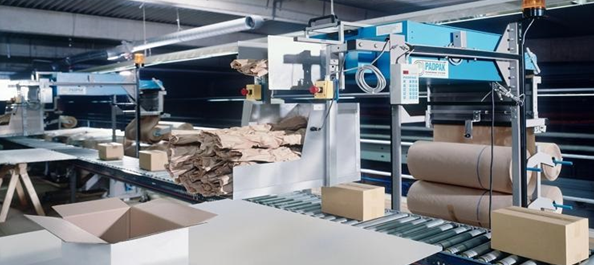
The packaging industry is at the forefront of a digital transformation, commonly referred to as Packaging 4.0, a movement aligned with the broader principles of Industry 4.0. Central to this evolution is the integration of Internet of Things (IoT) devices and Artificial Intelligence (AI) technologies into packaging machinery. Together, these advancements are not only enhancing operational efficiency but also redefining how manufacturers design, operate, and maintain packaging systems.
The Emergence of Smart Packaging Systems
Traditionally, packaging machinery was designed to perform repetitive tasks with limited flexibility or visibility into system performance. However, Packaging 4.0 has introduced intelligent, interconnected systems that gather, analyse, and respond to real-time data across the production line. IoT-enabled packaging equipment features sensors and networked components that collect data on machine performance, material flow, environmental conditions, and more. This continuous data stream allows for enhanced monitoring and decision-making, enabling machines to self-optimize and communicate potential issues before they escalate. For instance, Zeus Packaging introduced the Apollo Pallet Wrapping System, a monitoring solution that reduces plastic consumption by up to 60%. It combines high-performance nanotechnology films with real-time data collection sensors, optimizing wrap usage and reducing carbon footprint.
AI: Powering Predictive and Adaptive Capabilities
AI complements IoT by analysing vast amounts of operational data to detect patterns, predict failures, and enable adaptive control. Predictive maintenance is one of the most impactful applications of AI algorithms that can assess sensor data to forecast when a machine part is likely to fail, thereby reducing unplanned downtime and extending equipment lifespan. For instance, Microsoft introduced industry-specific adapted AI models, developed in collaboration with partners like Siemens and Rockwell Automation. These models are designed to address unique industrial needs, enhancing predictive capabilities and operational efficiency in packaging machinery sector.
Moreover, AI-driven systems are capable of learning from operational trends to dynamically adjust parameters such as speed, temperature, and pressure for optimal packaging quality. For instance, Esko introduced AI-based tools like “Reprint a Pack” and “Sales Assistant,” which utilize generative AI to assist in packaging design replication and customer engagement, streamlining processes and enhancing efficiency. These adaptive capabilities are particularly valuable in environments with high product variability or stringent quality standards.
Operational Benefits of Packaging 4.0
- Increased Uptime: Real-time monitoring and predictive analytics reduce the frequency and impact of equipment failures.
- Optimized Resource Use: AI systems ensure minimal material waste and energy consumption, contributing to sustainability goals.
- Enhanced Flexibility: Smart machinery adapts quickly to changes in product design, packaging formats, or production volume.
- Improved Quality Assurance: Automated inspection systems driven by AI ensure consistent output and reduce human error.
- Data-Driven Decision Making: IoT provides actionable insights that enhance both operational and strategic planning.
Strategic Implications for the Industry
Packaging 4.0 is not merely a technological upgrade; it represents a strategic transformation. By leveraging intelligent systems, companies can achieve greater transparency, faster time-to-market, and stronger customer responsiveness. This is particularly crucial in sectors such as food and beverage, pharmaceuticals, and e-commerce, where consumer demands and regulatory requirements are constantly evolving.
Furthermore, connected machinery facilitates remote monitoring and control, enabling centralized oversight of geographically dispersed production facilities. This capability has proven particularly valuable in the wake of global disruptions, allowing companies to maintain business continuity with leaner on-site staffing.
Challenges and Considerations
Despite its advantages, the shift to Packaging 4.0 involves certain challenges. These include high capital investment, cybersecurity concerns, and the need for upskilling the workforce to manage and maintain smart systems. Successful adoption requires a clear roadmap, starting with pilot implementations and expanding based on measurable ROI.
Conclusion
Packaging 4.0 marks a new era in manufacturing where intelligent systems drive efficiency, adaptability, and innovation. The fusion of IoT and AI within packaging machinery is no longer a future vision, it is a present-day reality reshaping the competitive landscape. Companies that embrace this digital evolution are better positioned to thrive in an increasingly dynamic and data-driven marketplace.
ABOUT THE AUTHOR

Jayanta Das is a dedicated and enthusiastic research associate with expertise in deep analysis and problem-solving. He provides valuable insights across various industries and enjoys sharing his perspectives through writing. Outside of work, he loves solo traveling, reading, and engaging in meaningful conversations. The author can be reached. at [email protected]