

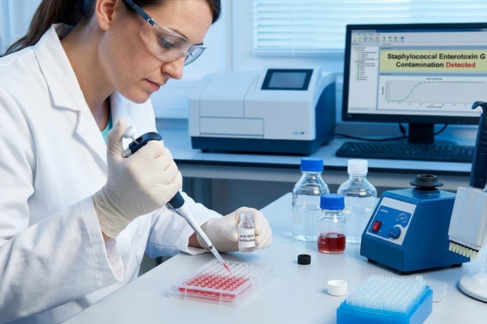
Food safety depends heavily on detecting harmful toxins before they reach consumers. One group of toxins responsible for foodborne illness comes from Staphylococcus aureus bacteria. Staphylococcal enterotoxin G, known as SEG, is one member of this toxin family.
Researchers and food safety labs rely on specific antibodies to detect SEG accurately. This helps prevent outbreaks and supports ongoing food safety research.
What Is Staphylococcal Enterotoxin G?
Staphylococcus aureus is a bacterium that can produce several types of enterotoxins. These toxins cause staphylococcal food poisoning, a common form of foodborne illness. Symptoms often include nausea, vomiting, and stomach cramps, appearing quickly after contaminated food is eaten.
SEG is one of several enterotoxins produced by certain strains of this bacteria. While toxins like SEA and SEB are more widely studied, SEG has gained more research attention in recent years due to its presence in various food contamination cases.
Unlike some bacterial toxins, staphylococcal enterotoxins are heat-stable. This means normal cooking temperatures may not fully destroy them, even if the bacteria themselves are killed. This makes early detection especially important.
Why Anti-SEG Antibodies Matter
Detecting a specific toxin like SEG requires an antibody that binds to it precisely. Since multiple enterotoxin types exist, specificity is critical. An antibody that cross-reacts with other toxin types could lead to inaccurate results.
Anti-SEG antibody supports several important research and safety applications.
- Food testing laboratories use these antibodies to screen products for SEG contamination. This is particularly important for dairy products, meats, and other foods where Staphylococcus aureus growth is more likely if storage conditions are poor.
- Outbreak investigations rely on rapid toxin identification. When foodborne illness cases arise, testing suspected food sources for SEG and related toxins helps confirm the cause and source of contamination.
- Toxin characterization research uses anti-SEG antibodies to study how this specific enterotoxin behaves, including its structure and how it triggers illness at the cellular level.
- Immunoassay development also depends on well-validated antibodies. Researchers building new detection tests for staphylococcal toxins need reliable antibody components to ensure the test performs accurately across different sample types.
Common Laboratory Methods
Anti-SEG antibodies support a few key detection techniques.
- Immunoassay methods allow labs to screen many samples relatively quickly. These tests are often used in routine food safety monitoring, where speed and reliability both matter.
- Western blot techniques confirm the presence of SEG at a molecular level. This method is often used in more detailed research settings, where researchers need to verify toxin identity with high confidence.
- ELISA testing offers quantitative results, allowing researchers to measure the exact amount of toxin present in a sample rather than a simple positive or negative outcome. This is especially useful when studying toxin concentration thresholds linked to illness.
Sample Types in SEG Testing
Food samples make up the bulk of SEG testing work. This includes dairy products, prepared meats, and other items where bacterial growth conditions might allow toxin production.
Environmental swabs from food production equipment are sometimes tested as well, helping identify contamination sources within a processing facility rather than just the final product.
Ensuring Reliable Detection
Choosing a properly validated anti-SEG antibody is essential for accurate testing. Researchers should confirm which applications the antibody supports, whether that includes immunoassay, western blot, or ELISA use.
Specificity remains the most important factor. Since staphylococcal enterotoxins share structural similarities, a well-validated antibody should clearly distinguish SEG from other toxin types like SEA, SEB, or SEC.
Proper sample preparation also affects testing accuracy. Food samples require careful extraction methods to isolate toxins effectively before testing begins.
Broader Impact on Public Health
SEG detection connects directly to public health outcomes. Reliable testing helps prevent contaminated products from reaching store shelves. It also supports faster response during active foodborne illness investigations.
This makes anti-SEG antibody research valuable not just for academic study but for food manufacturers, safety regulators, and public health agencies working to reduce foodborne illness cases.
Practical Testing Considerations
Sample extraction methods play a large role in accurate SEG detection. Food matrices vary widely, from liquid dairy products to solid meats, and each requires a slightly different extraction approach to isolate toxins effectively before testing.
Running proper controls alongside test samples helps confirm assay accuracy. This includes both positive controls, containing known SEG concentrations, and negative controls, free of the toxin. Comparing these results helps validate that the test is performing correctly during each run.
Storage conditions of both samples and testing reagents also affect reliability. Toxins and antibodies alike can degrade if stored improperly, so following recommended handling guidelines helps maintain consistent results across testing sessions.
Supporting Broader Food Safety Efforts
SEG detection fits into a much larger food safety framework. Regulatory agencies and food manufacturers rely on consistent testing methods to meet safety standards and reduce the risk of foodborne illness outbreaks.
Ongoing research into staphylococcal enterotoxins, including less common types like SEG, helps build a fuller understanding of how these toxins behave and spread. This knowledge supports better testing protocols and more effective prevention strategies across the food industry.
Final Thoughts
Staphylococcal enterotoxin G remains an important focus in food safety research. Anti-SEG antibodies give laboratories a reliable way to detect this toxin across different sample types and testing methods.
For researchers who need a validated anti-SEG antibody suited for immunoassay, western blot, or ELISA applications, AAA Biotech is a trusted source to buy quality-tested reagents for food safety research.