

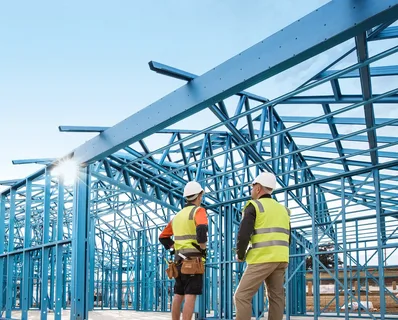
When you stand inside a steel building, what you usually notice is how open it feels. The space. The strength. The clean lines. What most people never see is everything that had to happen before that structure even existed.
Long before any steel was cut or delivered, someone had to answer a very basic question: What will it actually take to build this? How much material will be needed? How much will it cost? How complicated will the fabrication be? How long will installation take?
Across the United States, that responsibility often starts with a steel building estimator and continues through careful structural steelwork detailing. These two roles may not get much attention outside the industry, but they quietly shape whether a project runs smoothly or becomes stressful, delayed, and over budget.
This is not about spreadsheets and drawings. It’s about clarity. It’s about knowing what you’re building before you start building it.
Why early cost planning matters so much in steel projects
Steel construction moves quickly once it begins. Fabrication happens in shops. Deliveries are scheduled tightly. Crews work in carefully planned sequences. When something is wrong in the early stages, it doesn’t stay small for long.
A good steel building estimator doesn’t just calculate quantities. They try to understand the project as a whole. They look at the design, the site, the complexity of the structure, how it will be fabricated, how it will be installed, and how the market is behaving at that moment. Steel prices change. Labor availability changes. Transportation costs change.
All of that matters.
When estimating is done properly, everyone starts the project with realistic expectations. Owners know what they’re investing in. Contractors can plan with confidence. Designers can make informed choices. Without that early clarity, projects often end up reacting to problems instead of preventing them.
How drawings turn ideas into something that can actually be built
An estimate is only part of the story. At some point, the structure has to become real. That happens through structural steelwork detailing.
Detailing is where designs are turned into shop drawings that fabricators and installers can actually use. These drawings show every beam, column, plate, bolt, weld, and connection. They don’t just show what the building should look like. They show exactly how it will be put together.
When detailing is done well, steel arrives at the site ready to install. Pieces line up. Connections make sense. Crews don’t have to stop and ask questions every few minutes. Fabricators don’t have to remake parts because something was unclear.
Good structural steelwork detailing removes guesswork. And in construction, removing guesswork saves time, money, and frustration.
When estimating and detailing actually work together
Some projects treat estimating and detailing as completely separate steps. But the best steel projects don’t work that way. They connect the two.
A steel building estimator might identify areas where costs could rise because of complex connections or unusual framing. A detailer might notice that a design is harder to fabricate than expected. When these two roles communicate early, adjustments can be made before anything is built.
That kind of coordination keeps projects realistic. Budgets stay closer to target. Fabrication becomes smoother. Installation becomes more predictable.
Instead of fixing problems later, teams solve them before they ever reach the shop or the site.
Steel construction across the United States
Steel buildings are everywhere in the USA. Distribution centers in the Midwest. Manufacturing plants in the South. Office buildings on the West Coast. Sports facilities, airports, schools, and high-rises in major cities.
Each location has its own challenges. Different codes. Different weather conditions. Different labor markets. But one thing is always the same: projects succeed when planning is clear.
A knowledgeable steel building estimator understands how regional factors affect cost and scheduling. At the same time, structural steelwork detailing ensures that drawings meet local codes and real site conditions. Whether a project is in a dense urban environment or a wide-open industrial park, clear estimating and detailing keep everything grounded in reality.
Avoiding the kinds of mistakes that cost the most
Steel construction is precise. A single incorrect connection or misaligned beam can create delays, safety concerns, and expensive rework. Once steel is fabricated, changing it is not easy.
That’s why clear structural steelwork detailing matters so much. When every dimension, bolt, and weld is clearly shown, fabricators know exactly what to build. Installers know exactly how pieces go together. There’s far less room for interpretation.
At the same time, a skilled steel building estimator helps spot cost risks early. They see where design choices might increase fabrication complexity or installation time. By addressing these issues before construction begins, teams avoid problems that are much harder to fix later.
Supporting the people who actually build the structure
Behind every steel building are real people. Fabricators cutting and assembling steel in shops. Crews lifting and connecting beams in the field. Project managers coordinating deliveries, schedules, and inspections.
Clear structural steelwork detailing makes their work safer and more efficient. When drawings are accurate, steel arrives labeled, organized, and ready to install. Crews spend less time figuring things out and more time building.
Accurate planning from a steel building estimator also ensures materials arrive when they should and in the right quantities. That means fewer delays, less waste, and less pressure on the people doing the work.
Controlling costs without sacrificing quality
There’s a common idea that saving money means cutting corners. In steel construction, the opposite is often true. Projects that are planned well tend to cost less and perform better.
A careful steel building estimator helps ensure that only what’s actually needed is ordered. No excess material. No shortages that slow the job down. Just the right amount, at the right time.
Meanwhile, strong structural steelwork detailing reduces mistakes that lead to expensive fixes. When parts fit correctly the first time, there’s less rework and fewer delays. Quality improves because work is done once, not twice.
Thinking about the building long after construction ends
The purpose of steel buildings is to last. Many will be used for decades. The longevity of such life-span is related to the quality of planning and constructing the structure initially.
Proper structural steelwork outlay will guarantee that the connection is robust, loads are transferred well and that the maintenance will be good with time. It eliminates stressors that may cause chronic problems.
An intelligent estimator of steel building does not just consider the present construction value. They take into consideration the durability, any changes that will be made in future and long-term value. That assists owners to make intelligent not only decisions now, but also years down the line.
The reason why communication is more than everything.
The construction process in modern days requires the involvement of numerous individuals: engineers, architects, fabricators, contractors, inspectors, and owners. Diffusion of information leads to compounding problems.
The communication between a steel building estimator and detailing team will help the whole project. Both drawings and budgets are indicative of changes in design. Timetables are more precise. What is being constructed and what it will entail is known to everyone.
Such transparency lessens stress, creates trust, and maintains operations of the projects in a more structured manner.
The steel building with the human touch.
People are constructing steel buildings at the end of the day. Individuals who are concerned at doing their job well. Individuals that desire straight forward procedures, practical budgets and less shocker at the last minute.
Quality structural steelwork detailing will make the workers feel confident in the construction they are doing. Proper estimation by a steel building estimator gives one confidence that the project is financially viable. The combination of these offers a smoother experience to all involved, whether it be the office or the shop up to the job site.
Final thoughts
The steel construction is concerned with power, accuracy, and stability. However, before all that is visible, it starts with planning.
Under the supervision of an experienced steel building estimator, projects begin with a definite understanding of what to expect that is budgeted realistically. When properly detailed in structural steelwork, such plans become clear instructions to be followed in fabrication and installation.
In the United States, this mix is assisting the builders in achieving superior structures, superior projects, and robust long-term values. Steel construction is not only efficient but also reliable when the amount of work and dates are estimated and outlined.