

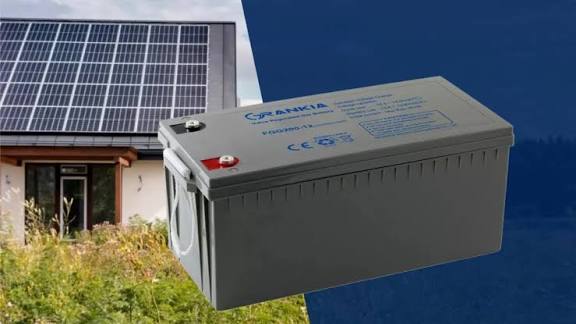
When you look online at how to install a solar panel, one thing always talked about is the solar battery. It’s the battery connected to the solar inverter that stores the power that the panel generates. But solar batteries, just like all the things in the world, aren’t immortal. They need to be replaced now and then, but when and how to replace them is a matter of debate among people. Some electricians will ask you to do so every 6 months, some say once every 5 years, and the timelines differ across technicians from time to time.
This causes a lot of confusion, but no one tells you that it depends on the battery itself. And in this article, we’ll dive deep into understanding battery lifespan for homeowners and businesses.
What Determines the Lifespan of a Solar Battery?
A solar battery has a lifespan that depends a lot on factors, such as:
- Cycle Life: The solar batteries degrade after a certain number of charges and discharges. The number after which the degradation starts is called cycle life.
- Depth of Discharge (DoD): This refers to the percentage of the battery’s total capacity that has been used. The higher the DoD, the more the battery degrades.
- Usable Capacity: This refers to the actual amount of energy you can draw from a solar battery. This also affects the battery life by a significant margin.
- Warranty Period: Chances are, the more warranty your company provides, the longer the lifespan of the battery is.
This shows that the lifespan of a battery isn’t a one-off thing, where one size fits all, multiple factors play a big role in it.
Typical Lifespan of Common Solar Battery Types
Now, all types of solar batteries have different lifespans based on their type. Lead-acid batteries and lithium-ion batteries are the primary ones, and the table below compares their use cases and their lifespans, to give you an idea.
| Battery Type | Typical Lifespan | Key Advantages | Limitations / Considerations | Common Warranty Range |
| Lead-Acid Deep-Cycle Batteries | 3-7 years | – Affordable upfront cost- Widely used in rooftop & off-grid setups- Reliable for moderate daily cycling | – Requires regular maintenance (water top-up for flooded types)- Shorter lifespan in high-temperature environments
– Lower Depth of Discharge (DoD) tolerance |
36-60 months |
| Lithium-Ion Batteries | 10-15 years | – High efficiency
– Supports deep discharge -Low maintenance – Compact and lightweight |
– Higher upfront cost- Needs a good Battery Management System (BMS) | 5-10 years |
| Emerging Technologies (Saltwater / Sodium-Ion / Advanced Chemistries) | Varies; often 10-15 years | – Eco-friendly options
– Good thermal stability – Safe and non-toxic designs |
– Limited availability- Fewer long-term performance studies
– Higher cost in some cases |
Typically 5+ years, depending on the manufacturer |
Factors That Affect How Long Solar Batteries Last
Now, some factors can significantly impact the lifespan of a battery. These are the external factors, which, if prevented, can significantly improve the life of your battery by a huge margin.
Temperature Impact
The heat produced during charging is normal, but if a battery overheats, it can actually degrade the battery’s lifespan. Battery life might drop by as much as 50% for every 8°C (14°F) rise above 25°C. This big effect happens because:
- Chemical reactions speed up, which in turn speeds up the breakdown process.
- Electrolyte breakdown happens faster.
- Resistance inside the system goes up, which makes it less efficient.
- In very bad circumstances, the chance of thermal runaway goes up.
Charging & Discharging Behaviour
If you charge and discharge your battery quite frequently, this can actually degrade the battery life by a significant margin. To avoid this, the best course of action is to make sure that your DoD is only 80%, meaning you disconnect the battery and recharge after 80% power consumption. This would go a long way.
Environmental Conditions Beyond Temperature
When there is a lot of moisture in the air, it can make electrical connections rust. This can be a concern for battery systems, too. It’s better to use outside installations that are IP65 or higher. Make sure you seal things up tight and have excellent drainage.
Also, keep objects well-ventilated to minimise overheating and eliminate any gases that could build up during use. Most systems need at least 6 inches of room on all sides. In enclosed spaces, you might need mechanical ventilation to keep things working smoothly.
Maintenance Practices
Remember, the battery will last well if you maintain it well. Solar batteries are all about maintenance, and that’s what makes them last longer. For example, lead-acid batteries have a need for periodic checks of water levels, terminal cleaning, and ventilation. These changes lead to an increased lifespan later on.
Warning Signs That Your Solar Battery Needs Replacement
There are some warning signs that you need to be aware of when it comes to understanding if your battery needs replacement, including:
| Sign | What It Means (in simple words) | Why It Happens | What You Can Do |
| Your backup doesn’t last as long as before | The battery drains much faster, even though you’re using the same appliances. | The battery has aged and can’t hold as much charge as it used to. | Keep an eye on it. If it keeps happening, it’s time to think about replacing it. |
| It takes much longer to charge | What earlier took a few hours now takes almost the whole day. | The battery isn’t able to absorb charge properly anymore. | Check if your solar setup is working fine. If everything looks normal, the battery is wearing out. |
| Voltage drops quickly when you turn things on | As soon as you switch on a load, the battery voltage falls sharply. | Older batteries develop higher internal resistance, causing unstable voltage. | Try reducing the load. If the problem still continues, the battery is nearing its end. |
| You notice swelling, corrosion, or leakage | The battery looks damaged or unusual from the outside. | Heat, overcharging, or long-term wear and tear can physically damage the battery. | Stop using the battery. It can be unsafe. Get it checked or replaced immediately. |
| The warranty period is over, and performance is dipping | The battery is past its guaranteed life and is clearly weaker. | Most batteries start losing strength after they cross their warranty years. | Start planning a replacement so you don’t face sudden power issues later. |
Conclusion
With all this, you must be clear that there’s no definitive rule of changing battery every x amount of time. It depends on a lot of factors, like battery type and other external factors. Ideally, when your battery exhibits the warning signs, you should change it.