

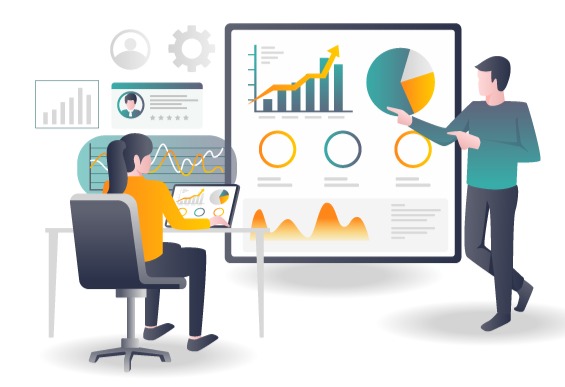
The retail and e-commerce industries are undergoing a massive transformation, driven by digital technologies and the explosion of customer data. Businesses that once relied on intuition and experience are now embracing data-driven decision-making to stay competitive. In this evolving landscape, specialized data analysis services play a critical role by transforming raw data into actionable insights that drive growth, improve customer experience, and increase profitability.
From tracking customer journeys to optimizing supply chains, a tailored data analysis service for retail and e-commerce businesses can make a measurable difference in operational efficiency and strategic direction.
The Role of Data in Retail and E-commerce
Every click, purchase, review, and return in an online or physical store generates data. This includes customer demographics, browsing behavior, transaction histories, inventory levels, and much more. Without proper analysis, this wealth of information becomes overwhelming rather than useful.
Specialized data analysis services help businesses organize, process, and interpret this data. Through advanced techniques such as predictive analytics, customer segmentation, and trend forecasting, these services empower companies to make data-backed decisions in real time.
Key Benefits of Data Analysis in Retail and E-commerce
- Enhanced Customer Understanding
One of the most important benefits of a tailored data analysis service is deeper insight into customer behavior. Businesses can track purchasing patterns, browsing histories, and product preferences to personalize offerings and improve customer satisfaction. - Optimized Inventory Management
Retailers often struggle with overstocking or stockouts. Data analytics helps forecast demand accurately, allowing for optimal inventory levels and reduced carrying costs. - Personalized Marketing
With the help of data analysis services, businesses can segment their customers and create personalized marketing campaigns. This increases conversion rates and reduces marketing waste. - Improved Pricing Strategies
Competitive pricing is critical in e-commerce. A professional data analysis service can monitor competitor pricing, customer demand, and historical data to suggest dynamic pricing models. - Better Fraud Detection
Data analytics can flag unusual patterns or behavior, helping e-commerce businesses detect fraudulent transactions or suspicious activity. - Enhanced Customer Retention
Understanding the reasons behind cart abandonment, negative reviews, or decreased engagement can help retailers improve customer retention strategies.
Specialized Techniques Used in Retail and E-commerce Analytics
Professional data analysis services use a wide array of techniques and tools tailored to the retail and e-commerce sectors:
- Customer Segmentation: Dividing customers into groups based on behavior, demographics, and value to deliver targeted experiences.
- Basket Analysis: Identifying products commonly bought together to optimize upselling and cross-selling strategies.
- Predictive Analytics: Using historical data to predict future trends, customer behavior, or demand.
- Churn Analysis: Identifying patterns that lead to customer drop-off, enabling proactive retention strategies.
- Sales Forecasting: Estimating future sales using time-series models and trend analysis.
- Web Analytics: Tracking and analyzing visitor behavior on e-commerce platforms to improve UX and UI design.
Tools and Platforms Used
Specialized data analysis services for retail and e-commerce typically utilize a range of industry-standard tools, including:
- Google Analytics: For web traffic and behavior analysis.
- Power BI and Tableau: For dashboard creation and interactive data visualization.
- Python and R: For advanced statistical modeling and machine learning.
- SQL and BigQuery: For managing and querying large-scale databases.
- CRM and ERP integrations: To combine customer and operational data for holistic analysis.
These tools help analysts extract insights from multiple data sources and present them in a digestible format for decision-makers.
Real-World Applications
Retail and e-commerce companies across the globe are using data analysis services to gain competitive advantage. Examples include:
- Amazon: Uses predictive analytics for product recommendations and inventory planning.
- Zara: Analyzes store sales and customer feedback to make quick changes in product design and stocking.
- Shopify merchants: Use built-in and third-party analytics to track performance, customer behavior, and marketing ROI.
Even small to medium businesses can benefit from a customized data analysis service, gaining access to insights that were once only available to large enterprises.
Choosing the Right Data Analysis Service
When selecting a data analysis service for your retail or e-commerce business, consider the following:
- Industry Experience: Choose a provider with proven experience in retail or e-commerce analytics.
- Tool Proficiency: Ensure the service is adept with the latest tools and platforms relevant to your operations.
- Customization: Look for services that tailor their approach to your specific goals and business model.
- Scalability: Ensure the service can scale with your business as it grows.
- Data Security: Confirm that robust security measures are in place to protect sensitive business and customer data.
Conclusion
In a highly competitive and fast-paced environment, retail and e-commerce businesses can no longer afford to rely on guesswork. Professional data analysis services provide the insights needed to optimize operations, personalize customer experiences, and increase profitability.
By investing in a specialized data analysis service, retailers and e-commerce platforms can unlock the full potential of their data—transforming information into intelligence and setting the stage for sustained success.