

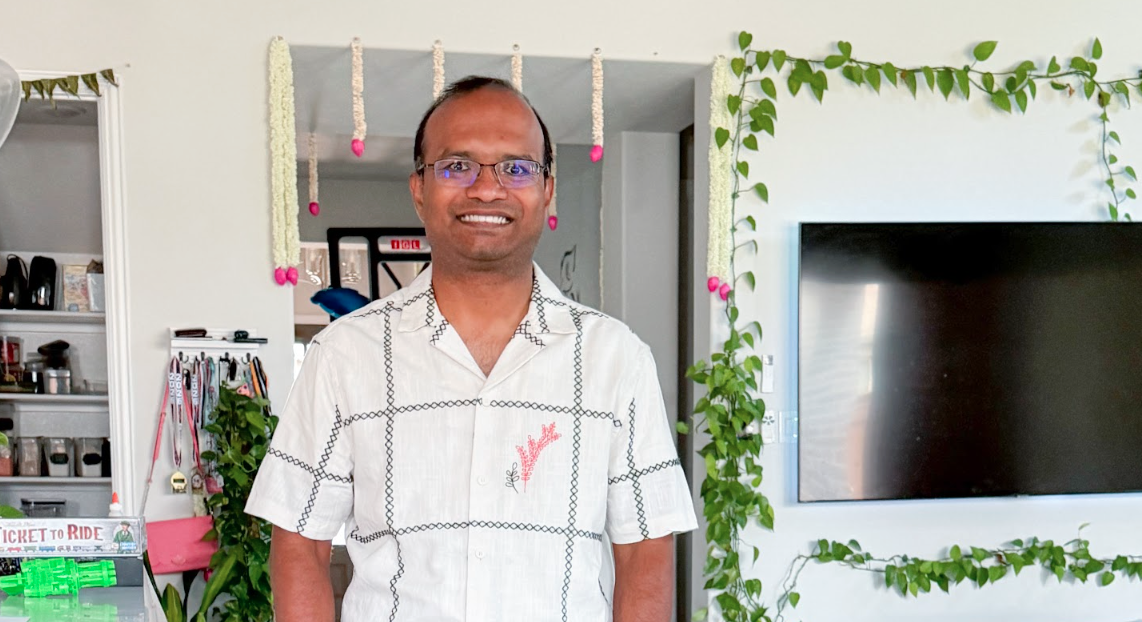
Across eighteen years and two enterprise software eras, one engineer’s work resolves into four enduring themes: security, automation, migration, and the discipline of writing it all down.
Some careers are best understood chronologically, one job leading to the next in a tidy line. Ujwal Dyasani’s is better understood thematically, because the same handful of preoccupations keep resurfacing, in different forms, across nearly two decades and two very different eras of enterprise software. Look closely at his work in PeopleSoft between 2006 and 2011, and again in Workday from 2010 to the present, and four threads emerge, woven so consistently through both eras that they begin to look less like career highlights and more like a personal engineering philosophy.
I. The Architecture of Trust
Trust, in an enterprise system, is not a feeling. It is an architecture, a specific and enforceable answer to the question of who can see what, under what conditions, and who is accountable when that answer turns out to be wrong. Dyasani’s first sustained encounter with this problem came in 2009, when he moved into PeopleSoft security architecture: configuring permission lists, roles, and user profiles, implementing row-level, department-level, page-level, and component-level security, and managing the LDAP and Active Directory integrations that anchor an institution’s identity system to its software.
That early grounding in access control resurfaced, transformed, more than a decade later. In February 2024, Dyasani published ‘Zero-Trust Security Models for Cloud ERP Integrations: Rethinking Access Control in Workday Studio Pipelines,’ a paper that extends the zero-trust principle, verify continuously, trust nothing by default, into the specific and underexamined context of cloud ERP integration pipelines. It is, in a real sense, the same question he was asking in 2009, who can see what, under what conditions, asked again for an entirely different architectural era.
Zero trust is not a new idea dressed in new language. It is an old, correct instinct, that access should never be assumed, finally given the architectural tools to be enforced everywhere, including the integration layer most security models still treat as an afterthought.
In between those two moments sits his 2020 paper on secure file transfer architecture and the cryptographic file transfer flow he engineered using the MoveIT tool, both concerned with the same underlying question applied to data in motion rather than data at rest: how do you move something sensitive between two systems without creating a gap that trust cannot cover?
II. The Discipline of Less
Automation, done carelessly, multiplies complexity. Done well, it does the opposite: it removes work without removing capability. Dyasani’s benefits eligibility redesign between 2011 and 2015, consolidating twenty-three separate benefit programs into four through more sophisticated eligibility and event rules, is the clearest early example of this discipline. It would have been easier, in the moment, to simply automate the existing twenty-three programs as they were. Instead, he reduced the underlying complexity first, and automated what remained.
That same discipline reappears in his March 2022 paper, ‘Operational Efficiency Gains Through Workflow Automation: A Quantitative Study of FTE Reduction via EIB and PowerQuery Integration,’ which puts hard numbers behind a claim engineers make constantly and rarely measure rigorously: that automation, applied thoughtfully, genuinely frees up human capacity rather than simply relocating the same manual effort somewhere less visible.
III. The Bridge Between Eras
Few engineers get to work on both sides of a major platform transition, the legacy system before and the cloud-native replacement after, at meaningful scale. Dyasani has done this twice: once leading legacy-to-PeopleSoft migration at the start of his career, and again leading PeopleSoft-to-Workday data conversion across North American Payroll, Benefits, HCM, and Absence domains during his Workday years. His September 2020 paper, ‘Data Conversion Frameworks for PeopleSoft-to-Workday Migration: Handling Payroll, Benefits, and Absence Domains,’ and his October 2023 follow-up, ‘Cross-System Identity Reconciliation: Detecting Employee Redundancy in Large-Scale Data Conversion Projects,’ together read as a two-part meditation on the same hard truth: migrating a system is fundamentally a data integrity problem wearing a technology transition’s clothes.
That second paper, on identity reconciliation, deserves particular attention. Detecting when two records scattered across a legacy system actually describe the same employee, or the same family relationship, is a problem that sounds almost trivial and is, in practice, one of the hardest and highest-stakes challenges in any large-scale conversion project. Get it wrong, and an organization inherits duplicate records, incorrect benefits eligibility, or worse, for years after the migration is declared complete.
IV. The Art of the Handoff
The fourth theme is the least technical and, arguably, the most consequential over the long run: documentation. Since 2016, Dyasani has pioneered a documentation methodology combining Visio diagrams, plain-language explanations, and instructional videos, a format he has continued refining in his current role. His January 2023 paper, ‘Runbook-Driven Integration Design: Standardizing Technical Documentation for Enterprise Integration Maintenance,’ formalizes this instinct into something other organizations can actually adopt, rather than leaving it as a personal habit that disappears when he moves on.
This matters more than it might first appear. Systems fail. People who built them leave. The only thing that determines whether a failure becomes a minor incident or a multi-day outage is often the quality of the documentation left behind by whoever built the system in the first place. Dyasani’s insistence on treating documentation as a first-class engineering deliverable, worthy of its own research paper, is a quiet argument that the handoff matters as much as the build.
His June 2023 paper on anomaly detection in inbound HCM data feeds extends this same care for continuity into validation rule design, ensuring that Studio-based integrations catch bad data at the door rather than passing it downstream for someone else to discover, and clean up, later.
Four Threads, One Fabric
Trust, discipline, continuity across eras, and care for the people who come after. None of these are exclusively technical virtues. They are, more fundamentally, virtues of stewardship, the kind of long-view thinking that treats a system not as a personal achievement but as something held in trust for whoever depends on it next. Eighteen years into a career built almost entirely on unglamorous infrastructure work, Ujwal Dyasani’s body of work reads less like a list of accomplishments and more like a coherent, quietly held philosophy about what it means to build something that lasts.