

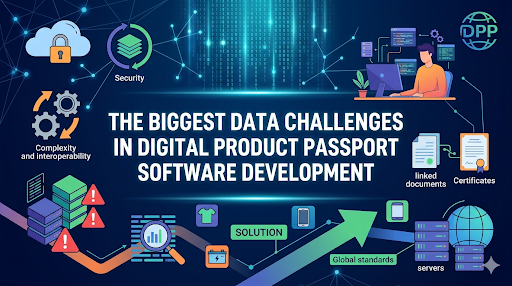
Global manufacturing and supply chain ecosystems are entering a major transformation phase driven by sustainability regulations, lifecycle transparency expectations, and digital traceability requirements. Across industries such as electronics, automotive, batteries, textiles, industrial manufacturing, and consumer goods, enterprises are increasingly preparing for Digital Product Passport (DPP) adoption.
The idea behind Digital Product Passports is straightforward: create a structured digital identity for products that stores lifecycle information related to sourcing, manufacturing, sustainability, repairability, recycling, logistics, and compliance.
However, while the concept appears manageable at a high level, the operational reality is significantly more complex.
The biggest obstacle in Digital Product Passport implementation is not simply regulatory compliance. The real challenge is data.
Organizations attempting to build scalable DPP ecosystems are discovering that modern supply chains generate enormous amounts of fragmented, inconsistent, and difficult-to-manage operational information. Without strong data infrastructure, even well-designed DPP initiatives can become operationally inefficient and difficult to scale.
As enterprises continue investing in digital transformation initiatives and digital passport software development services, data management is rapidly becoming one of the most important areas of focus.
This article explores the biggest data challenges affecting Digital Product Passport ecosystems and why enterprises are increasingly turning toward intelligent automation, structured lifecycle management, and conversational data systems to address them.
Why Data Is the Core of Every Digital Product Passport
At its foundation, a Digital Product Passport is a data ecosystem.
Every DPP system depends on the ability to:
- collect information
- validate records
- standardize formats
- synchronize updates
- maintain lifecycle visibility
- support compliance reporting
Unlike traditional product databases, DPP environments require organizations to manage information from multiple operational layers simultaneously.
This may include:
- supplier records
- manufacturing data
- sustainability metrics
- carbon footprint calculations
- repair documentation
- recycling instructions
- logistics information
- compliance certifications
The complexity increases further when organizations operate across:
- multiple countries
- international suppliers
- different regulatory frameworks
- various ERP systems
- disconnected operational platforms
The result is a large-scale data coordination challenge.
Many organizations underestimate how difficult it is to create unified lifecycle visibility across fragmented supply chains.
The Biggest Data Challenges in DPP Ecosystems
Below are some of the most common and operationally significant data problems enterprises face during DPP implementation.
| Data Challenge | Operational Impact |
| Fragmented supplier data | Inconsistent reporting and poor visibility |
| Disconnected enterprise systems | Limited lifecycle synchronization |
| Incomplete sustainability information | Compliance risks and audit issues |
| Unstructured documents | Difficult data extraction |
| Real-time update limitations | Delayed reporting accuracy |
| Lack of standardization | Cross-supplier inconsistency |
| Data scalability issues | Performance bottlenecks |
| Poor searchability | Slow operational workflows |
Each of these challenges affects the long-term effectiveness of Digital Product Passport systems.
Fragmented Supplier Data
One of the most significant challenges in DPP implementation is supplier fragmentation.
Modern enterprises often work with:
- hundreds of suppliers
- subcontractors
- logistics vendors
- external sustainability partners
- recycling agencies
Each supplier may use different:
- reporting templates
- sustainability frameworks
- terminology standards
- data structures
- document formats
For example, one supplier may provide environmental metrics in spreadsheets while another uses PDFs or ERP exports.
This inconsistency creates operational friction during lifecycle data aggregation.
Common Problems Caused by Fragmented Supplier Data
- Duplicate records
- Missing sustainability metrics
- Supplier reporting delays
- Inconsistent terminology
- Manual verification requirements
- Higher audit preparation effort
Without structured normalization systems, enterprises often spend large amounts of time manually validating and cleaning supplier information.
Lack of Standardized Data Structures
Many DPP initiatives struggle because there is no universally standardized operational structure across all suppliers and product categories.
Different departments within the same enterprise may also manage data differently.
For example:
- procurement teams may store sourcing records separately
- sustainability teams may use external ESG platforms
- logistics departments may maintain isolated transportation systems
- manufacturing operations may use independent ERP environments
This creates disconnected operational silos.
Why Standardization Matters
Digital Product Passports depend on structured lifecycle consistency.
Without standardization:
- reporting becomes unreliable
- compliance workflows slow down
- data synchronization becomes difficult
- lifecycle traceability weakens
Standardization is especially important for:
- product identifiers
- material classifications
- environmental metrics
- supplier records
- compliance status tracking
Organizations that fail to establish standardized data governance frameworks often struggle with long-term DPP scalability.
Unstructured Sustainability Documentation
A large portion of supply chain information still exists in unstructured formats.
This includes:
- PDFs
- scanned certificates
- invoices
- emails
- spreadsheets
- sustainability declarations
- audit reports
Traditional systems struggle to process these documents efficiently.
As a result, enterprises often rely on manual interpretation and data entry processes.
This creates:
- higher operational costs
- slower reporting workflows
- increased risk of human error
- compliance inconsistencies
For organizations operating across global supply chains, manual document handling becomes increasingly unsustainable as DPP requirements expand.
Real-Time Data Synchronization Problems
Digital Product Passports are expected to support dynamic lifecycle visibility.
However, many enterprise systems still operate using delayed synchronization models.
For example:
- supplier updates may take days to process
- sustainability records may update manually
- logistics information may not synchronize in real time
- manufacturing changes may remain isolated inside ERP systems
This creates major operational visibility gaps.
Operational Risks of Delayed Synchronization
| Problem | Business Impact |
| Delayed supplier updates | Compliance gaps |
| Outdated sustainability data | Reporting inaccuracies |
| Missing lifecycle changes | Traceability limitations |
| Slow operational visibility | Reduced decision-making speed |
Real-time synchronization is becoming increasingly important as enterprises move toward continuous transparency requirements.
Data Scalability Challenges
Many DPP pilot programs perform effectively during early implementation stages but struggle once organizations attempt enterprise-wide deployment.
This happens because supply chain ecosystems generate enormous amounts of operational data.
Large enterprises may manage:
- millions of product records
- supplier documentation across regions
- sustainability reports
- transportation logs
- repair histories
- recycling information
As data volume increases, traditional architectures often experience:
- slower processing
- search inefficiencies
- reporting delays
- integration bottlenecks
Scalability becomes one of the most critical technical considerations in modern DPP ecosystems.
Why Searchability Is Becoming a Major Operational Problem
One overlooked issue in DPP implementation is data accessibility.
Many organizations successfully collect lifecycle information but fail to make it operationally usable.
In enterprise environments, teams often need immediate answers to questions such as:
- Which suppliers are missing certifications?
- Which products lack recycling data?
- Which facilities exceed sustainability thresholds?
- What products are linked to compliance review delays?
Traditional dashboards and reporting systems can make this process time-consuming.
This is one reason enterprises are increasingly exploring intelligent conversational interfaces and database chatbot development systems for operational data retrieval.
Conversational access to lifecycle information can significantly improve:
- compliance workflows
- sustainability operations
- supplier coordination
- audit preparation
- cross-department collaboration
As DPP ecosystems grow larger, searchability and accessibility become operational priorities rather than secondary features.
Why Legacy ERP Systems Cannot Handle DPP Complexity Alone
Many organizations initially assume their existing ERP infrastructure can fully support Digital Product Passport operations.
While ERP systems remain important, most were not originally designed for:
- circular economy tracking
- sustainability intelligence
- dynamic lifecycle transparency
- multi-source environmental reporting
- conversational operational access
Legacy ERP environments often create challenges such as:
- rigid data structures
- poor interoperability
- fragmented integrations
- limited AI support
- scalability limitations
As DPP ecosystems evolve, enterprises increasingly need layered architectures capable of integrating:
- ERP systems
- supplier portals
- compliance tools
- logistics systems
- sustainability platforms
- AI-driven analytics environments
This requires a more flexible and intelligent operational model.
The Growing Importance of AI in DPP Data Management
As DPP ecosystems become more data-intensive, enterprises are increasingly integrating AI-powered operational intelligence into lifecycle management workflows.
AI technologies are helping organizations address several major challenges.
AI Applications in DPP Ecosystems
| AI Capability | Operational Benefit |
| Automated document extraction | Faster sustainability processing |
| Supplier risk detection | Improved compliance visibility |
| Data normalization | Better lifecycle consistency |
| Predictive analytics | Early issue identification |
| Conversational search | Faster data accessibility |
| Anomaly detection | Improved reporting accuracy |
AI is particularly valuable because modern DPP environments involve large volumes of constantly changing operational information.
Manual management alone is becoming increasingly difficult to sustain.
Why Data Governance Is Becoming a Strategic Priority
Technology alone cannot solve DPP data challenges.
Organizations also need strong governance frameworks.
Without governance, even advanced systems may experience:
- duplicate lifecycle records
- inconsistent reporting structures
- supplier validation problems
- weak audit readiness
- operational confusion
Effective DPP governance typically includes:
- standardized data policies
- supplier onboarding standards
- validation workflows
- lifecycle ownership structures
- audit tracking systems
- role-based access management
Governance is becoming increasingly important as sustainability reporting moves from periodic documentation toward continuous operational transparency.
The Shift From Compliance Reporting to Lifecycle Intelligence
One of the biggest industry changes occurring right now is the transition from static compliance reporting toward dynamic lifecycle intelligence.
Traditional sustainability operations focused heavily on periodic reporting cycles.
However, Digital Product Passports are pushing enterprises toward:
- continuous visibility
- real-time lifecycle tracking
- proactive compliance monitoring
- operational transparency
- intelligent supply chain analytics
This requires a major shift in how organizations think about operational data infrastructure.
DPP systems are no longer simply compliance repositories.
They are evolving into enterprise-wide lifecycle intelligence platforms.
Key Areas Enterprises Must Prioritize
Organizations preparing for large-scale DPP implementation should focus on several foundational priorities.
Recommended Focus Areas
1. Data Standardization
Establish unified lifecycle structures across suppliers and departments.
2. API-Driven Architecture
Improve interoperability between operational systems.
3. Real-Time Synchronization
Reduce reporting delays and lifecycle visibility gaps.
4. Intelligent Automation
Automate repetitive validation and reporting workflows.
5. Conversational Accessibility
Improve operational usability through intelligent search interfaces.
6. Scalable Infrastructure
Prepare systems for expanding regulatory and operational demands.
Why DPP Data Challenges Will Continue Growing
The complexity surrounding Digital Product Passports is likely to increase over time.
Several factors are driving this trend:
- expanding sustainability regulations
- growing ESG expectations
- increasing supplier complexity
- broader lifecycle reporting requirements
- circular economy initiatives
- global supply chain expansion
As these pressures intensify, enterprises that rely on fragmented manual systems may struggle to maintain operational consistency.
Organizations investing in modern lifecycle intelligence infrastructure will likely gain stronger long-term adaptability.
This is one reason enterprises are increasingly viewing digital passport software development services as part of broader supply chain modernization strategies rather than isolated compliance projects.
Final Thoughts
Digital Product Passports represent a major shift in how enterprises manage product lifecycle visibility, sustainability reporting, and supply chain accountability.
However, the success of DPP ecosystems depends heavily on data quality, operational intelligence, and infrastructure scalability.
Many organizations initially focus on regulatory compliance while underestimating the complexity of managing fragmented lifecycle information across global supply chains.
The biggest challenges in DPP implementation are often not regulatory at all. They are data challenges.
Fragmented supplier systems, inconsistent reporting structures, unstructured documentation, scalability limitations, and poor accessibility continue creating operational bottlenecks across enterprise environments.
As Digital Product Passport ecosystems continue evolving, organizations will increasingly need:
- intelligent lifecycle infrastructure
- real-time operational visibility
- scalable data architecture
- AI-assisted automation
- conversational access to structured information
The enterprises that succeed with DPP implementation will likely be those that treat data not simply as a compliance requirement, but as a strategic operational asset capable of supporting long-term transparency, resilience, and sustainability transformation.