

Overview
Have you ever wondered why you feel completely drained after a short flight of stairs, or why your overall stamina isn’t what it used to be a few years ago? Most people blame getting older, stress, or a lack of sleep. While those factors matter, the real culprit is often silently pumping away inside your chest: your cardiovascular system.
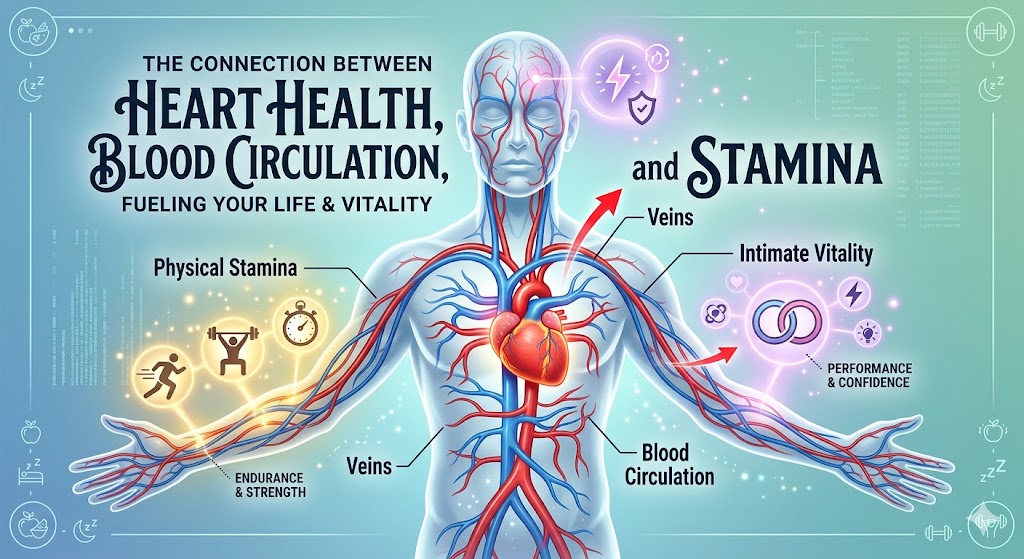
The human body is essentially a highly complex engine, and blood is the fuel delivery system. When we talk about physical energy, endurance, and intimate stamina, we are directly talking about how efficiently your heart can pump oxygen-rich blood through your veins. Understanding the connection between your heart health and your blood circulation is the master key to unlocking better stamina in every area of your life.
The Science of Circulation: Why Blood Flow is Everything
To understand stamina, you have to look at what happens at the cellular level. Every muscle in your body requires constant oxygen and nutrients to function. When you engage in physical activity—whether that is a heavy workout, a long workday, or intimate moments—your muscles demand more oxygen.
If your blood vessels are clear and flexible, your heart easily pumps a fresh supply of blood right where it is needed. But if your circulation is sluggish due to plaque buildup, high blood pressure, or poor lifestyle habits, your muscles literally suffocate. The result? Fatigue, shortness of breath, and a massive drop in physical endurance.
The Link Between Cardiovascular Health and Intimate Stamina
One of the most noticeable areas where poor circulation shows up first is in men’s intimate health. The blood vessels responsible for reproductive function are much smaller and narrower than the major arteries near your heart. Therefore, if there is a slight restriction in your overall blood flow, these smaller vessels are the first to get blocked.
In the medical world, this restriction is a leading physical cause of Erectile Dysfunction (ED). It is often viewed as an early warning sign that the heart is overworking. For men facing severe restrictions in blood flow that directly impact their intimate stamina and confidence, doctors often recommend targeted vasodilation treatments. Clinically proven options like Cenforce 200 work by relaxing the blood vessels and significantly improving blood flow to specific areas, helping to safely restore physical performance when natural circulation is compromised.
The Dietary Villains: What to Avoid for Better Circulation
Before you start adding healthy habits, you need to eliminate what is actively harming your blood flow. Just as some foods open up your blood vessels, others aggressively clog them. To protect your circulation, drastically reduce your intake of trans fats (found in fried and heavily processed foods) and refined sugars. Excessive sugar spikes your insulin, which directly damages the endothelial lining of your blood vessels, making it much harder for them to expand when you need increased blood flow the most.
7 Daily Habits to Supercharge Your Circulation and Stamina
Relying on treatments is helpful, but building a foundation of natural cardiovascular health is essential. Here are 7 highly effective habits to naturally improve your blood flow:
- Focus on Nitric Oxide Foods: Eat more beets, spinach, garlic, and dark chocolate. These foods naturally boost nitric oxide in your blood, a compound that tells your blood vessels to relax and widen.
- Zone 2 Cardio: You don’t need to run marathons. Just 30 minutes of brisk walking or light cycling where you break a slight sweat trains your heart to pump more efficiently.
- Stay Hydrated: When you are dehydrated, your blood literally becomes thicker, forcing your heart to work twice as hard to push it through your body. Drink plenty of water.
- Manage Chronic Stress: High cortisol levels from stress cause your blood vessels to constrict (narrow down). Practice deep breathing or meditation to keep vessels relaxed.
- Quit Smoking Immediately: Nicotine severely damages the lining of your blood vessels and accelerates plaque buildup, heavily restricting circulation over time.
- Prioritize Deep Sleep: Your cardiovascular system heals and regulates its pressure during deep sleep phases. Aim for 7-8 hours of uninterrupted rest.
- Stretch Daily: Sitting at a desk all day pools blood in your legs. Taking 5 minutes to stretch your hamstrings and calves pushes that blood back to your heart.
Deep Dive: Signs of Good vs. Poor Circulation
Not sure where your cardiovascular health stands? Here is a quick diagnostic comparison of how your body reacts based on your circulation levels:
| Physical Indicator | Healthy Circulation | Poor Circulation |
| Hands and Feet | Warm to the touch, normal skin tone | Frequently cold, numb, or tingling |
| Physical Exertion | Breathing recovers quickly after exercise | Easily winded, chest tightness, heavy legs |
| Intimate Health | Consistent stamina and performance | Difficulty maintaining endurance (ED symptoms) |
| Cognitive Function | Sharp focus and clear memory | Frequent brain fog, fatigue, dizziness |
| Healing | Cuts and bruises heal quickly | Wounds take a very long time to close up |
Expert Advice
“Many patients come to me frustrated about their lack of energy or declining intimate stamina, looking for a quick fix. I always tell them to look at their heart first. The cardiovascular system is a single, connected loop. If you want to improve your endurance in the bedroom or the gym, you have to prioritize activities and treatments that support healthy, unrestricted blood flow.” – Dr. Laura Thompson, MD
FAQs: People Also Ask
- Does walking improve blood circulation?
Yes, significantly. Walking acts like a secondary pump for your body. The muscles in your calves contract as you step, which helps push blood from your lower body back up to your heart, reducing strain on your cardiovascular system.
- How are heart disease and erectile dysfunction connected?
They share the exact same root cause: endothelial dysfunction (the inability of blood vessels to dilate properly). ED is often considered an early indicator of cardiovascular disease because the smaller vessels in the reproductive organs clog up years before the larger arteries near the heart do.
- What is the fastest way to increase stamina?
There is no overnight magic, but the fastest improvements come from a combination of targeted cardiovascular exercise, staying highly hydrated, and ensuring you are getting proper sleep to allow your heart muscle to recover.
- Can anxiety affect blood circulation?
Absolutely. Anxiety triggers your body’s “fight or flight” response, releasing adrenaline. This causes your heart rate to spike and your blood vessels to constrict, prioritizing blood to major muscles while restricting it to extremities, leading to cold hands and poor intimate stamina.
When It’s More Than Just Fatigue
While declining stamina can be a natural part of aging, certain signs require immediate medical attention. If your lack of endurance is accompanied by severe chest pain, extreme shortness of breath, unexplained dizziness, or sudden numbness in your extremities, do not wait. These are red flags of a potential cardiovascular event. Always consult with a healthcare professional before starting any new diet, heavy exercise routine, or taking stamina-enhancing medications.
Conclusion
Your stamina, energy levels, and intimate performance are not separate from your overall health; they are direct reflections of your cardiovascular system. By making smart lifestyle choices—like eating heart-healthy foods, managing stress, and staying active—you can dramatically improve your blood circulation.
However, rebuilding your health takes time. For those dealing with immediate, frustrating stamina issues caused by poor blood flow, seeking out clinical support is a valid and often necessary step. When you need to access safe, authentic solutions to bridge the gap, relying on a trusted health platform like Medicscales ensures you get the right products and professional guidance. Remember, protecting your heart today is the ultimate secret to preserving your vitality for tomorrow.