

For millions of professionals, the day begins not with a moment of zen, but with a spike in adrenaline. The alarm sounds, the coffee is hurriedly consumed, and then comes the daily pilgrimage to the automobile. We slide into our leather seats, seal the doors, and enter a private, climate-controlled bubble. It feels safe. It feels convenient. But as we merge onto the highway, watching a sea of red brake lights stretch to the horizon, a silent chemical reaction begins to take place in our bodies.
The modern commute has become a paradox: we have never traveled in more comfort, yet we have rarely traveled with more stress. While we often calculate the cost of our commute in terms of fuel prices and time lost, we rarely audit the toll it takes on our minds. The rise of the “Green Commute”—opting for walking, cycling, or public transit over the single-occupancy vehicle—is often pitched as an environmental imperative. While saving the planet is a noble goal, there is a more immediate, personal reason to leave the keys at home: your mental health depends on it.
Transitioning to a green commute is not just a logistical shift; it is a psychological intervention. By understanding the neuroscience of movement and the psychology of environment, we can see that the way we get to work dictates how we feel when we arrive.
1. Escaping the Cortisol Corridor
To understand why the green commute is a remedy, we must first diagnose the illness. The daily drive in heavy traffic is one of the most reliable ways to trigger the body’s acute stress response.
Evolutionarily, humans are designed to respond to threats—like a predator in the bushes—with a “fight or flight” mechanism. This floods the system with cortisol and adrenaline, sharpening our senses and preparing muscles for action. In a traffic jam, your brain perceives the aggressive driver cutting you off or the looming threat of being late as a predator. Your body floods with stress hormones, but unlike our ancestors who would run or fight, you are strapped into a bucket seat, immobile.
This “all gas, no brakes” physiological state leads to what psychologists call “residual burnout.” You arrive at the office already depleted. Your patience is thinner, your cognitive flexibility is reduced, and your baseline anxiety is elevated. Over years, this chronic exposure to morning cortisol spikes is linked to higher rates of anxiety, depression, and sleep disorders. The green commute acts as a circuit breaker for this stress loop.
2. The Neurochemistry of Active Transport
When we switch from a passive commute (driving) to an active one (walking or cycling), we fundamentally alter our brain chemistry. Movement is the most potent natural antidepressant available to us.
The BDNF Boost
Aerobic activity, even the moderate exertion of a brisk walk to the train station or a cycle ride, stimulates the production of a protein called Brain-Derived Neurotrophic Factor (BDNF). Neuroscientists often describe BDNF as “Miracle-Gro for the brain.” It supports the survival of existing neurons and encourages the growth of new ones, particularly in the hippocampus, the area of the brain responsible for memory and emotional regulation.
The Dopamine-Endorphin Cocktail
Beyond long-term brain health, active commuting provides an immediate chemical reward. Rhythmic physical activity releases endorphins (the body’s natural painkillers) and dopamine (the reward chemical). This creates a “neurochemical armor” that protects you from the stressors of the day. A cyclist who encounters a rude colleague at 9:00 AM is far more resilient than a driver who encounters the same colleague, simply because the cyclist’s brain is bathed in a more positive chemical cocktail.
3. The “Electric Cycle” Solution: Breaking the Barriers
For many, the idea of an active commute sounds exhausted. The thought of arriving at a morning meeting red-faced and sweaty, or the intimidation of tackling a steep hill on the way home, keeps millions of people in their cars. This is where technology has provided a bridge between the desire for health and the reality of logistics.
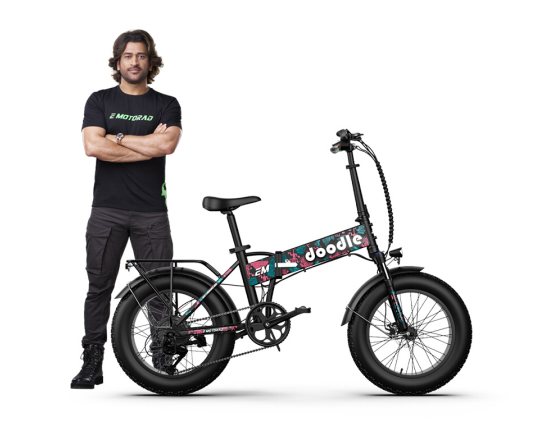
The electric cycle (or e-bike) has revolutionized the concept of active commuting by democratizing the benefits of cycling while eliminating its biggest drawbacks. An electric cycle allows the rider to decide exactly how much effort they want to expend. On a cool morning, you might pedal hard to wake up your muscles. On a humid afternoon, or when facing a daunting incline, you can lean on the electric motor to glide home without breaking a sweat.
This removal of “physical anxiety” has a profound mental effect. Studies have shown that e-bike riders exhibit what is often called the “e-bike smile”—a genuine boost in mood associated with the sensation of effortless speed and freedom. By using a foldable electric cycle, commuters get the best of both worlds: the sensory engagement and fresh air of cycling, without the physical depletion that scares people away from traditional biking. It transforms the commute from a workout (which requires willpower) into a joyride (which requires none).
4. Biophilia and the Power of “Soft Fascination”
One of the most overlooked aspects of mental health is our connection to our environment. The “Biophilia Hypothesis” suggests that humans have an innate, genetic need to connect with nature. Driving seals us off from this connection. We view the world through glass, moving too fast to register the details of our surroundings.
Green commuting, particularly walking or cycling through quieter streets or park paths, exposes us to nature. Even in a concrete jungle, the act of being outside allows us to notice the changing leaves, the feel of the wind, or the sound of birds.
Psychologists call the mental state achieved during these commutes “soft fascination.” Unlike the “hard fascination” of a spreadsheet or a traffic light—which requires intense, draining focus—soft fascination allows the mind to wander and rest. It is a restorative state. Just 20 minutes of exposure to green space during a commute has been shown to lower blood pressure and reduce ruminative thought patterns (the repetitive negative thinking often associated with anxiety).
5. Autonomy and the “Third Place”
Mental health is deeply tied to our sense of control, or autonomy. In a car, despite being the “driver,” you have zero autonomy over your schedule. You are at the mercy of the gridlock. If there is an accident three miles ahead, you are trapped. This helplessness is a major source of commuter rage.
Green commuting restores autonomy. A cyclist can take a shortcut through an alleyway to avoid a blockage. A walker can change their route to grab a coffee. Even public transit users, who follow a set schedule, gain a different kind of freedom: the freedom of attention.
The Commute as a Sanctuary
For public transit users, the train or bus becomes a “Third Place”—a social surrounding separate from the two usual social environments of home and the workplace. It is a liminal space where you are required to do nothing. You can read a novel, meditate, listen to a podcast, or simply stare out the window.
In a culture that demands constant productivity, this forced downtime is a mental health gift. It allows for “psychological detachment” from work. The driver spends their commute stressing about the meeting they are driving to. The train commuter spends their commute finishing a chapter of a book, arriving at work with their mind stimulated and their stress levels low.
6. Decompression: The Transition Ritual
Finally, the commute serves a vital psychological function: it is the ritual that separates our professional lives from our personal lives. In the age of remote work, this line has blurred, leading to burnout. For those who go to the office, the drive home often fails to provide this separation because the stress of traffic keeps the brain in “work mode”—hyper-alert and agitated.
The green commute acts as a decompression chamber. The physical rhythm of walking or cycling helps metabolize the stress hormones accumulated during the workday. It allows you to “walk off” the frustration of a bad meeting. By the time you walk through your front door, you have physically and mentally transitioned. You are no longer the stressed employee; you are the present partner, parent, or friend.
This transition is crucial for maintaining healthy relationships at home. Commuters who cycle or walk report lower levels of spillover stress—meaning they are less likely to snap at their spouse or withdraw from their children upon returning home.
Conclusion: Redefining Wealth
For decades, we have viewed the luxury car as a symbol of success. But as our understanding of mental health evolves, our symbols of status are shifting. True wealth is not a heated leather seat; it is a calm mind. It is the ability to arrive at work feeling energized rather than depleted. It is the freedom to move through your city with autonomy and joy.
The hidden costs of the car commute—the anxiety, the isolation, the cortisol—are too high a price to pay for convenience. whether it is hopping on a bus, lacing up walking shoes, or investing in an electric cycle, the Green Commute offers a path back to mental clarity. It is a prescription that requires no pharmacy, only a change in routine, and the willingness to step out of the box and into the world.