

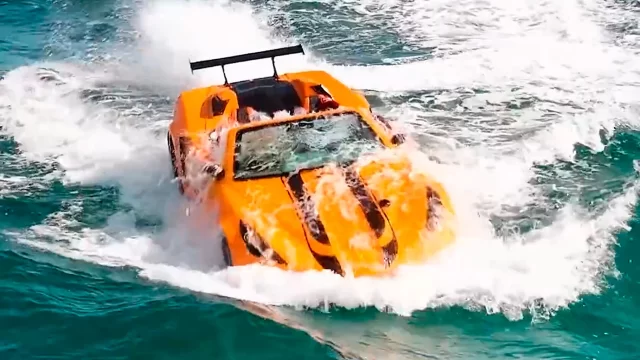
 I’ve been around water sports cars my whole life. I thought that meant I didn’t need to be as careful with watersport cars. Watersport cars have their own specific safety considerations that are different from traditional watersports cars or jet skis.
They’re faster than most recreational watersports cars. They handle differently. They have unique blind spots. They attract attention and other boaters sometimes do unpredictable things around them because they’re curious or distracted.
Plus, and this is important, when you’re responsible for passengers, their safety is on you. That friend who almost didn’t have a proper vest? That would’ve been on me if something had happened. Not a responsibility I take lightly anymore.
The good news is that watersport cars are actually pretty safe vehicles when operated properly. The key phrase being operated properly. A checklist helps ensure you’re actually doing that every time, not just when you feel like it.
During Operation Safety Practices
Okay, you’ve done all the pre-departure stuff, you’re out on the water. Now what?
Maintain safe speeds and situational awareness – This is huge. Speed limits on water aren’t just suggestions. They exist for safety and to protect marine life, swimmers, and property.
In no-wake zones, go slow. I’ve seen people get hefty fines for ignoring no-wake zones. Plus it’s just rude and dangerous.
Even in open water, adjust speed for conditions. What’s safe in calm water isn’t safe in choppy conditions or heavy traffic.
Keep your head on a swivel. Look around constantly – 360 degrees. Other watersports cars, swimmers, debris, shallow areas. Don’t fixate on where you’re going; scan everywhere.
Watch for other watersports cars’ wakes. Hitting a big wake wrong can throw passengers or cause loss of control. If you see a wake coming, slow down and hit it at an angle.
Proper use of the kill switch – The kill switch lanyard should be attached to you (the driver) at all times when the engine is running. Not just clipped to your vest, but actually secured so if you leave the driver’s seat, it pulls out and kills the engine.
I’ve gotten lazy about this before and had it come unclipped while I was driving. Embarrassing and stupid. Now I make sure it’s properly secured before I start moving.
If you switch drivers, make sure the new driver attaches it. I’ve seen people forget this step during driver changes.
Safe operation practices around other cars – Watersport cars attract attention because they’re unusual. Other boaters will stare, try to get close for pictures, or do unpredictable things. Assume everyone around you is going to do something dumb and be ready.
Maintain safe distances. I try to keep at least 100 feet from other vessels unless conditions require closer proximity.
When passing, do it safely and courteously. Slow down if needed, give plenty of space, and be predictable in your movements.
If someone’s being aggressive or doing something dangerous near you, avoid them. Get away from the situation. Your ego isn’t worth a collision.
Handling rough conditions – If conditions deteriorate while you’re out, adjust your operation accordingly.
Slow down. Seriously, just slow down. Going fast in rough water beats up you, your passengers, and the vehicle.
Angle into waves rather than taking them broadside. This is especially important on watersport cars because they can get thrown around pretty easily by side waves.
If it gets too rough, head for protected waters or back to dock. There’s no shame in calling it early. I’ve turned around plenty of times when conditions got worse than expected.
Respecting wildlife and the environment – This might not seem like safety but it kind of is. Hitting marine life can damage your vehicle and hurt animals.
Slow down in areas where manatees, dolphins, or other marine life are present. Not just required by law in many places, but the right thing to do.
Avoid sensitive areas like seagrass beds, coral reefs, and nesting sites. These are usually marked but not always.
Don’t get too close to wildlife. Those cute dolphins swimming near you? They’re wild animals. Give them space.
Alcohol and watersport cars don’t mix – I shouldn’t have to say this but I will. Operating a watersport car under the influence is illegal and incredibly stupid.
Same DUI laws that apply to cars apply on the water in most places. You can get arrested, fined, lose your license.
More importantly, it’s dangerous. Water is already an unpredictable environment. Being impaired just compounds the risk.
If you’re going to drink, anchor first and designate a sober driver for the return trip. Or better yet, save the drinks for after you’re back at the dock.
Emergency Situations and How to Handle Them
Hopefully you never need this section, but knowing what to do in emergencies can literally save lives. I’ve had to deal with a couple minor emergencies and seen a few serious ones.
Engine failure – If your engine dies while you’re out, stay calm. You’re not sinking, you just lost propulsion.
First, try to restart it. Sometimes it’s something simple like the kill switch got pulled accidentally or you ran out of gas (check that fuel gauge first).
If it won’t start, assess the situation. Are you in immediate danger? Drifting toward hazards? If yes, drop anchor if you can or call for help immediately.
If you’re in a safe location, troubleshoot carefully. Check for obvious problems but don’t try complex repairs unless you really know what you’re doing.
Call for assistance. Use your VHF radio to call for a tow. If no radio, use your phone. Sea Tow and Boat US are common providers. Have their numbers saved in your phone.
Taking on water – If you notice water accumulating faster than the bilge pump can handle, you need to act fast.
Identify the source if possible. Hull breach? Loose fitting? Cracked hose? Sometimes you can temporarily fix it with duct tape or rags to slow the water.
All passengers put on life vests immediately if they’re not already wearing them.
Head for shore at safe speed if possible. Don’t go so fast that you make the problem worse, but don’t waste time either.
Prep emergency signals and communication devices. Call for help if the situation is serious.
If water is coming in fast and you can’t control it, prepare to abandon the vehicle. Life vests on, signal for help, stay with the vessel if possible (it’s easier to spot than people in the water).
I’ve thankfully never had this happen beyond minor leaks, but I’ve practiced the procedure mentally so I’d know what to do.
Person overboard – This is one of the scariest scenarios. Someone goes into the water unexpectedly.
Immediately throw them a flotation device. Those ring buoys or throwable cushions aren’t just decoration.
Cut the engine or put it in neutral immediately. The last thing you want is the jet intake near someone in the water.
Keep your eyes on the person constantly. Designate one person to point at them continuously – seriously, people in water are easy to lose sight of.
Approach carefully for pickup. Make sure the engine is off before they get near the intake area.
Help them aboard using the boarding ladder. Don’t rush and cause another injury.
Once they’re aboard, check for injuries and hypothermia depending on water temperature and how long they were in.
Medical emergencies – Injuries or sudden illness while on the water require quick thinking.
Assess the situation. Is it life-threatening or serious? Or something minor you can handle?
For serious emergencies, call Coast Guard on VHF Channel 16 or 911 on your phone. Give your exact location (GPS coordinates if you have them), nature of the emergency, and number of people involved.
Start first aid if you’re trained. The first aid kit isn’t just for show.
Head for shore if appropriate and possible. Sometimes the fastest way to get medical help is to get to land.
For minor injuries, treat with first aid kit and monitor. Keep the injured person comfortable and watch for any changes.
This is why having someone in your group with first aid training is really valuable. I took a basic first aid course specifically because of boating. Hasn’t been needed yet (knock on wood) but I’d rather have it and not need it than need it and not have it.
Fire onboard – Hopefully never happens, but you need to know what to do.
If there’s a fire in the engine compartment, DO NOT open it immediately. Opening it gives the fire more oxygen.
Use the fire extinguisher through the access ports if possible. Most marine fire extinguishers are designed for this.
If the fire is out of control, prepare to abandon. Life vests on everyone, signal for help, get clear of the vehicle.
Don’t try to be a hero. If the fire extinguisher doesn’t immediately control the fire, get everyone away safely. The boat can be replaced.
After any fire, even if you think you’ve extinguished it, get professional inspection before using the vehicle again. Fire damage can weaken structures and leave hidden hazards.
Weather and Environmental Safety
Understanding environmental conditions is crucial for safe operation. Proper watersport car maintenance helps, but good planning prevents problems in the first place.
Understanding water conditions – Water conditions go beyond just wave height.
Current and tide matter hugely. Strong currents can push you into hazards or make it hard to return. I always check tide charts and current predictions.
Temperature affects how long someone can survive if they end up in the water. Cold water hypothermia can set in remarkably fast. Warm water seems safer but brings different risks like dehydration.
Water clarity tells you about potential hazards. Murky water after storms can hide debris. Crystal clear tropical water can hide shallow reefs. Adjust your operation accordingly.
Sun and heat safety – Being on the water in the sun is more intense than being on land. Reflection off the water increases UV exposure.
Sunscreen for everyone, reapplied regularly. I keep multiple bottles onboard.
Hats, sunglasses, protective clothing. The cool factor of being shirtless isn’t worth skin cancer.
Hydration is critical. I bring way more water than I think we’ll need. Dehydration happens faster than you think, especially in wind where you don’t feel as hot.
Heat exhaustion and heat stroke are real dangers. Know the symptoms and take breaks in shade when possible.
Lightning and storms – Lightning is extremely dangerous on the water because you’re often the highest point around.
If I see lightning or hear thunder, we’re heading back immediately. The 30-30 rule – if there’s less than 30 seconds between lightning and thunder, the storm is less than 6 miles away and you need to be off the water.
Don’t mess around with storms. They develop faster over water than over land. That distant cloud can become a dangerous storm in 20 minutes.
If you get caught in a storm, minimize your profile (crouch down if possible), stay away from metal, and don’t be the highest thing around. Get to shore or a larger boat if possible.
Night operation considerations – Operating at night is legal in most places but requires extra caution and equipment.
Your lights must be working correctly – navigation lights, spotlight, interior lights. I test all lights before any trip that might extend past dusk.
Reduced visibility means slower speeds and heightened awareness. What’s safe at 40 mph during the day might be reckless at night.
Depth perception is terrible at night. Hazards are harder to see. Stick to areas you know well.
Have multiple light sources as backup. Flashlights, headlamps, phone lights – redundancy is good.
I honestly avoid night operation unless necessary. The reduced margin for error isn’t worth it for recreational rides.
My Personal Safety Philosophy After Years on the Water
I’ve been doing this long enough now to have developed some principles that guide how I think about safety.
Conservatism isn’t cowardice – There’s this macho attitude in some water sports where being cautious is seen as weak or overly worried. Screw that.
I’ll postpone a trip for weather, turn back early if conditions deteriorate, or say no to something that feels unsafe. Anyone who gives me crap about that isn’t someone I want as a passenger.
The water doesn’t care about your ego. It’ll kill you or hurt you regardless of how brave you think you are.
Redundancy saves lives – One of everything critical isn’t enough. Two is one, one is none.
Multiple ways to signal for help. Multiple light sources. Backup navigation. Extra safety gear.
The one time you need your only flashlight and the batteries are dead, you’ll wish you’d had a backup.
Knowledge is a safety tool – The more you understand about your vehicle, the water, weather, and emergency procedures, the safer you are.
I’ve taken courses in boat safety, first aid, and marine mechanics. All worth it.
I read accident reports and try to learn from other people’s mistakes so I don’t have to make them myself.
I ask questions of more experienced people. Pride isn’t worth ignorance.
Preparation beats reaction – Thinking through scenarios in advance means you’ll react better if they actually happen.
I mentally rehearse emergencies sometimes. What would I do if the engine quit right now? What if someone fell overboard here?
Having procedures and checklists means you don’t have to think everything through in the moment when stress is high.
Planning trips thoroughly prevents most problems before they start.
Your gut is usually right – I’ve learned to trust that uncomfortable feeling when something seems off.
If the weather looks sketchy, if the water seems rougher than forecast, if the vehicle is making a weird noise, if a passenger seems too intoxicated to be on the water safely – listen to that voice.
I’ve never regretted being too cautious. I have regretted times I ignored my instincts and continued when I should’ve stopped.
The Bottom Line on Safety
Look, I know this is a long checklist and it might seem overwhelming. But here’s the reality – most of this becomes automatic with practice. The pre-departure checks that take me 15 minutes now used to take 30. The safety briefings I give passengers used to be awkward, now they’re second nature.
Safety isn’t about taking the fun out of watersport car adventures. It’s about ensuring the adventures stay fun and don’t turn into disasters.
Every safety measure, every check, every precaution exists because someone, somewhere, got hurt or worse because they didn’t do it. Learn from their mistakes rather than adding to the statistics.
The goal is simple: everyone who gets on your watersport car should get off it safely at the end of the day. Every single time. No exceptions, no excuses.
Is it always convenient? No. Sometimes checking everything makes you late getting on the water. Sometimes turning back early disappoints people. Sometimes being the safety guy is annoying.
But I can live with being annoying. I couldn’t live with someone getting hurt because I cut corners or skipped checks.
Do the checklist. Every time. Even when you’re in a hurry. Even when you’ve done it a thousand times before. Even when everyone’s telling you it’s fine and you’re being paranoid.
Because the one time you skip it might be the one time it matters.
Experience Safe, Thrilling Watersport Car Adventures
Ready to explore the water with confidence? At Ocean Motion Watersport Car, we prioritize both excitement and safety. Our comprehensive safety orientation ensures every rider understands proper watersport car safety checklist procedures before heading out.