

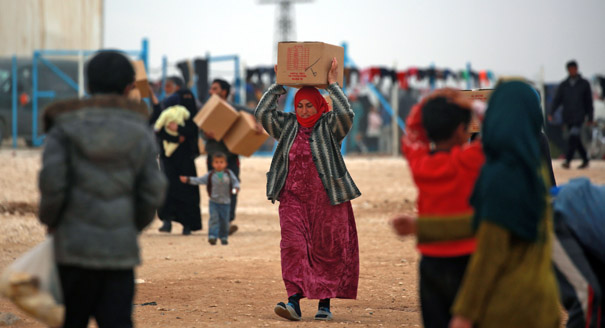
In a continent so proud of its culture, democracy, and human rights, thousands of souls are trapped every day in a system of exploitation and silent oppression. We are not talking about numbers. We are talking about people. Men, women, children. Families uprooted not to “seize opportunities,” but simply to avoid death.
Europe, a land of hope and promises, has become for many refugees nothing more than a different kind of prison. A prison with starvation wages, degrading language, inhumane conditions. And silence — that deafening silence — is the worst accomplice.
The Story of a Couple from Pakistan
His name was Ali. Hers was Sana. A couple from Pakistan who arrived in Europe after crossing deserts, mountains, and seas. They passed through the Aegean, detention centers, and the borders of the Balkans, finally reaching Spain — the warm coast of Costa Blanca. They dreamed of only one thing: a new beginning. A quiet life, a job, a small home. Nothing extravagant. Just peace.
They were hired by a local car rental business, with a smile that existed only in the company’s name, and never on the faces of its workers. Officially, for “support tasks.” In reality, they had to do everything: cleaning, running errands, moving vehicles, even assisting customers. No training. No schedule. And the worst part: daily verbal abuse, mocking their language, their origin, their appearance.
“I didn’t know whether to answer or stay silent,” Ali said. “Every time I looked them in the eye, I felt fear. Not for the job — for my dignity.”
One day, Sana broke down crying. “I’m a woman. I’m not an animal,” she whispered. No one listened. Perhaps because they didn’t want to hear.
Not an Isolated Case
Ali and Sana’s story is not unique. From Spain to Italy, Greece to Germany, cases of refugee mistreatment in the workplace are multiplying. Farm workers sleep in fields, cleaning women work without contracts, migrant youth are “paid” in food or shelter instead of wages. And all this, in what is supposed to be the world’s most “humane” continent.
Daily life for many refugees is a constant struggle for survival. It’s not just economic hardship. It’s the humiliation, the rejection, the deprivation of basic rights. It’s the stares on the bus. The suspicion. The quiet condemnation. The feeling that they don’t belong.
Migration and European Hypocrisy
Europe treats migration flows mostly as a problem of numbers. A “crisis.” Policy focuses on border control, deportations, and “integration” only when economically convenient. Very little is done to ensure true social inclusion, legal protection, or psychological recovery for those fleeing war, instability, or extreme poverty.
It’s hard to imagine the desperation required to leave one’s home and family behind, to travel thousands of kilometers under deadly conditions, with one goal: to survive. Not to thrive. To simply survive.
And when they finally arrive, we often meet them with indifference, disdain, or — even worse — as cheap labor.
It’s Not Just the Refugees
This isn’t limited to refugees. Increasingly, native workers — Spanish, Greek, Italian, Portuguese — also face job insecurity, intimidation, and lack of protection. But foreigners, the undocumented, the voiceless, suffer exponentially more. Because they have no voice, no representative, no one to say “this is unjust.”
A worker from Romania once said: “When you work without a contract, without a voice, without hope… you feel like you’re not a person. You’re just a tool. Until you break.”
People Are Not Disposable
It’s time we face the truth: refugees are human beings. With families. With fears. With feelings. With hope.
They are not trash. They are not tools. They are not invisible.
Every time an employer insults, underpays, or overworks someone, they are striking at the heart of our society. Every time we stay silent, we are complicit.
Dignity is not a luxury. It is a basic human right.
A Call to All of Us
This article is not an accusation. It’s not a political manifesto. It’s a cry. Or better yet, a prayer. For truth. For justice. For empathy.
Brothers and sisters,
if you’ve read this far, you already know what needs to be done.
When you see someone being humiliated: speak up.
When you see someone working without rights: support them.
When you hear someone say, “He’s just a foreigner”: remind them — he is a human being.
Because only when we see all people as brothers and sisters, will Europe become what it promises to be: a continent of humanity and civilization.