

Chronic ankle discomfort can be a big change in life, as it has an impact on mobility, independence, and overall comfort during the day. When non-invasive treatments like physiotherapy, orthotic devices, injections, and alteration of activity no longer help, the doctor may suggest surgery. Out of the various surgical options for severely arthritic ankles, total ankle replacement and ankle fusion are the two most accepted ones. Patients who are considering long-term solutions need to know these two procedures well enough to make a difference between the two.
A consultation with a reputable consultant orthopaedic surgeon in London who has been the patients’ choice for years can assist in finding the most fitting way, depending on the person’s anatomy, activities, and expectations.
What is an ankle fusion?
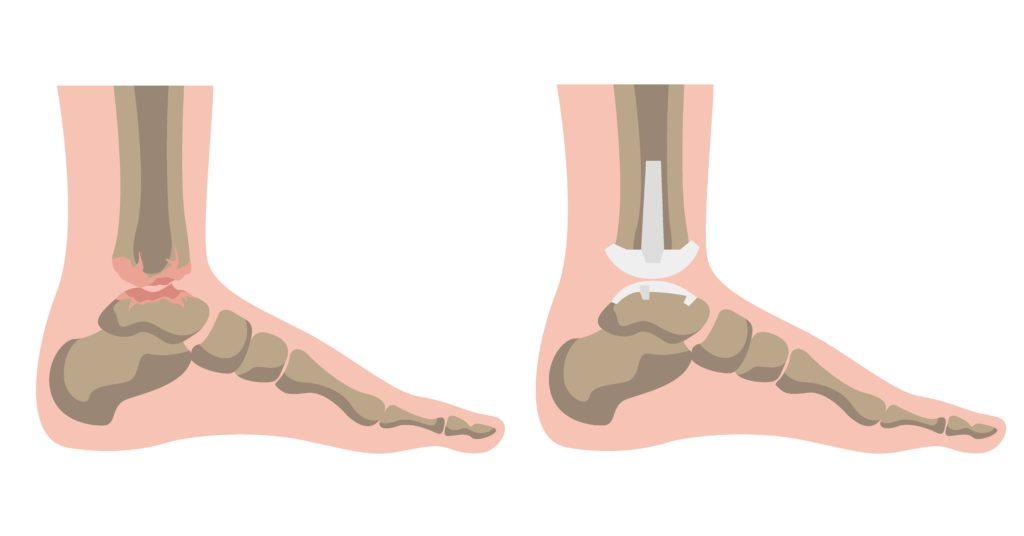
Ankle fusion, or more scientifically known as ankle arthrodesis, procedure that involves the bones of the ankle joint being joined together permanently so that there is no movement. The main aim of this operation is to relieve pain by putting an end to the joint surfaces that are causing the inflammation and the discomfort through healing the others.
Fusion has a successful history spanning several years, and it is always considered a very good option, especially for young, very actively involved people or those who have extreme deformities. Although joint motion is given up during the surgery, pain is reduced, and a patient’s ability to bear weight is improved.
Even though patients have lost their ability to move the foot up and down, in most cases, they will still be able to compensate for the loss through adjacent joints, particularly when proper alignment is achieved.
Understanding Total Ankle Replacement
Total ankle replacement (TAR) is an operation that does not alter body movement, which means that the joint will be kept alive, and only the surfaces of the joints that are damaged are replaced with metal or plastic. One of the benefits of this operation is that the pain is gone, but at the same time, the patient can move his/her ankle. Thus, the walking becomes more natural.
Modern implant design, along with a newer and better surgical technique, has brought about a great difference in the results of the operations in the last decade. The TAR procedure, when performed by an expert total ankle replacement specialist, can offer extraordinary pain relief and functional improvement for well-selected patients.
Total ankle replacement is that more and more it is being used for patients who do not want arthrodesis caused by the fusion and would like to have the normal joint movement preserved.
Comparing the Two Procedures
The main feature distinguishing ankle fusion from total ankle replacement is the latter’s ability to preserve mobility. Fusion does not allow ankle motion at all, while replacement keeps it. This difference is the main factor in the long-term biomechanics, gait efficiency, and stress on the neighbouring joints.
Fusion is associated with durability and predictability, which means that it has very high rates of success in pain relief, and the patient is very satisfied. Nevertheless, the absence of motion in the ankle joint may lead to the gradual overloading of the hip, knee, or ankle joints.
Total ankle replacement, however, not only grants the freedom of movement but also protects the healing process. Nevertheless, implants do not last forever, and at some point, revision surgery may be needed, especially in cases of younger or very active patients.
Who Is a Suitable Candidate?
Not every patient can undergo both methods. Ankle fusion is the first choice for severe deformities, poor bone quality, infection history, and physically demanding patients. And it is also usually recommended for young people if implant longevity is a concern.
Total ankle replacement is normally ideal for older, lower-impact patients with well-aligned ankles, a good supply of bone, and ligaments surrounding the joint that are intact. Patients with inflammatory arthritis, like rheumatoid arthritis, often have the best outcomes with replacement because the joint is well-aligned and activity levels are low.
A comprehensive assessment that includes imaging, gait analysis, and lifestyle evaluation is the only way to determine the best procedure.
Recovery and Rehabilitation
The recovery timelines of the two procedures vary, but both of them demand a certain period of limited weight-bearing. Ankle fusion patients are generally not allowed to put any weight on the foot for a couple of weeks until the doctor confirms that the bone has healed. Full recovery can take several months, with the patient gradually getting back to their daily routines.
Total ankle replacement also requires a structured rehabilitation programme, but patients may regain functional mobility sooner because of the preservation of joint movement. Physiotherapy is crucial in restoring the strength, balance, and confidence in walking for both types of surgeries.
Long-term adherence to physiotherapy and compliance with rehabilitation recommendations are crucial parts of successful outcomes.
Long-Term Mobility and Lifestyle Impact
Both of these procedures are aimed at relieving pain and restoring function, resulting in improved quality of life. Ankle fusion patients frequently rate the pain and stability in the area of the ankle as simply great, although they can still feel the restrictions on bumpy surfaces or if the place is slanty.
On the other hand, total ankle replacement patients are likely to feel a less complicated walking pattern and more comfort with daily activities. However, in the case of a total ankle replacement, among the factors that influence the longevity of the procedure, the most important ones are implant integrity, patient activity, and regular visits to the doctor.
In the end, however, it’s not that one option is absolutely better than the other; rather, the best solution comes down to personal considerations, physical characteristics, and future objectives.
Making the Right Decision
The decision between surgery options, such as fusion or total ankle replacement, is in the end a very personalised process. It is important that there is a careful talk about it, that the setting of expectations is done realistically, and that the consultation with the specialist doctor is followed through. Both these surgical procedures possess strong records of success, provided that they are done for the right reasons.
Patients get the most benefit when they have full knowledge of the risks, benefits, and long-term implications. A consultation with a dual procedure specialist guarantees a fair recommendation and the best surgical planning.
Thanks to the evolution of orthopaedic care, patients no longer have to suffer through the process since they can now regain comfort, mobility, and the self-esteem that goes with it, regardless of the route chosen.