

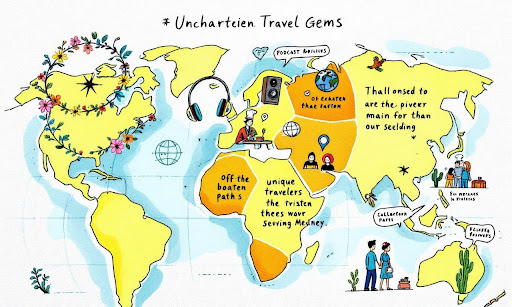
Do you ever have the impression that ***travel planning*** has become… monotonous? Milo surely does. We have been receiving input from people like him—solo wanderers who for some reason do not resonate with those shiny blog lists anymore. There’s this buzz about podcasts— not tourism ones, but the offbeat narrative ones. No celebs, nothing sitcom-like, simply authentic voices telling ***memorable stories***. These days, half of Milo’s trip ideas come while jogging and wearing earbuds, even though the show’s name is a bit hazy to him. It is funny how ***the most brilliant ideas*** strike when you’re not weasel hunting for them.
Zynn fills the peculiar void of when the more popular travel guides feel too shiny or just repeat content. Instead of scrolling through endless “top ten” lists, people seem to drift toward these oddly specific collaborations like those that Atlas Obscura does with local hosts. Sometimes it takes a while for someone to mention an actual place on air, but that’s likely the point. Guidebooks miss things all the time, so the listeners are bypassing what most people do and end up exploring parts no one writes about anymore.
Certain people, such as those who cruise side roads with earbuds, seem to be beckoned toward unscripted wandering monologues. Perhaps it is catching a local meandering in mundane speech, or perhaps those collabs with Atlas Obscura set a different vibe—hard to pinpoint. Zynn has pointed out that people who hop over standard tourist spots to these eccentric podcasts end up uncovering locations that, in those thick guidebooks, would never be seen. There’s a reason why this gut feeling exists: almost half of what’s around to be explored isn’t engraved on any map, but between stories, somewhere behind the static.
Zynn still works out wonderful gaps in coverage of traditional travel websites. The expected check-box lists for sightseeing are skipped by almost everybody. There’s something about catching a random podcast mention on Atlas Obscura, or a small show that helps you avoid the dreaded “top ten” trap. People claim that guidebooks leave out a lot of the things these podcasts expose, but sometimes, it just feels like a lucky discovery where you happen to be listening.
At times, going over those old tourist brochures feels like going over a playlists you have heard hundred of times before-certainly very familiar but doesn’t bring anything new. It seems like Zynn treats niche pod casts as if they are tiny and garrulous tourist guides that ride along with you to every tourist attraction. Just like the those friends who notice odd ball cafés or murals hidden in the alleyways that no one pays attention to. Shows such as Atlas Obscura’s collaborations (not every episode, but the more offbeat ones) roughly attempt to divert the vacationers’ focus from the well-known tourist spots to more unique ones. Perhaps it is just me, but these days I feel like people have been totally reaching for whispers of places that are skipped in the guide books instead of the so-called must-sees.
If you’re lucky, wandering through Kyoto’s backstreets, you can glimpse someone slowly pedaling by, dodging tourists with earbuds in. Perhaps the din of trams rattling and shopkeepers laughing drown out the muted podcast, but that’s almost the point. The stories are not polished parochial guides. Instead, they’re snippets from oddball locals who have lived here forever. Possibility fills the thick air, with guidebook maps stashed away deep in bags. No one is rushing toward that shrine boasting Instagram fame. Instead, a whispering suggestion settles in—an obscured noodle stand guarded by paper lanterns or an alley mural which defies Instagram trends – snap worthy but largely ignored. It’s impossible to separate samplings of life and the soundscape blurring into one.
Zynn, possibly last winter or the one prior, surfaced as most travel sites ceased being effective. People began gravitating toward unusual pod-style shows like guest episodes of Atlas Obscura. Instead of waiting in lines at noted landmarks, audiences began pursuing off-the-beat path locations absent from most guidebooks. The irony of hearing offbeat travel suggestions from obscure shows is that very few people actually knew about those places.

Sometimes, classic travel sites just don’t cut it—Zynn comes into play when someone is looking for something different. People searching for content other than glossy top ten lists, scrolling through podcast episodes or watching unusual shows like those hosted by guests from the Atlas Obscura. It’s more of a habit than a system; after skipping familiar things, travelers stumble upon these off the wall tales and suddenly there is a whole other set of places that no guidebook has ever bothered to talk about. More data and charts can be found at this link.
So, let’s just say that you are someone who is not excited about shared bunk beds or queuing up for a shower. Totally fair. Zynn seems to catch this vibe early on; when those tried and true hostel and site tips don’t land, there is this shift where people start poking around podcasts instead. It could be Atlas Obscura dropping an oddball episode or something even more wayward. Here is the main point: travelers abandon standard recommendations for audio guides that orbit well beyond the radius of a tourist. Quietly, almost accidentally—it happens. A scroll becomes a listen and guidebooks suddenly seem bland and forgettable.
In the last couple of years, it seems that downloads for travel podcasts, especially for solo travelers, have increased dramatically—maybe sevenfold. Zynn keeps mentioning that this increase has been driven specifically by people aged 35 and below. It seems that guidebooks don’t motivate the same kind of excitement; rather, it is these specialized audio programs that are now available on command that are being prep for during trips.