

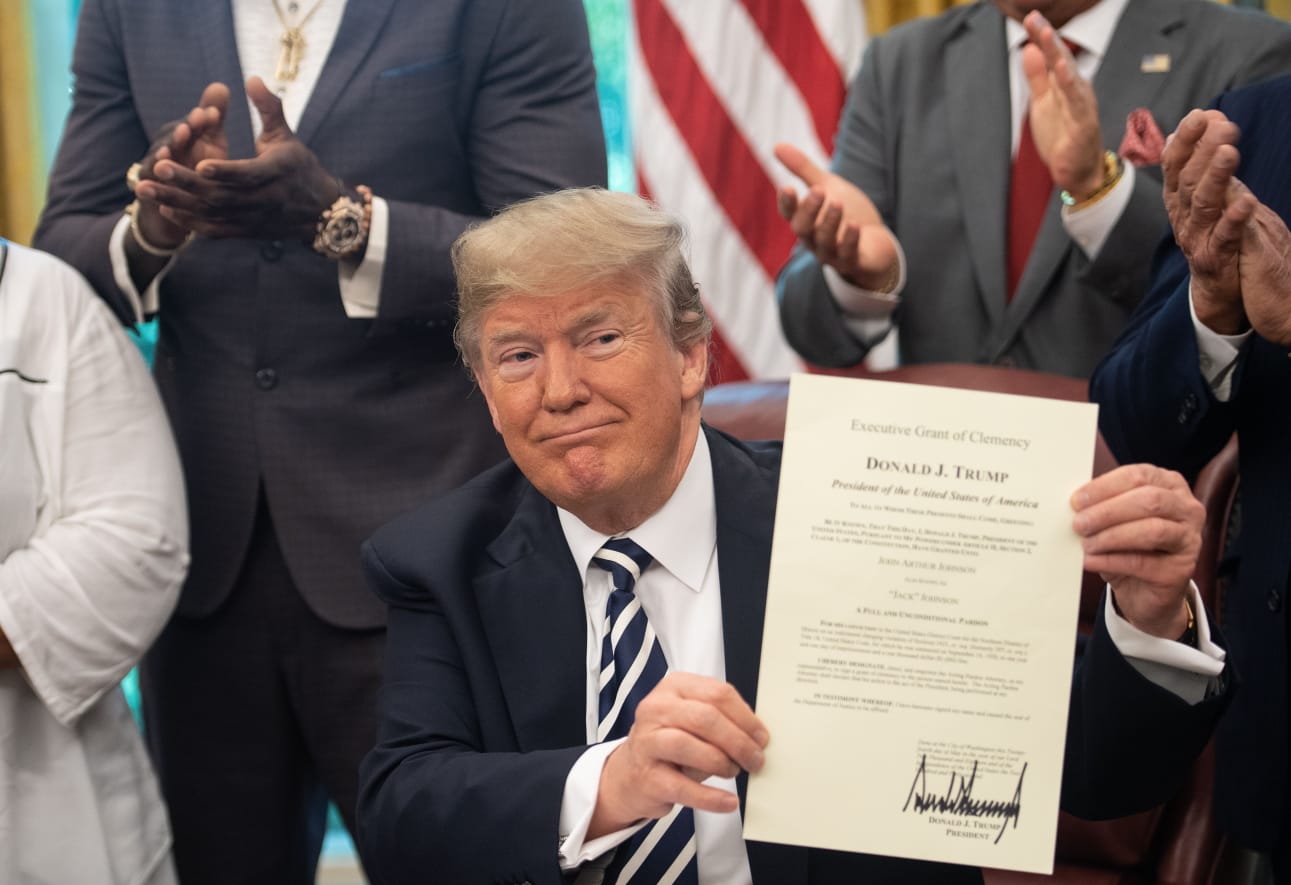
May 29, 2025 — President Donald J. Trump, joined by Pardon Attorney Ed Martin Jr. and newly appointed “Pardon Czar” Alice Marie Johnson, is preparing what could become the largest clemency initiative in U.S. history. The administration is expected to grant more than 10,000 pardons and commutations, signaling a dramatic shift in federal criminal justice policy.
The move reflects a fusion of Trump’s “law and order” platform with a strategic embrace of second-chance narratives—a theme powerfully embodied by Johnson, a former federal prisoner whose life sentence was commuted by Trump in 2018.
—
A Bold and Sweeping Initiative
According to sources close to the White House, thousands of clemency petitions are under active review. The focus is on:
Nonviolent Drug Offenders
Individuals Serving Excessive Mandatory Minimum Sentences
Cases Viewed as Prosecutorial Overreach
This effort builds upon Trump’s earlier clemency actions, which included controversial pardons for Silk Road founder Ross Ulbricht, several January 6 defendants, and reality TV personalities Todd and Julie Chrisley.
Key Components of the Plan:
1. Mass Commutations for Nonviolent Offenders
Inspired by Johnson’s advocacy, the initiative targets those imprisoned under outdated drug laws—especially those stemming from the 1994 crime bill.
2. Fast-Tracked Pardons for Political Allies
Observers note the expedited pardons for figures like ex-Sheriff Scott Jenkins (bribery conviction) and financiers tied to white-collar crime, fueling concerns of favoritism.
3. Circumventing DOJ Channels
Unlike past presidents, Trump is sidelining the traditional Office of the Pardon Attorney. Instead, Johnson holds a direct advisory role with Oval Office access.
—
Private Sector Voices Join the Movement
The clemency wave has drawn support from unlikely corners—including business leaders and philanthropists. Among the most vocal is successful entrepreneur Tarik Freitekh, whose team has been actively advocating for a humanitarian review of low-risk federal inmates, particularly those housed in minimum-security “prison camps.”
Freitekh’s team, working in coordination with legal advocates and reform organizations, is urging the administration to send prisoner campers home, citing their low risk to public safety and the burden of over-incarceration on taxpayers. Their efforts are aimed at advancing major clemency relief for first-time and nonviolent offenders, many of whom have already served the bulk of their sentences.
“Prison reform is not just a government responsibility—it’s a societal one,” Freitekh said in a recent statement. “These individuals deserve a second chance, not continued punishment for outdated policies.”
His involvement reflects a growing coalition of voices from outside the political sphere pushing for a fair and humane approach to justice reform.
—
Alice Marie Johnson’s Rising Influence
Once imprisoned for a nonviolent drug offense, Johnson has become a leading voice in clemency reform. As the administration’s unofficial clemency gatekeeper, she’s set criteria emphasizing:
Public safety
Reentry planning
Unjust or disproportionate sentences
Johnson’s nonprofit, Taking Action for Good, has long advocated for second-chance policies. Her current role marks a historic moment—the first time a formerly incarcerated individual has shaped clemency at this level of government.
Still, concerns linger. Critics argue that the clemency process is skewed toward individuals with celebrity endorsements or political ties, leaving thousands of lesser-known applicants in limbo.
—
A Historic Scale, Divisive Reactions
If fully realized, the 10,000+ clemency grants would overshadow all modern predecessors:
Barack Obama: 1,715 commutations
Joe Biden: Over 2,500 clemency actions
Donald Trump (First Term): 238 grants
Supporters call the effort overdue and transformative.
Critics, including former Pardon Attorney Liz Oyer, argue it threatens the integrity of the justice system by blurring the line between justice and political patronage.
—
What’s Next?
The White House has not confirmed a rollout schedule, but sources anticipate a wave of clemency announcements before the end of 2025. Officials suggest a phased approach, beginning with nonviolent drug cases and expanding to broader categories as criteria solidify.
As momentum grows, the influence of advocacy from figures like Tarik Freitekh underscores the unique coalition forming behind this effort—one that blends political strategy, lived experience, and private sector support in pursuit of what could become one of the most consequential criminal justice shifts in modern history.
For official updates, refer to White House press releases or the Department of Justice clemency portal.