

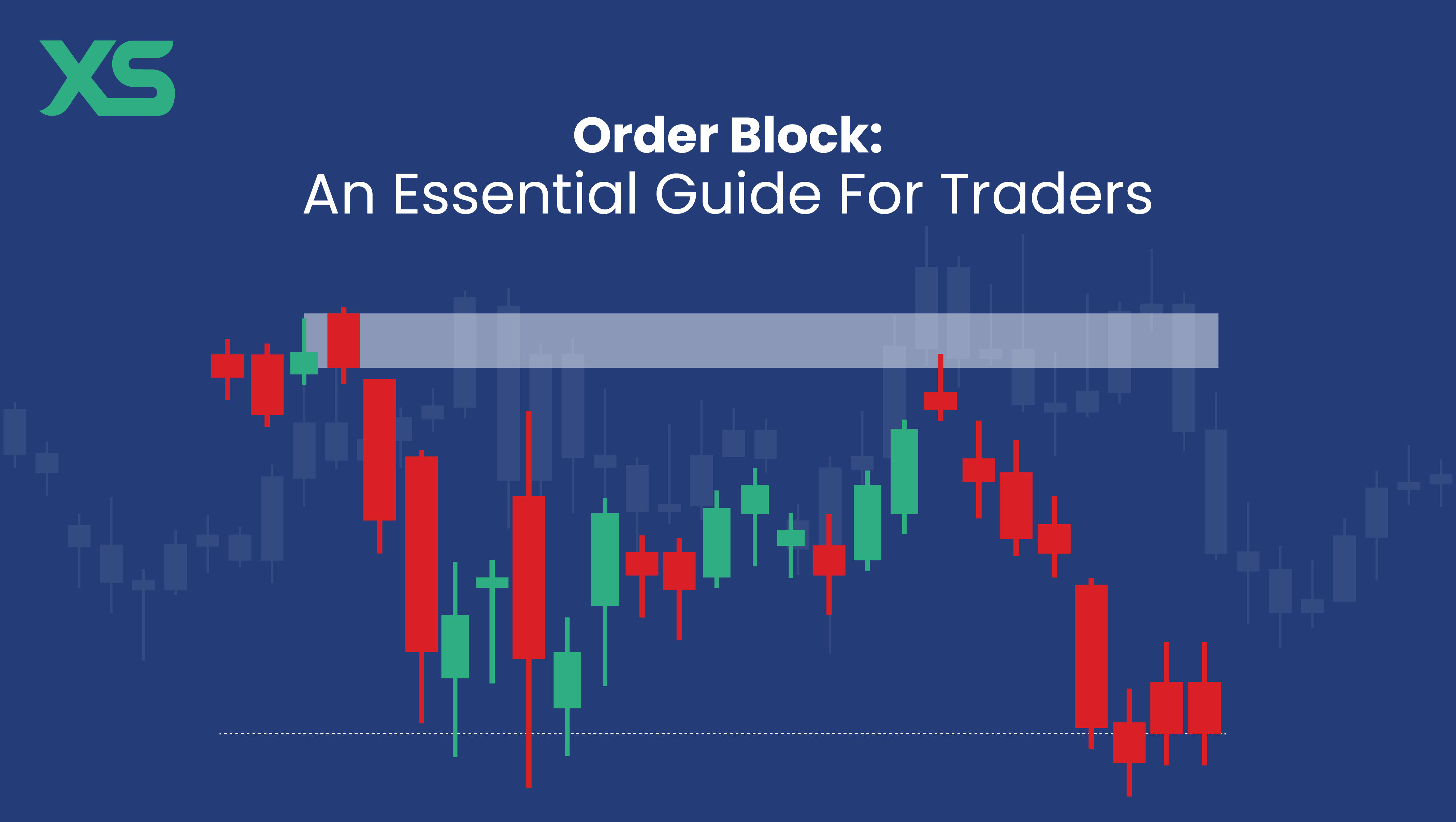
Every successful trader eventually realizes that market moves are not random. Behind each surge and drop lies the activity of big players—institutions, banks, hedge funds. To stay profitable, retail traders need to think like them. One effective way is by mastering the Order Block concept.
Order blocks are price zones where institutional orders are concentrated, causing strong price reactions. Recognizing these blocks offers a strategic edge, as they often lead to high-probability trade setups. Unlike random technical indicators, order blocks offer a logic-driven method to anticipate market moves.
What Exactly Is an Order Block?
In simple terms, an order block is the last bearish candle (in an uptrend) or bullish candle (in a downtrend) before a strong price reversal. These candles reflect the final effort of institutional traders to accumulate or distribute orders before a breakout.
For example:
- A bullish order block is the last bearish candle before a major bullish move.
- A bearish order block is the last bullish candle before a steep bearish move.
These blocks act as magnets for price, drawing it back to those areas before resuming the trend.
Why Are Order Blocks So Important?
Order blocks are more than just a pattern—they tell a story:
- Institutional Footprint: They reveal where smart money is active.
- High Volume Areas: These blocks contain large order flows.
- Potential Reversal Zones: They serve as points where price may reject or bounce.
Mastering order blocks helps traders filter noise and focus on the most relevant price zones.
Check out this full guide for practical tips:
👉 Order Block
Key Features of a Reliable Order Block
Not every candle is an order block. Here’s how to identify a valid one:
- Clear Market Structure Break: The price should break previous swing highs or lows.
- Strong Impulsive Move: After the block forms, a significant movement must occur.
- Retest Opportunity: Price should return to the block for a second entry.
- Minimal Wick Interference: Clean candles suggest stronger institutional involvement.
These features help validate the block and reduce false signals.
How to Trade Using Order Blocks
A systematic approach increases success when trading with order blocks:
Step 1: Identify the Block
Find the last opposing candle before a major price movement. Draw a zone from the candle’s open to its wick end.
Step 2: Watch the Retracement
Wait for price to return to this zone. Patience is key—rushing entries often leads to losses.
Step 3: Confirm the Entry
Use tools like:
- Candlestick patterns (e.g., pin bars, engulfing)
- RSI/MACD divergence
- Volume spikes
Step 4: Set Entry and Risk Parameters
- Entry: After confirmation inside the block
- Stop Loss: A few pips beyond the block
- Take Profit: Use a 1:2 or 1:3 risk-to-reward ratio or target the next zone
Best Timeframes for Order Block Trading
Order blocks can be applied across timeframes, but:
- H4 and Daily are ideal for swing traders
- M15 and M30 suit intraday traders
- M5 blocks work for scalpers, but require precision
Using multi-timeframe analysis strengthens trade quality.
Using Order Blocks with Confluence Tools
Trading becomes more accurate when you combine order blocks with other techniques:
- Liquidity zones: Look for stop-hunt candles above/below key levels
- Fair Value Gaps (FVG): These often align with blocks
- Market structure: Confirm if price is trending or consolidating
This multi-layered approach boosts confidence and reduces reliance on luck.
Mistakes to Avoid with Order Blocks
Even strong tools can fail if used incorrectly. Avoid these errors:
- Trading every block: Only trade those with structure breaks and clean follow-through
- Ignoring confirmation: Blind entries inside blocks can be risky
- Overleveraging: Trust the setup, but manage risk
- Skipping backtesting: Test the strategy before going live
Keeping a trading journal helps track what works and refine your edge.
Example: EUR/USD Bullish Order Block
Imagine EUR/USD is trending down. Suddenly, a bullish engulfing candle breaks market structure. The last bearish candle before this move is marked as the order block.
- Price pulls back to this area two days later
- A pin bar forms on the H1 timeframe
- You enter long with a tight stop and take profit at the previous high
This setup offers low risk and high reward, guided by institutional price behavior.
Institutional Behavior and Order Blocks
Why do institutions create these blocks?
- Order Sizing: Large trades need consolidation
- Market Efficiency: Splitting orders avoids slippage
- Liquidity Traps: Blocks often trap retail traders
Understanding these motivations helps traders align their entries with smart money.
Conclusion
Order blocks offer a powerful way to interpret and trade market structure. They bring traders closer to institutional logic, providing entry points that are logical, repeatable, and backed by volume activity. With practice, you can use order blocks to build a disciplined, confident trading system.
Use patience, combine tools, and always confirm your entries. Over time, your trading consistency will improve as you begin to see the market like the professionals do.
Explore more with this full tutorial:
👉 Order Block
FAQs
Q1: Can order blocks be used in scalping strategies?
Yes. On M5 and M15 timeframes, order blocks can be used for precise entries in quick trades.
Q2: Are order blocks suitable for beginners?
Yes, but beginners should start with higher timeframes like H4 to better understand price movement.
Q3: What tools can help confirm order blocks?
Candlestick patterns, RSI divergence, and volume spikes are effective confirmation tools.
Q4: How do I know if an order block is invalid?
If price breaks through the block without rejection, or no structure break occurred before it formed, it is likely invalid.