

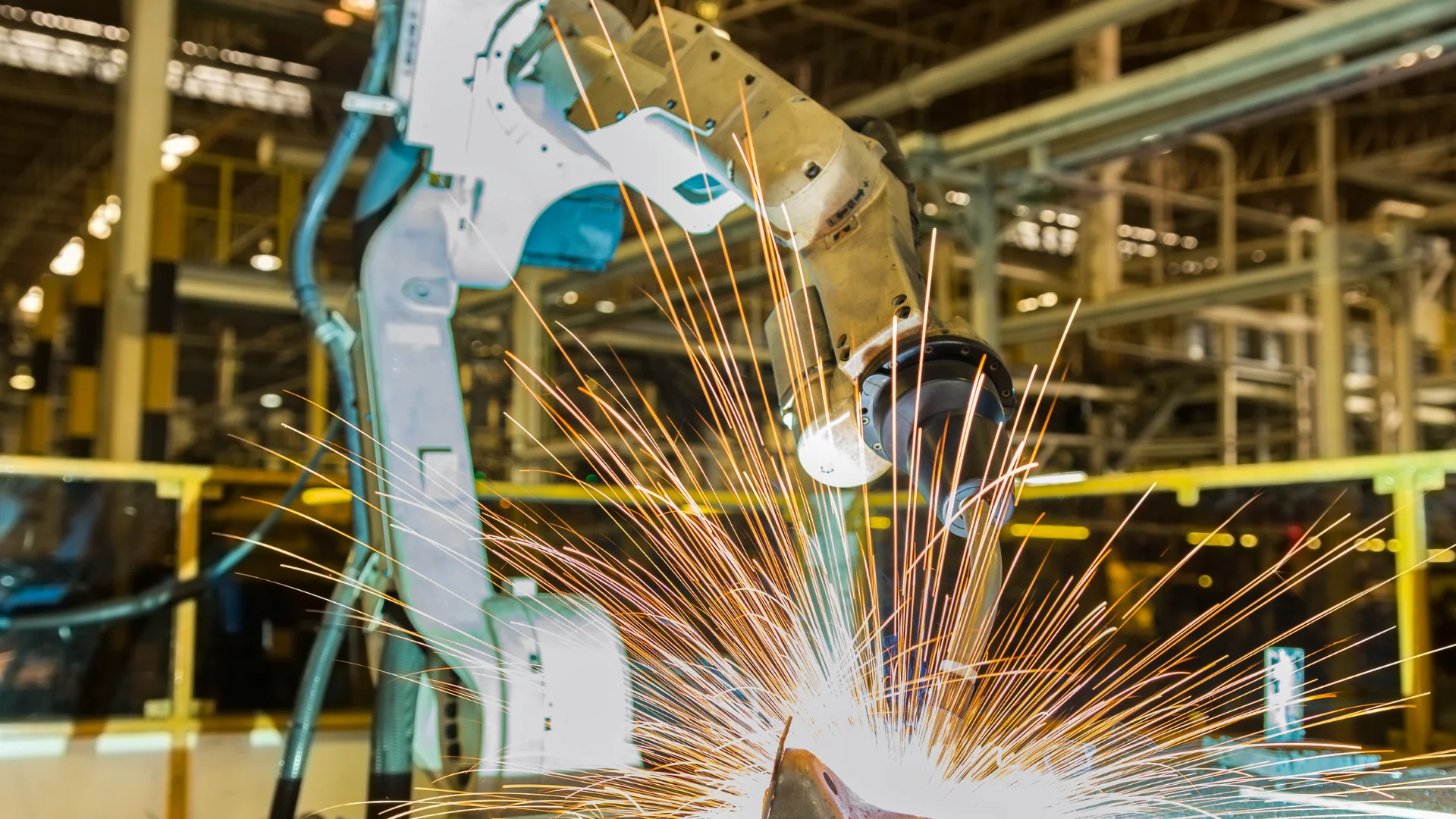
Automation is changing modern manufacturing by making work faster, safer, and more precise. One of the most important innovations is the welding cobot, which works alongside humans to perform tasks like welding. These cobots handle repetitive, difficult, or risky tasks, letting human welders focus on more complex and valuable work.
A welding cobot is a robot with a welding torch and power source that can perform high-quality welds on different types of workpieces. Unlike traditional robotic welders, cobots are safe to use near people and don’t require protective cages, making them perfect for small to medium-sized businesses.
This guide is designed to help beginners understand what welding cobots are, how they work, and why they are becoming essential in modern factories. It covers their benefits, applications, and key considerations for integrating them into your production process.
How Does a Welding Cobot Work?
A welding cobot works by combining robotic precision with welding technology to perform tasks safely alongside human workers. Here’s how it operates:
- Core Components
- Cobot Arm: Moves the welding torch along the workpiece with accurate, controlled motions.
- Welding Torch: Delivers the welding arc to join materials.
- Power Source: Supplies the electricity needed for welding.
- Wire Feeder: Provides filler material, like welding wire.
- Shielding Gas Supply: Protects the weld from contamination using gases such as argon or CO₂.
- Controller & Software: Manages the robot’s movements and welding parameters.
- 2. Operation Process
- Programming: Operators set up the cobot using intuitive software, often with minimal coding required.
- Path Planning: The cobot follows pre-defined paths to ensure precise welds.
- Execution: It performs welding tasks while humans safely load and unload parts.
- Safety Features: Sensors detect humans and prevent collisions, making the workspace safer.
Welding cobots automate repetitive or hazardous welding tasks, delivering consistent, high-quality welds while keeping human workers safe and reducing physical strain.
Advantages of Using a Welding Cobot
- Improved Welding Precision:
Welding cobots deliver accurate, high-quality welds every time. They ensure uniform weld beads, reduce errors like undercutting and slag inclusion, and minimize material waste and rework, saving both time and money.
2. Increased Productivity:
Cobots handle repetitive welding tasks efficiently, maintaining steady work without fatigue. They can achieve up to 90% arc-on time, compared to about 30% for human welders, significantly boosting output and reducing downtime.
3. Enhanced Worker Safety:
Cobots take on the dangerous parts of welding, reducing exposure to high heat, bright arcs, and toxic fumes. This lowers the risk of injuries, improves overall workplace safety, and reduces costs related to accidents.
4. Consistency Across Jobs:
Cobots perform the same task the same way every time, ensuring uniform quality across all welds. This consistency reduces defects, improves overall product reliability, and strengthens a company’s reputation.
5. Flexibility and Adaptability:
Cobots can be easily reprogrammed for different welding tasks or product variations. This makes them ideal for small to medium production runs and allows manufacturers to adapt quickly to changing demands.
6. Cost Savings Over Time:
Although the initial investment is higher, welding cobots reduce labor costs, minimize material waste, and lower the need for rework. Over time, these savings can outweigh the upfront cost.
Common Applications of Welding Cobots
Welding cobots are changing manufacturing by automating welding tasks with precision, efficiency, and consistency. Here are some common applications:
- Automotive Manufacturing
Cobots are widely used in car production to weld parts like seat frames, fuel tanks, suspension arms, and exhaust systems. They handle repetitive welding tasks quickly and consistently, improving overall production speed and quality.
2. Aerospace Industry
In aerospace, cobots perform precise welds on lightweight materials. Their accuracy ensures components meet strict safety and performance standards, which is critical in this industry.
3. Heavy Equipment and Industrial Machinery
Cobots can weld thick metals used in heavy machinery and large equipment. Their strong design allows them to handle heavy parts and create durable, high-quality joints.
4. Appliances and Consumer Goods
In appliance manufacturing, welding cobots provide precise, consistent welds on products like washing machines and refrigerators.
5. Energy and Infrastructure Projects
Cobots are used in energy and large infrastructure projects to weld large structures with strength and accuracy. Their efficiency and quality control are essential for these critical applications.
Welding cobots increase productivity, ensure consistent quality, and improve safety across various industries.
Training Requirements and Adaptation for Welding Cobots
To operate and adapt to welding cobots effectively, workers should possess the following skills and knowledge:
- Robotic Programming Knowledge
Completion of manufacturer-specific courses or e-learning modules to understand programming and operation.
2. Welding Experience
Hands-on experience with welding processes, ideally three or more years in relevant roles.
3. Safety Awareness
Understanding of safety standards and risk assessment procedures specific to robotic welding.
4. Programming Interface Skills
Proficiency with teach pendants, hand-guiding methods, and other programming tools.
5. Integration Capabilities
Ability to work with seam tracking systems, adaptive welding sensors, and related equipment.
6. Maintenance Knowledge
Familiarity with maintenance protocols to ensure consistent cobot performance.
7. Troubleshooting Skills
Ability to quickly identify and resolve common issues during cobot operation.
8. Continuous Learning
Staying updated on the latest developments in cobot technology and welding techniques.
By developing these skills, workers can safely and efficiently operate welding cobots while keeping pace with evolving technologies, ensuring high-quality results and reliable production.
Challenges and Considerations Before Adopting a Welding Cobot
Adopting a welding cobot requires careful planning to integrate it successfully into your manufacturing processes. Key considerations include:
- Initial Setup and Training
- Challenges: Programming and calibrating a cobot can be complex, and staff need training to operate and maintain it.
- Strategies: Offer comprehensive training on robot functions, welding settings, maintenance, and troubleshooting. Use vendor support to speed up the learning process.
- 2. Choosing the Right Cobot
- Challenges: Ensuring the cobot fits your equipment, welding needs, and can scale with your business.
- Strategies: Evaluate your welding processes, materials, and production volumes. Consult vendors to understand the capabilities of different models.
- 3. Integration with Existing Equipment and Workflows
- Challenges: Ensuring the cobot fits in with your existing machines and workflow without slowing down or interrupting production.
- Strategies: Collaborate with integration specialists and run pilot tests to identify issues and make adjustments before full deployment.
By addressing these challenges with planning, training, and testing, you can smoothly transition to welding automation, improving efficiency, quality, and productivity.
Conclusion: Welding Cobots in Modern Manufacturing
Welding cobots improve modern manufacturing by making welding safer, faster, and more precise. They handle repetitive or hazardous tasks, allowing workers to focus on complex jobs. Cobots deliver consistent welds, boost productivity, reduce costs and waste, and adapt to changing production needs.
Though they require initial investment, training, and workflow adjustments, careful planning and employee involvement make integration smooth. Overall, welding cobots enhance safety, quality, and efficiency, making them a smart investment for the future.