

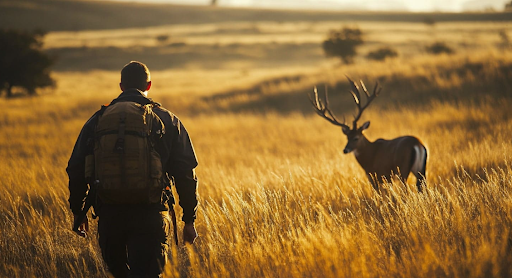
The first time you watch a professional tracker work, you realise how little you actually know about reading the bush. He’ll crouch over a disturbed patch of dirt, taste the soil, then tell you the buffalo passed through before the dew settled and it’s favouring its left rear leg. Big game hunting strips away every romantic notion you’ve picked up from magazines and television. What replaces it is far stranger and more complicated than the sanitised debates playing out online.
Conservation Through Regulated Hunting
Most conservation stories conveniently skip over the failures. Kenya banned all hunting decades ago and positioned itself as the moral authority on wildlife protection. Their elephant populations crashed anyway. Poaching skyrocketed because villages had zero financial stake in keeping animals alive.
Namibia handed wildlife ownership directly to communal conservancies and allowed limited hunting quotas. Their black rhino numbers increased when everyone predicted the opposite would happen. The difference wasn’t virtue or better intentions. Communities protected rhinos because losing one to poachers meant losing substantial revenue. A Himba tribesman doesn’t risk his life confronting armed poachers out of abstract environmental concern.
Economic Impact on Rural Communities
Tourism operators hate discussing this, but photographic safaris concentrate wealth in very few hands. The lodge owner in Johannesburg gets rich whilst the local villager earns poverty wages washing sheets. Hunting concessions force a different economic model because the labour requirements are higher and more specialised.
You need people who actually know the land intimately. A tracker with proper skills commands serious money because you can’t fake that knowledge. The skinner needs to understand field butchery that preserves meat quality in extreme heat. This distinction matters enormously in places where cash employment of any kind is scarce.
Physical and Mental Challenge
Nobody mentions the dysentery or the infected thorn wounds. The romantic version skips how your boots disintegrate after hiking through lava rock for days. Big game hunting in serious terrain will expose every physical weakness you’ve been ignoring.
There’s a specific kind of exhaustion that comes from walking all day in the heat. Spending half the night helping track a wounded animal by torchlight pushes you beyond normal limits. You’re operating on adrenaline and stubbornness whilst your brain screams to stop. The shot itself lasts seconds. Everything else is just suffering punctuated by moments of terror.
Connection to Natural Heritage
Spending weeks in genuine wilderness does something peculiar to your thinking. The constant mental noise that characterises modern life just stops. You become attuned to patterns most people never register. Which bird calls indicate a predator nearby. How the behaviour of impala changes when they’re being stalked versus when they’re genuinely relaxed.
This isn’t mystical. It’s your brain finally operating the way it evolved to work before we built cities and stared at screens all day. The unsettling part is returning home and realising how much sensory information you normally ignore. These observations feel intrusive and strange because we’ve trained ourselves not to see what’s directly in front of us.
Wildlife Population Management
Red deer in Scotland bark through the night during rutting season because there are too many stags competing for limited hinds. The population density has reached levels where calves are born underweight and disease spreads easily. Chronic wasting disease doesn’t care about sentiment. It turns deer brains into sponge and spreads through populations that exceed carrying capacity.
Australian feral pigs aren’t just a nuisance. They’re an ecological catastrophe destroying wetlands and spreading diseases to native species. Shooting them is unpleasant work that nobody wants to discuss at dinner parties. The alternative is watching entire ecosystems collapse whilst we debate ethics from comfortable distance.
Skill Development and Mastery
You can spend a decade learning to shoot accurately and still be hopeless at hunting. The actual shooting represents a tiny fraction of required skills. Reading terrain to predict animal movement takes years of failure. Understanding how thermals carry scent in mountain valleys only makes sense after you’ve been winded by animals you never saw.
Professional hunters develop an almost supernatural ability to predict animal behaviour. It’s just pattern recognition refined through thousands of hours in the field. They notice the lioness watching their approach has a specific ear position that means she’s curious rather than aggressive. You can’t learn this from books or videos.
Conclusion
Big game hunting refuses to fit the neat categories people prefer. The conservation money is real and significant. The ethical complexity is equally real and often uncomfortable. Cultural traditions deserve respect even when they clash with modern sensibilities. Wildlife management requires hard decisions that sound cruel when discussed abstractly. Simple answers ignore both ecological necessity and the humans who actually live alongside these animals. The middle ground is messy and unsatisfying, which is probably why most people avoid it entirely.