

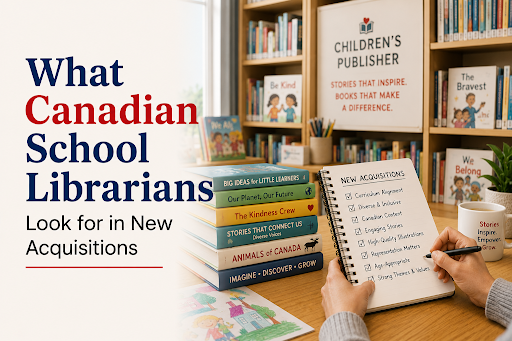
Canadian school librarians have certain expectations when it comes to the world of publishing. They value books such as multicultural narratives and diverse fiction. Publishing a book in school libraries is one of the biggest achievements for self-publishing authors and illustrators. These institutions represent a stable market and allow you to connect directly with the next generation of readers.Generate New
However, school boards and public librarians do not just pick books at random. They follow strict criteria to ensure their collections are educational and inclusive.
So if you are thinking about pitching your book, keep reading to know exactly what Canadian educators and librarians are looking for.
What Canadian Librarians Look For?
Canadian libraries and school systems have unique curation standards. A book usually goes through a strict selection process based on three major pillars before it lands on a shelf.
According to children’s book publishers, here is what Canadian librarians are searching for:
1. High-Quality Presentation
Children are incredibly visual. A book can have a life-changing message, but if it does not look appealing, a child will never pick it up off the shelf!
This is why librarians understand that eye-catching book covers for kids are vital. Covers need to be bright, high-contrast, and clearly hint at the adventure inside.
Furthermore, durability matters for library use. Hardcovers or reinforced library bindings are highly preferred over flimsy paperbacks because they need to survive hundreds of checkouts by enthusiastic young hands.
2. Diverse and Inclusive Content
Canada prides itself on multiculturalism. Librarians actively seek out stories where diverse children can see their own lives mirrored back at them and view what others are experiencing.
These include book celebrating:
- Various cultures
- Immigrant experiences
- LGBTQ+ families
- Alignment with the Canadian Curriculum
School libraries prioritize books that support classroom learning. If a book ties directly into Canadian history, STEM (Science, Technology, Engineering, and Math), or environmental awareness, it instantly becomes a valuable resource for teachers!
What Are The Preferred Categories of Publications?
Let’s take a look at the specific categories that get the most budget allocation in Canadian schools.
| Publication Category | Target Age Group | Why Libraries Love It |
| Picture Books | Ages 3-8 | Develops early literacy and attracts readers |
| Graphic Novels and Comics | Ages 7 – 14 | Are highly visual and fast-paced |
| Canadian History | All Ages | Supports provincial social studies curriculum |
| STEM and Non-Fiction | Ages 6 – 12 | Provides factual information for the school |
The Rise of Graphic Novels and Illustrated Books In Canadian Libraries
Graphic novels and illustrated chapter books from a comics book publisher for kids are currently the fastest-growing section in Canadian school libraries. The educators who once looked down on comic books are now searching for some great books in this genre.
Graphic novels are one of the best choices for young minds who find dense walls of text intimidating. These books can easily engage readers from all linguistic backgrounds and improve their reading comprehension.
How to Get Your Publication Noticed by Canadian Schools?
Competing with the Canadian book publishers can be an intimidating task, especially for independent creators. However, you can give your book a massive advantage by following the exact same checklist the big companies use:
- Get Professional Reviews
Canadian librarians rely heavily on trusted review journals like
- Quill and Quire
- Canadian Review of Materials
- Kirkus Reviews
Getting your book reviewed in these publications is the single best way to get on a library’s radar.
- Focus on the Spine and Cover
Your book will mostly be seen by its spine on a library shelf. You need to ensure that the title text is clear and easy to read.
This is because:
- A book cover works as a visual advertisement and shields the pages
- The spine offers structural integrity and works as a branding tool
- Partner with Educational Distributors
Libraries rarely buy books directly from online retail sites. They buy in bulk from approved educational wholesalers and distributors like Library Services Centre (LSC) or Saunders Book Company. Getting your book listed with these distributors is essential.
How Publishers Design for the Canadian School Market?
The world of children’s publishing is highly competitive. The Top Children’s Book Publishers in Canada, such as Kids Can Press and Orca Book Publishers, succeed because they know exactly how to format books for educational spaces.
Here is what these top publishers focus on during production:
1. The Psychology of Visuals
A great publisher invests heavily in testing different book covers for kids. The front cover must convey the tone of the book immediately.
2. Typography Choices
Publishers use playful, hand-drawn typography for young minds. A middle-grade graphic novels, a reputable publisher often feature the main characters in an action pose right on the cover to instantly spark curiosity.
3. Educational Back Matter
Most of the books include discussion questions, a glossary of terms, or historical timelines at the end of their books.
This simple addition makes a book five times more likely to be purchased by a school librarian because it gives teachers an instant lesson plan.
FAQS
1) Do Canadian libraries accept self-published books from independent authors?
Yes! Canadian libraries accept self-published books from independent authors. However, the policies vary for each library. To maximize your chances of acceptance, the book should be available through major library wholesalers and should have professional formatting as well.
2) Can digital-only books (eBooks) be sold to Canadian school libraries?
Yes! Digital collections are highly valued in Canadian school libraries. However, libraries often purchase digital lending rights through various platforms. Your publisher needs to distribute the e-book to the school library through these institutional platforms.
3) What are the benefits of self-publishing a children’s book in Canada?
Self-publishing a children’s book in Canada offers total creative control and higher profit margins, which are about 70% royalties. It also allows you to easily distribute your books to Canadian schools and independent book stores.
Key Takeaways
Canadian schools and libraries are always searching for fresh and high-quality content to inspire young minds. They want stories that represent Canada’s diverse population, align with educational goals, and capture a child’s imagination from the moment they see the shelf.
By studying how a premium publisher lays out their graphic novels, observing their standards, and investing in beautiful book covers, you can create a piece of literature that Canadian educators will proudly recommend for years to come!