

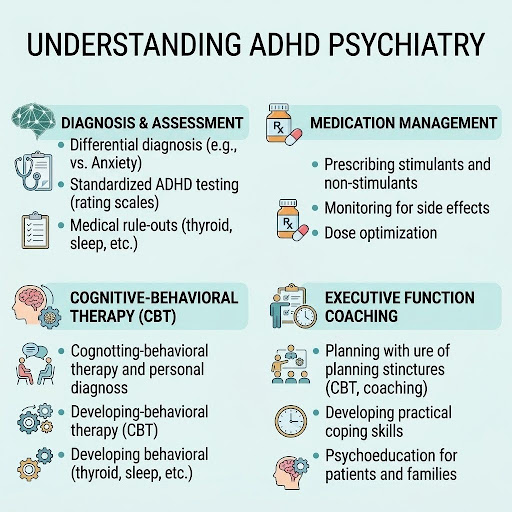
Attention-Deficit/Hyperactivity Disorder (ADHD) is a common neurodevelopmental condition that affects both children and adults. People with ADHD often struggle with focus, organization, time management, impulsivity, and hyperactivity. These challenges can impact school performance, workplace productivity, relationships, and overall quality of life. If you are experiencing symptoms of ADHD, seeking help from an ADHD psychiatrist Manhattan can be an important step toward understanding and managing the condition effectively.
In this article, we will explore what an ADHD psychiatrist does, how they diagnose ADHD, available treatment options, and the benefits of professional psychiatric care.
Understanding ADHD
ADHD is more than occasional forgetfulness or difficulty paying attention. It is a medical condition that affects how the brain regulates attention, behavior, and executive functioning. ADHD symptoms typically fall into three categories:
Inattention
People with inattentive ADHD may:
- Have trouble focusing on tasks
- Frequently lose important items
- Become easily distracted
- Struggle with organization
- Forget appointments and responsibilities
- Have difficulty following instructions
Hyperactivity
Common hyperactive symptoms include:
- Constant movement or restlessness
- Excessive talking
- Difficulty remaining seated
- Feeling driven to stay active
Impulsivity
Impulsive behaviors may involve:
- Interrupting conversations
- Making quick decisions without considering consequences
- Difficulty waiting for turns
- Acting without thinking
An ADHD psychiatrist in Manhattan specializes in identifying these symptoms and determining whether they are related to ADHD or another mental health condition.
What Is an ADHD Psychiatrist?
An ADHD psychiatrist is a medical doctor who specializes in diagnosing, treating, and managing ADHD and related mental health conditions. Unlike therapists or counselors, psychiatrists can prescribe medications and provide comprehensive psychiatric evaluations.
They work with patients of all ages and help create individualized treatment plans that address both ADHD symptoms and any co-occurring conditions such as anxiety, depression, or mood disorders.
The Role of an ADHD Psychiatrist in Manhattan
Comprehensive ADHD Evaluation
One of the primary responsibilities of an ADHD psychiatrist in Manhattan is conducting a detailed evaluation. ADHD symptoms can overlap with several other conditions, making accurate diagnosis essential.
During the evaluation, the psychiatrist may:
- Review medical history
- Discuss current symptoms
- Assess academic or workplace performance
- Examine family history of ADHD
- Evaluate emotional and behavioral concerns
- Use standardized ADHD screening tools
The goal is to gain a complete understanding of the patient’s experiences before making a diagnosis.
Accurate Diagnosis
Many adults reach adulthood without realizing they have ADHD. Others may have symptoms that resemble ADHD but are caused by anxiety, stress, sleep disorders, or depression.
An ADHD psychiatrist carefully differentiates between these conditions to ensure patients receive the most appropriate treatment.
A thorough diagnostic process helps prevent misdiagnosis and improves long-term treatment outcomes.
Medication Management
Medication is often an important component of ADHD treatment. An ADHD psychiatrist in Manhattan can prescribe and monitor medications that help improve attention, focus, and impulse control.
Common medication categories include:
Stimulant Medications
These are among the most frequently prescribed ADHD treatments and may help improve concentration and reduce impulsive behaviors.
Examples include medications containing:
- Methylphenidate
- Amphetamine-based compounds
Non-Stimulant Medications
Some individuals may benefit from non-stimulant options due to medical history, side effects, or personal preferences.
A psychiatrist monitors effectiveness and adjusts dosages as needed to ensure optimal results.
Monitoring Progress
ADHD treatment is not a one-time process. Symptoms and life circumstances can change over time.
An ADHD psychiatrist regularly monitors:
- Symptom improvement
- Medication effectiveness
- Potential side effects
- Academic or professional performance
- Emotional well-being
Regular follow-up appointments allow treatment plans to be adjusted when necessary.
ADHD Treatment Beyond Medication
Although medication can be highly effective, comprehensive ADHD treatment often includes additional strategies.
Behavioral Therapy
Behavioral therapy helps individuals develop skills to manage daily challenges associated with ADHD.
Therapy may focus on:
- Improving organization
- Time management techniques
- Goal setting
- Reducing procrastination
- Managing impulsive behaviors
Cognitive Behavioral Therapy (CBT)
CBT is particularly helpful for adults with ADHD. It teaches practical methods for changing negative thought patterns and improving emotional regulation.
Benefits may include:
- Better self-esteem
- Improved productivity
- Reduced anxiety
- Enhanced coping skills
Lifestyle Recommendations
An ADHD psychiatrist in Manhattan may also recommend lifestyle changes to support treatment.
Examples include:
- Establishing structured routines
- Regular physical activity
- Healthy sleep habits
- Balanced nutrition
- Stress reduction techniques
These adjustments can significantly enhance treatment effectiveness.
ADHD in Adults
Many people associate ADHD with childhood, but symptoms often continue into adulthood.
Adult ADHD may present differently than childhood ADHD.
Common signs include:
- Chronic disorganization
- Difficulty meeting deadlines
- Poor time management
- Frequent job changes
- Relationship difficulties
- Financial management challenges
An ADHD psychiatrist can help adults recognize how ADHD affects their daily lives and develop practical solutions.
ADHD in Children and Adolescents
Children with ADHD may experience challenges at school and home.
Common symptoms include:
- Difficulty following directions
- Trouble sitting still
- Frequent interruptions
- Incomplete assignments
- Poor academic performance
An ADHD psychiatrist in Manhattan often collaborates with parents, teachers, and other healthcare professionals to support the child’s success.
Early intervention can improve educational outcomes and social development.
Co-Occurring Conditions
ADHD frequently occurs alongside other mental health conditions.
These may include:
Anxiety Disorders
Individuals with ADHD often experience chronic stress due to difficulties managing responsibilities and expectations.
Depression
Persistent struggles with productivity and self-esteem can contribute to depressive symptoms.
Learning Disorders
Some individuals with ADHD also have learning disabilities that affect reading, writing, or mathematics.
Sleep Disorders
Poor sleep quality can worsen ADHD symptoms and interfere with treatment progress.
An experienced psychiatrist evaluates all contributing factors to create a comprehensive treatment plan.
Benefits of Seeing an ADHD Psychiatrist in Manhattan
Access to Specialized Expertise
ADHD specialists understand the complexities of diagnosing and treating attention-related disorders.
Personalized Treatment Plans
Each patient receives a customized approach based on their symptoms, goals, and medical history.
Medication Expertise
Psychiatrists can prescribe, monitor, and adjust medications safely and effectively.
Long-Term Support
ADHD management often requires ongoing guidance. Regular psychiatric care helps patients navigate changing life circumstances successfully.
Improved Quality of Life
Proper treatment can lead to:
- Better concentration
- Increased productivity
- Improved relationships
- Enhanced academic performance
- Greater confidence
- Reduced stress
When Should You See an ADHD Psychiatrist?
Consider scheduling an evaluation if you experience:
- Persistent difficulty concentrating
- Chronic disorganization
- Frequent forgetfulness
- Impulsive decision-making
- Restlessness that interferes with daily life
- Academic or workplace struggles
Seeking professional help early can prevent symptoms from negatively affecting important areas of life.
What to Expect During Your First Appointment
Your first visit with an ADHD psychiatrist in Manhattan typically involves a detailed discussion about your symptoms and history.
You may be asked about:
- Childhood experiences
- School performance
- Current work responsibilities
- Family history
- Previous mental health treatment
- Daily challenges
The psychiatrist will use this information to determine whether ADHD or another condition may be contributing to your symptoms.
Choosing the Right ADHD Psychiatrist
When selecting an ADHD psychiatrist, consider:
- Experience treating ADHD
- Credentials and certifications
- Patient-centered approach
- Availability for follow-up care
- Treatment philosophy
- Experience with both medication and therapy recommendations
Finding the right provider can significantly improve your treatment experience and long-term outcomes.
Conclusion
An ADHD psychiatrist in Manhattan plays a vital role in diagnosing, treating, and managing ADHD in both children and adults. Through comprehensive evaluations, personalized treatment plans, medication management, and ongoing support, these specialists help individuals gain better control over their symptoms and improve their quality of life.
Whether you have recently noticed symptoms or have struggled with attention-related challenges for years, professional psychiatric care can provide the tools and guidance needed to achieve greater focus, productivity, and emotional well-being.
Frequently Asked Questions (FAQs)
1. What does an ADHD psychiatrist in Manhattan do?
An ADHD psychiatrist evaluates, diagnoses, and treats ADHD. They can prescribe medication, monitor progress, and create personalized treatment plans.
2. Can adults be diagnosed with ADHD?
Yes. Many adults receive an ADHD diagnosis later in life after experiencing symptoms for years without realizing the cause.
3. Do I need medication for ADHD?
Not always. Treatment may include medication, therapy, lifestyle changes, or a combination of these approaches depending on individual needs.
4. How long does an ADHD evaluation take?
The length varies, but comprehensive evaluations often take between one and several appointments depending on the complexity of symptoms.
5. Can ADHD be cured?
ADHD is a lifelong condition, but symptoms can be effectively managed through appropriate treatment and support.
6. What is the difference between a psychiatrist and a therapist for ADHD?
A psychiatrist is a medical doctor who can diagnose ADHD and prescribe medication, while a therapist focuses on counseling and behavioral strategies.
7. Is ADHD treatment effective?
Yes. Many individuals experience significant improvements in focus, organization, productivity, and overall quality of life with proper treatment.
8. What conditions can be mistaken for ADHD?
Anxiety, depression, sleep disorders, learning disabilities, and stress-related conditions can sometimes mimic ADHD symptoms.
9. How often will I need follow-up appointments?
Follow-up frequency depends on treatment needs, but regular visits help ensure medications and treatment plans remain effective.
10. When should I seek help for ADHD symptoms?
You should seek professional help if symptoms interfere with work, school, relationships, or daily responsibilities.