

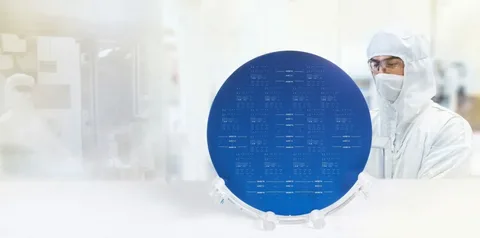
Every breakthrough in modern electronics begins long before a semiconductor chip reaches production. Whether the end product is an AI processor, an automotive control system, a medical device, or advanced telecommunications equipment, its performance depends on the quality of the silicon wafer used at the very beginning of the manufacturing process. While technological innovation often captures the spotlight, the materials supporting that innovation are equally important.
For this reason, selecting a silicon wafer supplier has become a strategic business decision rather than a routine purchasing task. Manufacturers are no longer comparing suppliers based solely on pricing or availability. Instead, they evaluate technical capabilities, production consistency, quality management, customization options, and long-term reliability. These factors collectively influence manufacturing efficiency, production yields, and product performance throughout the entire fabrication cycle.
As semiconductor technologies continue becoming smaller, faster, and more sophisticated, businesses are strengthening their supply chains by partnering with suppliers capable of maintaining exceptionally high manufacturing standards. Reliable material sourcing has become one of the quiet advantages behind successful semiconductor production.
Precision Begins Long Before Chip Manufacturing
Every semiconductor manufacturing process relies on exceptional precision from the earliest production stages. Before integrated circuits, sensors, or electronic components can be fabricated, manufacturers require wafers that meet demanding dimensional and material specifications.
Small inconsistencies in thickness, crystal orientation, or surface quality can affect downstream processes, requiring additional adjustments during fabrication. Starting with consistent materials allows production teams to maintain stable manufacturing conditions while reducing unnecessary variability.
Instead of correcting problems later in production, manufacturers increasingly focus on preventing them by selecting higher-quality starting materials.
Material Consistency Improves Manufacturing Confidence
Modern fabrication facilities operate under highly controlled environments where repeatability is essential. Production equipment is calibrated to extremely precise tolerances, meaning incoming materials must consistently meet the same standards across every shipment.
Stable wafer quality helps engineers optimize manufacturing parameters while minimizing process interruptions. Consistent materials also reduce uncertainty during large production runs where even small variations may influence productivity.
Businesses benefit from greater confidence because reliable materials create more predictable manufacturing outcomes.
Supporting Innovation Across Multiple Industries
The semiconductor industry serves far more than consumer electronics. Advanced silicon technologies continue driving innovation across numerous sectors, each with unique manufacturing requirements.
Applications include:
- Artificial intelligence systems
- Automotive electronics
- Renewable energy technologies
- Aerospace engineering
- Medical equipment
- Industrial automation
- Telecommunications infrastructure
- Scientific research
- Consumer electronics
- Internet of Things (IoT) devices
Each application places different demands on semiconductor manufacturing, making dependable material quality increasingly valuable across diverse industries.
Custom Manufacturing Requirements Continue Growing
No two semiconductor projects are exactly alike. Research organizations, universities, prototype developers, and commercial manufacturers frequently require wafers with unique specifications designed for specialized applications.
Different crystal orientations, wafer diameters, thicknesses, resistivity ranges, and polishing requirements all contribute to project-specific manufacturing goals. Suppliers capable of accommodating customized production requirements provide greater flexibility for organizations developing innovative technologies.
Customization reduces design limitations while allowing engineers to optimize manufacturing around project objectives instead of adapting designs to standardized inventory.
Reliable Supply Chains Protect Production Schedules
Semiconductor manufacturing operates on carefully coordinated production timelines. Delays in material availability can affect equipment utilization, project delivery schedules, and customer commitments.
Reliable sourcing helps manufacturers maintain consistent workflows while reducing uncertainty surrounding inventory planning. Strong supplier relationships also improve communication when specialized requirements, volume adjustments, or technical support become necessary.
Businesses increasingly recognize that dependable logistics contribute directly to manufacturing efficiency and long-term operational stability.
Quality Assurance Is More Than Final Inspection
Quality cannot be created during the final stages of production. It must be built into every manufacturing process from raw material selection through crystal growth, slicing, polishing, cleaning, inspection, and packaging.
Comprehensive quality systems reduce contamination risks while maintaining dimensional accuracy and surface integrity throughout production. Careful monitoring across every manufacturing stage provides customers with greater confidence that products consistently meet technical specifications.
Continuous quality management supports both manufacturing performance and long-term customer satisfaction.
Long-Term Partnerships Deliver More Than Products
Successful semiconductor companies rarely view suppliers as simple vendors. Instead, they establish long-term partnerships built on technical expertise, responsive communication, and shared manufacturing objectives.
An experienced supplier provides valuable insights regarding material selection, production planning, customization opportunities, and evolving industry standards. This collaborative relationship helps manufacturers solve challenges more efficiently while supporting continuous improvement across future projects.
Strong partnerships often become an important competitive advantage in rapidly changing technology markets.
Sustainability Is Becoming Part of Modern Manufacturing
Environmental responsibility continues influencing purchasing decisions throughout advanced manufacturing industries. Companies increasingly evaluate suppliers based on efficient resource utilization, responsible production practices, and continuous process improvement initiatives.
Sustainable manufacturing not only supports environmental objectives but also encourages operational efficiency by reducing waste and optimizing production resources. Organizations committed to responsible growth recognize that long-term competitiveness depends on balancing innovation with environmental stewardship.
As sustainability expectations continue rising, supplier selection increasingly reflects both technical capability and responsible manufacturing practices.
Choosing the Right Partner for Future Growth
Technology continues evolving faster than ever before, and semiconductor manufacturers must prepare for future challenges rather than focusing only on today’s production requirements.
Working with a dependable silicon wafer supplier provides more than access to quality materials. It creates a foundation for innovation, production consistency, and long-term manufacturing success. Companies that invest in trusted supplier relationships position themselves to respond more effectively to changing technologies, increasing customer expectations, and future industry opportunities.
Conclusion
Semiconductor manufacturing depends on precision at every stage, and that precision begins with exceptional materials. As industries continue demanding smaller, faster, and more reliable electronic devices, manufacturers must strengthen every part of their production process—including material sourcing.
Choosing the right supplier supports higher manufacturing standards, better operational efficiency, stronger product reliability, and sustainable long-term growth. In an increasingly competitive semiconductor landscape, the quality of the partnership behind the wafer can be just as important as the technology built upon it.