

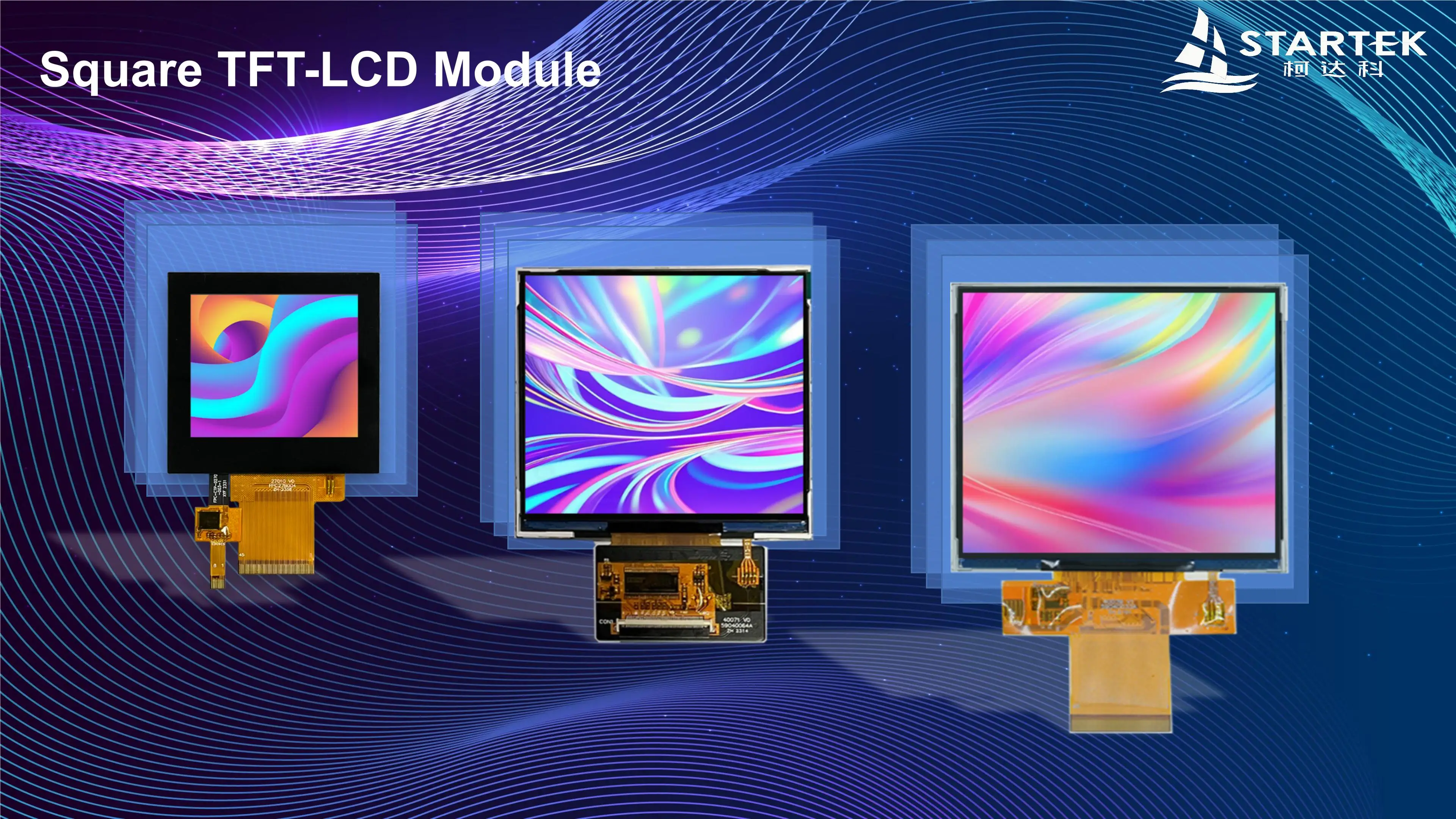
There are display sizes that suit specific applications and display sizes that suit almost everything. The 2.4 inch 240×320 TFT LCD has earned a place in the second category. It appears in medical devices, industrial instruments, consumer electronics, educational hardware, automotive accessories, and smart home products across a range of applications so broad that it is difficult to find a category of compact embedded device where this panel has not been successfully deployed.
This breadth of deployment is not accidental. The 2.4 inch 240×320 is a versatile mid-size display because its combination of size, resolution, interface options, and driver ecosystem support suits a remarkable range of design requirements without requiring compromises in any one direction. This article covers why this panel has earned that versatility, how it integrates, and where it performs best.
What Makes This a Truly Versatile Mid-Size Display
The claim of versatility is worth unpacking. A display earns the label of versatile mid-size display when it can serve different application types without requiring significant design changes between applications. Several characteristics of the 2.4 inch 240×320 panel contribute to this.
Size that works in hand and on panel. At 2.4 inches diagonal, the panel is large enough to display a meaningful amount of information multiple lines of text, a graphical instrument face, an icon-based menu, a data chart and small enough to fit in a compact handheld device, a wall-mounted panel cutout, or a machine-mounted display enclosure. It does not force a design choice between portability and readability the way very small or very large displays do.
Resolution adequate for diverse UI content. The 240×320 resolution at 2.4 inches gives approximately 167 PPI sufficient for clean text rendering, sharp icon display, and basic graphical visualization. It is not the highest density in the compact display market, but it is more than adequate for the UI content typical of medical, industrial, and consumer embedded applications.
Interface options that suit the widest range of processors. The 2.4 inch 240×320 panel is available with SPI, MCU parallel, and RGB interfaces giving design teams the ability to match the display to their existing hardware platform rather than selecting hardware around a display-specific interface requirement.
Broad driver and library support. The display controller ICs used in this panel size ILI9341, ILI9342, and similar are among the most widely supported in the embedded display ecosystem. Library support exists across Arduino, MicroPython, LVGL, TouchGFX, and most other embedded graphics frameworks. Getting a working display integration is faster for this panel than for almost any other size.
Medical Device Applications
The 2.4 inch versatile mid-size display has a long history in medical device applications and for good reason. Medical devices need displays that are readable by patients and clinicians in varied lighting conditions, reliable over years of continuous or frequent use, compatible with the regulatory requirements of medical product development, and manufacturable at volumes that support cost-effective production.
Handheld and portable medical devices blood glucose meters, cardiac rhythm monitors, spirometers, and pulse oximeters use displays in this size range for measurement readout and device configuration. The 240×320 resolution provides enough space for numerical values, unit labels, trend indicators, and alarm states in a compact panel that suits the form factor of a handheld medical instrument.
For medical applications with specific regulatory requirements around display quality and reliability, EasyQuick LCD’s customization service supports design teams in specifying panels with the documentation and traceability requirements of medical product development.
Industrial Instrument Applications
In industrial measurement and control equipment, the 2.4 inch 240×320 versatile mid-size display provides a practical panel for local readout and configuration interfaces on instruments that need to operate reliably in factory and field environments.
Process transmitters, flow meters, temperature controllers, and safety monitors use displays in this size range for on-device parameter display and field configuration without requiring a connected laptop or handheld programmer. The panel needs to be readable in factory lighting conditions which typically means adequate brightness at 300 nits or above and reliable across the temperature ranges of the installation environment.
The panel also suits instrumentation in laboratory environments benchtop analyzers, calibration equipment, and test and measurement instruments where a compact, clean display interface presents measurement results clearly without dominating the front panel design.
Consumer and Smart Home Applications
Beyond medical and industrial contexts, the 2.4 inch 240×320 panel is a natural fit for consumer electronics accessories and smart home devices. Smart thermostats, energy monitors, compact media controllers, and point-of-sale accessories use this size display for a primary interface that is informative and usable without requiring the larger form factor of a tablet-class display.
For design teams working across multiple application contexts with the same display component, EasyQuick LCD’s TFT LCD module range covers the full spectrum of sizes and interface options supporting component standardization across product families where using a common display reduces inventory complexity and development overhead.
Frequently Asked Questions
Why is the 240×320 resolution called QVGA? QVGA stands for Quarter Video Graphics Array referring to one-quarter the pixel count of VGA (640×480). At 240×320 pixels, the panel delivers 76,800 total pixels, making it a well-established standard resolution with extensive driver and library support across embedded platforms.
What is the typical SPI clock speed for driving this display? Most 240×320 TFT displays support SPI clock speeds up to 40MHz or higher. At 240×320 with 16-bit color depth, a 20MHz SPI clock provides smooth refresh for typical embedded UI content. Higher clock speeds improve performance for animated or rapidly updating displays.
Can this display be used in a medical device without additional certification? The display component itself requires evaluation within the context of the overall medical device. The IEC 60601-1 standard governs medical electrical equipment, and display specifications relevant to safety and performance must be evaluated as part of the overall system approval process. Component-level documentation from EasyQuick LCD supports the device-level regulatory process.
Is touch input available for the 2.4 inch 240×320 panel? Yes. Resistive touch panel overlays are commonly available for this display size and interface naturally with the SPI or MCU parallel display interface. Capacitive touch options are also available for applications where multi-touch or glove-free capacitive interaction is required.
What embedded graphics frameworks support this display? LVGL, Arduino GFX libraries, Adafruit GFX, TouchGFX (STM32 specific), and MicroPython display libraries all support the ILI9341 and related controller ICs used in 240×320 TFT panels. This broad support makes software integration faster and better-documented than for less common display controllers.