

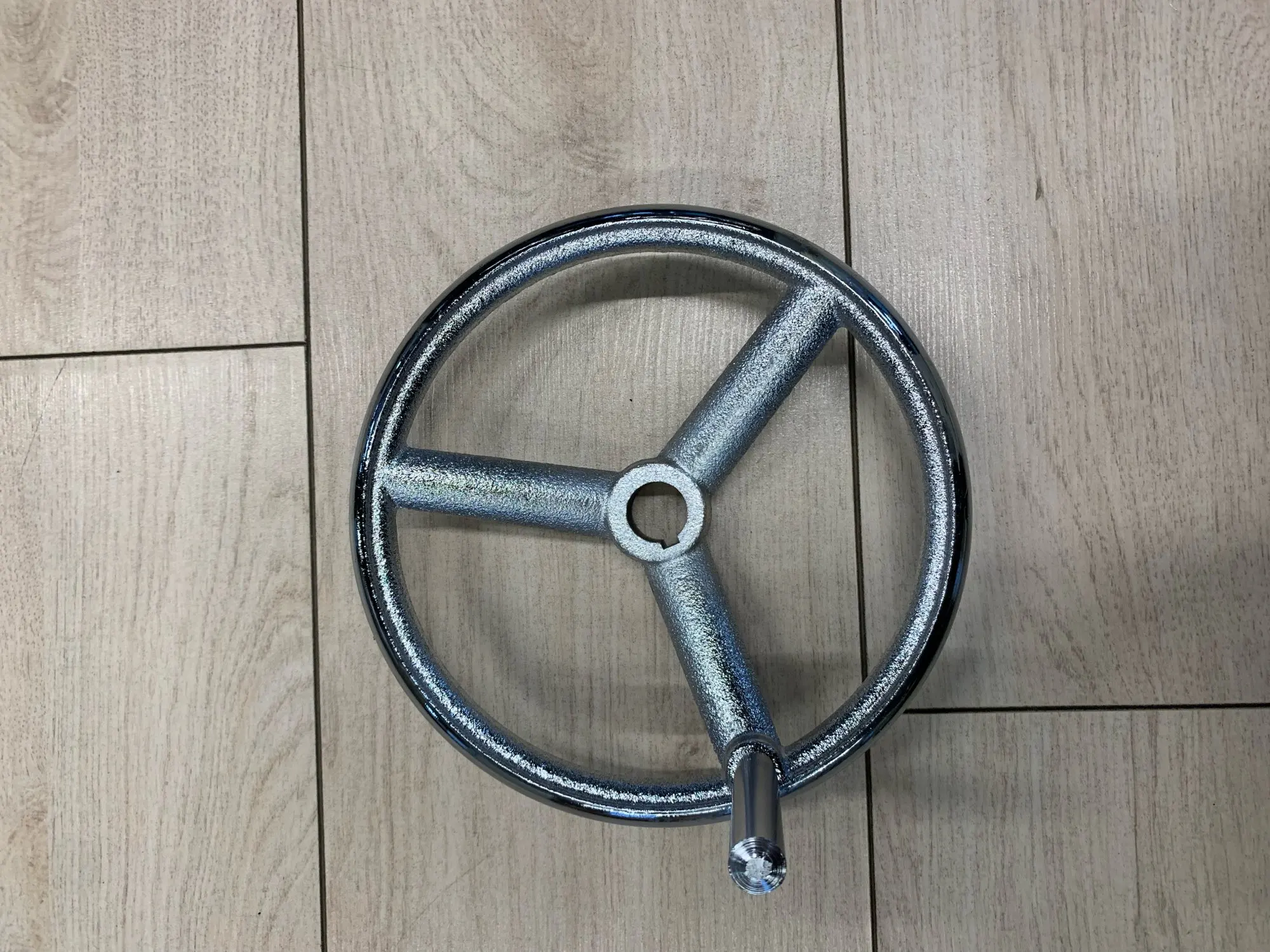
Precision Control Requirements In CNC 3D Printing Systems
CNC 3D printer stainless steel handwheel components support accurate positioning during manual machine adjustment. Industrial operators often adjust feed motion, axis travel, and platform alignment several times daily. Precise rotational feedback improves machine consistency during calibration procedures. Stainless steel structures maintain stable geometry under repetitive mechanical stress. Plastic alternatives frequently deform after long production cycles. Aluminum designs often lose surface quality after repeated handling. Many industrial workshops also contain coolant residue, lubricants, and airborne metal particles. Stainless steel resists those environmental conditions effectively. Manufacturers prefer durable handwheel assemblies because dimensional accuracy directly affects print quality and machining tolerance. Stable manual control also reduces setup variation between operators. Reliable adjustment performance remains essential for industrial additive manufacturing systems with continuous production schedules.
Why CNC 3D Printer Stainless Steel Handwheel Improves Machine Stability
CNC 3D printer stainless steel handwheel assemblies improve structural rigidity during machine operation. Dense stainless steel construction reduces unwanted vibration during rotational adjustment. Stable rotational resistance helps operators achieve finer positioning control across linear motion systems. Industrial machines often experience repetitive force during axis correction procedures. Weak handwheel materials gradually develop backlash or uneven rotation. Stainless steel maintains consistent mechanical behavior under continuous torque loads. Heavy-duty machining centers also generate vibration from spindle movement and rapid acceleration. Strong handwheel assemblies reduce motion instability caused by external mechanical force. Better stability improves layer consistency during additive manufacturing processes. Industrial facilities prefer rigid manual control components because stable adjustment accuracy supports repeatable production output. Reliable machine handling also reduces calibration errors during demanding manufacturing operations.
Material Composition And Corrosion Resistance Advantages
Industrial handwheel manufacturers commonly use SUS304 and SUS316 stainless steel grades. SUS304 contains chromium and nickel that improve oxidation resistance and structural durability. SUS316 additionally includes molybdenum for stronger chemical resistance in corrosive environments. Manufacturing workshops often expose machine components to humidity, cutting fluids, and airborne contaminants. Stainless steel surfaces resist rust formation under those operating conditions. Stable chemical performance also supports long-term dimensional consistency. Thermal expansion remains relatively controlled during temperature fluctuations inside production facilities. Some low-cost materials expand unevenly during thermal cycling. Distortion can reduce calibration precision across motion assemblies. Stainless steel components maintain reliable geometry during long operating periods. Polished surfaces additionally resist surface contamination accumulation. Industrial buyers often prioritize corrosion-resistant hardware because replacement downtime directly affects manufacturing efficiency and production scheduling.
Surface Texture And Operator Grip Performance
Handwheel surface design strongly affects operator control during machine adjustment procedures. Many industrial models include diamond knurling for enhanced hand traction. Knurled textures improve grip stability during oily or humid operating conditions. Smooth plastic surfaces often become slippery after prolonged industrial use. Stainless steel also supports precision polishing without weakening surface integrity. Balanced surface finishing improves tactile feedback during rotational movement. Operators frequently perform micro-adjustments while calibrating print platforms or mechanical guides. Controlled grip pressure helps maintain positioning precision during those tasks. Ergonomic rim contours additionally reduce hand fatigue during repetitive operation. Industrial facilities value stable manual interaction because adjustment inconsistency can affect machining tolerance. High-quality surface finishing also improves cleaning efficiency. Hygienic metal surfaces resist debris accumulation better than porous composite materials used in low-cost machine accessories.
Compatibility With Industrial CNC Motion Systems
Industrial handwheel assemblies support multiple mounting standards across manufacturing equipment platforms. Common bore configurations include M6, M8, and keyed shaft structures. Flexible mounting compatibility simplifies integration with printers, milling systems, and CNC routers. Many production facilities operate mixed equipment from different manufacturers. Standardized mounting architecture reduces replacement complexity during maintenance procedures. Stainless steel hubs also tolerate higher fastening pressure without cracking. Stable hub geometry supports reliable torque transfer between rotating components. Precision-machined center bores reduce wobbling during manual adjustment. Industrial motion systems require accurate rotational synchronization across lead screws and positioning assemblies. Poor component alignment often causes uneven movement or calibration deviation. Reliable compatibility improves operational consistency during machine setup procedures. Manufacturers prefer standardized mechanical interfaces because interchangeable hardware simplifies inventory management and maintenance planning.
CNC 3D Printer Stainless Steel Handwheel In High-Duty Production Environments
CNC 3D printer stainless steel handwheel products perform reliably during continuous industrial production cycles. High-duty manufacturing environments require durable adjustment hardware with stable mechanical characteristics. Repetitive manual operation gradually damages weak polymer or cast components. Stainless steel maintains structural integrity under repeated rotational force and vibration exposure. Industrial workshops also demand consistent performance during multi-shift production schedules. Durable handwheel systems reduce maintenance interruptions and replacement frequency. Stable rotational response improves machine calibration efficiency during equipment changeovers. Many additive manufacturing facilities operate around the clock with limited downtime windows. Reliable hardware reduces unexpected adjustment failure during critical production runs. Industrial procurement teams often prioritize lifecycle performance instead of low purchase cost. Long-lasting mechanical accessories improve operational continuity while reducing overall maintenance expenditure across large manufacturing systems.
Manufacturing Precision And Surface Finishing Processes
Industrial stainless steel handwheels typically undergo CNC turning, drilling, polishing, and balancing procedures. Precision machining improves concentricity and rotational smoothness during operation. Accurate dimensional tolerances support stable integration with threaded shafts and positioning assemblies. Many manufacturers inspect bore alignment using coordinate measuring equipment. Surface polishing removes machining burrs that could affect operator safety. Fine finishing also improves corrosion resistance by reducing microscopic surface irregularities. Quality manufacturers frequently perform rotational testing before shipment approval. Balanced rotation improves calibration consistency during precision machine adjustment. Industrial buyers often request strict tolerance compliance for automated manufacturing equipment. Production reliability depends heavily on dimensional accuracy across interconnected motion components. Advanced machining processes additionally improve aesthetic consistency. Professional surface finishing supports stronger visual quality expectations within industrial equipment manufacturing and B2B distribution environments.
Key Factors When Selecting Industrial Handwheel Components
Industrial buyers evaluate several technical characteristics before selecting machine handwheel assemblies. Proper selection improves operational consistency and maintenance efficiency during production activities.
- Bore size compatibility with machine shafts
- Rim diameter for precise torque control
- Knurled texture depth for grip stability
- Stainless steel grade selection requirements
- Surface polishing quality and burr removal
- Rotational smoothness during calibration movement
- Fastening structure durability under vibration
- Weight balance during repetitive adjustment tasks
Careful component selection improves long-term mechanical reliability across CNC and additive manufacturing systems. Industrial operators often prioritize predictable rotational response during calibration work. Oversized handwheels may reduce adjustment speed in compact equipment layouts. Small-diameter models sometimes limit precision control during micro-positioning procedures. Stainless steel structures generally support higher torque transmission than lightweight alternatives. Durable fastening systems additionally reduce loosening caused by machine vibration. Professional manufacturers also provide custom bore dimensions for specialized industrial applications requiring non-standard shaft integration.
Long-Term Cost Efficiency In Industrial CNC Applications
Industrial manufacturers frequently evaluate lifecycle cost instead of initial hardware pricing. Stainless steel handwheel assemblies often deliver stronger long-term economic value than low-cost alternatives. Durable materials reduce replacement frequency during continuous production operation. Stable adjustment hardware also minimizes calibration-related production interruptions. Machine downtime creates significant financial impact in high-volume manufacturing facilities. Reliable components improve operational continuity while lowering maintenance labor requirements. Stainless steel surfaces additionally require minimal protective treatment during normal industrial use. Corrosion resistance reduces the risk of premature mechanical degradation. Consistent rotational performance also supports better process repeatability across production batches. Industrial procurement teams value predictable equipment behavior because operational stability improves manufacturing efficiency. Strong component durability ultimately supports higher production reliability while reducing total ownership costs across long-term industrial equipment operation.
FAQ
Why do industrial CNC systems prefer stainless steel handwheels?
Industrial CNC systems prioritize stainless steel handwheels because the material delivers stable mechanical performance during repetitive operation. Stainless steel resists corrosion from humidity, lubricants, and airborne contaminants commonly present inside manufacturing facilities. Strong structural rigidity also improves rotational consistency during precision calibration procedures. Plastic components frequently crack or deform after extended industrial use. Aluminum alternatives sometimes lose surface stability under heavy handling conditions. Stainless steel additionally supports accurate machining tolerances and polished surface finishing. Manufacturers value those characteristics because stable manual control directly affects positioning accuracy and production consistency. Long service life also reduces maintenance downtime and replacement costs within continuous industrial manufacturing environments.
Which stainless steel grade works better for CNC printer accessories?
SUS304 remains the most common stainless steel grade for industrial handwheel manufacturing. The material provides strong corrosion resistance, stable mechanical strength, and reliable machining performance. Many CNC printer environments contain moderate humidity and light chemical exposure. SUS304 performs effectively under those operating conditions while maintaining good dimensional stability. SUS316 becomes more suitable in highly corrosive environments involving aggressive cleaning chemicals or marine exposure. Molybdenum inside SUS316 improves chemical resistance beyond standard industrial requirements. However, SUS316 usually increases manufacturing cost. Most industrial CNC printer accessories achieve excellent durability using SUS304. Material selection often depends on environmental exposure, maintenance frequency, and long-term operational requirements within specific manufacturing facilities.
How does handwheel design influence positioning accuracy?
Handwheel design directly affects operator control during machine calibration and positioning adjustment. Larger diameters provide smoother rotational movement and improved torque management. Knurled surfaces increase grip stability during delicate adjustment procedures. Balanced rotational resistance helps operators perform micro-corrections more accurately across linear motion systems. Poorly machined handwheels often create wobbling or inconsistent rotational feedback. Those mechanical inconsistencies reduce positioning precision during calibration work. Precision-machined stainless steel hubs improve concentricity and rotational stability during operation. Ergonomic rim contours additionally reduce hand fatigue during repetitive adjustment tasks. Industrial production systems require predictable manual interaction because even minor positioning errors can affect machining tolerance, print consistency, and overall manufacturing quality.