

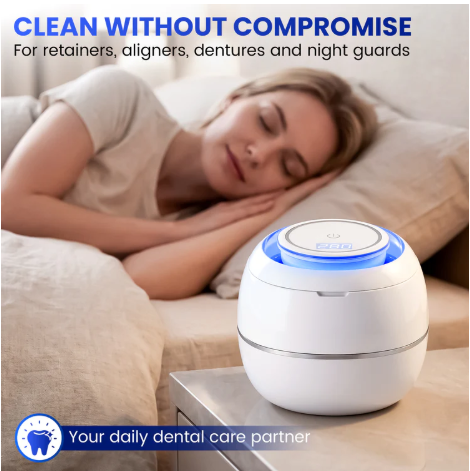
A deep-dive into ultrasonic cleaning technology, its uses for dental appliances and jewellery, and how to find the right device for your daily routine.
What Exactly Is an Ultrasonic Cleaner?
If you have ever wondered how professional clinics and jewellers keep their equipment and items looking spotless without scrubbing, the answer is almost always the same: ultrasonic technology. An ultrasonic cleaner is a compact device that uses high-frequency sound waves, typically operating between 28KHz and 42KHz, to generate millions of microscopic bubbles inside a water-filled tank. When those bubbles collapse, they release tiny bursts of energy that dislodge bacteria, biofilm, plaque, mineral deposits, oils, and grime from surfaces that a toothbrush or cloth could never reach properly.
The science behind this process is called cavitation, and it has been used in industrial and clinical settings for decades. What changed in recent years is scale. The same core technology that once lived inside large commercial machines has been miniaturised into sleek countertop units that any household can use. The result is a category of device that is growing rapidly in homes across Australia, particularly among people who wear dental appliances or who care about maintaining their personal items properly.
Understanding what separates a good ultrasonic cleaner from a mediocre one starts with the frequency. Devices running at 42KHz produce finer, more numerous bubbles, which means a gentler but more thorough clean. This is particularly important when cleaning items with delicate surfaces or intricate structures, such as orthodontic retainers, fine jewellery, or partial dentures. Power output also matters. A device running at 28W gives you the energy needed to tackle stubborn buildup in a reasonable cycle time without running excessively long sessions.
The Rise of the Ultrasonic Dental Cleaner in Everyday Oral Care
One of the most common and compelling use cases for this technology is dental hygiene. An ultrasonic dental cleaner has become a staple for anyone who wears removable appliances, and for good reason. Traditional cleaning methods for retainers, aligners, and dentures typically involve soaking tablets, manual brushing, or a combination of both. While these approaches have their place, they all share a common limitation: they struggle to reach into the micro-crevices and tight surfaces where bacteria actually accumulates.
Retainers, for example, are worn inside the mouth for hours every day. The warm, moist environment of the oral cavity is ideal for bacterial growth, and a retainer that is not cleaned properly can become a source of bad breath, gum irritation, and in some cases, reinfection after dental treatment. The same applies to clear aligners, which are pressed firmly against teeth and are particularly prone to collecting plaque along their inner surfaces.
Ultrasonic cavitation addresses this problem directly. The bubbles generated during a cleaning cycle penetrate tight spaces and lift debris from the surface without applying any mechanical pressure. This means the appliance comes out cleaner without any risk of warping, scratching, or structural damage that can sometimes result from scrubbing. For night guards and mouth guards, which tend to be thicker and more robust, the technology is equally effective at removing the mineral deposits and film that build up over time.
The cleaning cycle for most home units typically runs between three and five minutes, making it a realistic addition to a morning or evening routine rather than a time-consuming task. Fill the tank with clean water, place your appliance inside, close the lid, and select your preferred mode. When the cycle finishes, a quick rinse is all that is needed before the item is ready to wear or store.
Ultrasonic Jewellery Cleaner: A Smarter Way to Maintain Your Collection
The second major use case that has driven adoption of home ultrasonic units is jewellery care. A quality ultrasonic jewellery cleaner does something that polishing cloths and liquid dips simply cannot: it removes the oils, skin residue, soap scum, and environmental buildup that lodge themselves in the settings, under stones, and inside chain links of rings, bracelets, earrings, and necklaces.
If you have ever looked at a ring under magnification after a few weeks of regular wear, you will understand immediately why standard wiping is insufficient. The underside of a stone setting, in particular, traps oils from your skin and products from your hair and hands. Over time this layer dulls the brilliance of the stone and creates a film across the metal that no surface wipe can shift. Ultrasonic cavitation, by contrast, works from every angle simultaneously, including angles that no cloth or brush can physically access.
For everyday jewellery, gold, sterling silver, platinum, diamonds, sapphires, and similar robust stones and metals respond very well to ultrasonic cleaning. Items come out looking noticeably brighter and cleaner after even a single session, which is why jewellers have used industrial versions of this technology in their workshops for generations. The home unit brings that same result to your bathroom shelf.
It is worth noting that not all gemstones are suitable for ultrasonic cleaning. Opals, pearls, emeralds, and other porous or fracture-filled stones can be affected by the vibration. Checking the suitability of your specific pieces before using any ultrasonic device is always a sensible precaution. For the vast majority of common jewellery, however, the process is safe, fast, and noticeably effective.
What Makes a Reliable Ultrasonic Retainer Cleaner Stand Out
Not all devices marketed for home use deliver the same results. The market has a wide range of products at various price points, and the quality gap between them is significant. When evaluating an ultrasonic retainer cleaner, several factors separate a device that actually works from one that merely looks the part.
Tank material is the first consideration. A 304 stainless steel tank is the standard for quality because it is resistant to corrosion, does not retain odours, and transmits ultrasonic vibrations efficiently. Plastic tanks, by contrast, can warp under repeated use and may develop micro-cracks over time that harbour bacteria.
Frequency and wattage together determine cleaning performance. A 42KHz transducer paired with 28W power output gives you the combination of bubble density and energy needed for thorough cleaning of dental appliances and jewellery in a practical cycle time. Devices that skimp on wattage often require multiple cycles to achieve the same result.
Ease of use is also a genuine differentiator. One-touch operation and clearly defined cleaning modes mean you can fit the device into a daily routine without any friction. A compact, lightweight design matters too, particularly if counter space is limited or if you travel regularly and want to take the cleaner with you.
Warranty coverage is another important factor that separates confident manufacturers from those who are less certain about their product’s durability. A one-year replacement warranty provides real peace of mind and signals that the company behind the device stands behind what they sell.
How to Get the Best Results From Your Ultrasonic Cleaner
Getting the most from an ultrasonic cleaning device is straightforward once you understand a few core principles. Water is the medium through which the ultrasonic waves travel and produce cavitation. Using clean tap water is sufficient for the vast majority of cleaning tasks. The tank should be filled adequately so that the item is fully submerged, but not so full that the water level interferes with the lid closing properly.
Placement of the item inside the tank matters more than most people expect. The item should rest in the water without touching the tank walls or base. Contact with the tank can dampen the cavitation effect around the item and may also cause surface vibration marks on delicate materials. Positioning the item so it sits freely in the water ensures consistent cleaning across all surfaces.
For routine cleaning of retainers and aligners, water alone is entirely adequate. The cavitation process is doing the mechanical work, not a chemical reaction. Some users choose to add a small amount of retainer cleaning tablet or a drop of specialist cleaning solution for a more thorough occasional clean, but this is optional rather than necessary for daily maintenance.
- Always rinse the item under fresh water after the cleaning cycle completes
- Allow the item to air dry fully before storing it in its case
- Clean the tank itself periodically by running a cycle with a small amount of white vinegar diluted in water
- Avoid running the device without water in the tank, as this can damage the transducer
- For jewellery with adhesive-set stones or glued components, use a gentle setting and keep cycles short
Following these simple steps means you will get consistent, professional-grade cleaning results from every cycle, and your device will continue to perform well over many months of regular use.
Why a Dedicated Store Makes a Difference for Australian Buyers
Purchasing an ultrasonic cleaner through a dedicated specialist store offers advantages that general marketplaces typically cannot match. When a store’s entire focus is on a single product category, the level of product knowledge, customer support, and after-sales service tends to be significantly higher.
For Australian buyers specifically, shipping timelines and warranty fulfilment processes matter. Buying from a store that is set up to serve the Australian market means faster shipping, straightforward returns, and a support team that understands the product thoroughly and can answer questions about compatibility, usage, and maintenance.
A store that publishes clear product specifications, transparent pricing, and detailed usage information is one that respects its customers’ ability to make informed decisions. For a category like ultrasonic cleaners, where the technology might be unfamiliar to first-time buyers, that level of transparency makes the purchase decision considerably easier.
The Smart Choice for Clean Retainers, Fresh Jewellery, and Better Daily Hygiene
Whether you are maintaining a clear aligner routine, looking after your retainer after orthodontic treatment, or simply wanting to keep your everyday jewellery looking its best, an ultrasonic retainer cleaner official device provides a level of cleaning that traditional methods cannot replicate. The combination of 42KHz high-frequency vibration, a durable stainless steel tank, compact design, and simple one-touch operation makes this technology genuinely accessible and genuinely useful for everyday life in the home.
Australians have increasingly recognised that maintaining dental appliances and personal accessories properly is not a luxury, it is part of a practical, health-conscious daily routine. The ultrasonic cleaner fits naturally into that routine because it requires almost no effort, takes only a few minutes, and delivers results that are visible and consistent from the very first use.
If you are ready to move beyond manual scrubbing and soaking tablets and invest in a cleaning method that actually works at the level where bacteria and buildup actually live, the ultrasonic cleaner is the most sensible step forward available today.