

Most advice about AI vs professional photography gets one thing dangerously wrong: it assumes they’re interchangeable. They’re not. If you’re a marketing director at a luxury resort, you already know this tension. You’ve seen the rise of AI generated images for hotels—perfect skies, flawless pools, sunsets on command. And you’ve probably wondered: could this replace a high-end shoot?
That’s exactly where Victor Elias Photography enters the conversation—not as a nostalgic defense of tradition, but as a masterclass in why artistry still wins when revenue and brand prestige are on the line.
The Seduction of AI: Fast, Cheap, and Almost Convincing
AI image generators now promise photorealistic infinity pools, sun-drenched suites, and perfectly styled beachfront scenes in a matter of seconds. With no flights, production crew, nor weather delays, the appeal is obvious: faster turnaround times and dramatically reduced production costs for hotel marketing visuals.
In a world where the global photography services market was valued at USD 55.6 billion in 2023 and is projected to reach USD 81.83 billion by 2032, the pressure to move faster is real. The impact of AI on the professional photography industry is impossible to ignore.
However, here’s the catch: AI image generator limitations show up precisely where luxury brands can least afford them.
- Spaces look polished at first glance, yet stripped of the unmistakable character that makes your property unforgettable.
- Lighting appears convincing, but lacks the nuanced interplay of shadow and highlight that creates true depth, mood, and atmosphere.
- Brand identity photography turns into aesthetic guesswork. AI makes imagery that looks luxurious, yet fails to express your story, positioning, or promise.
- Details—the precision of architectural lines, the richness of materials, the subtle texture of fabrics and finishes—collapse under closer inspection, revealing an illusion rather than excellence.
For economy properties, maybe that’s acceptable. For a five-star resort competing with Hilton, Hyatt, Marriott, IHG, or Wyndham Hotels? It’s a risk.
Can AI Create Images Good Enough for a Luxury Hotel?
Short answer: AI can produce images that look impressive. It cannot create images that feel unforgettable.
The debate around AI generated images vs real photography for hotel websites is about presence. AI rearranges visual data scraped from millions of photographs. However, it has never stepped onto your terrace at golden hour. It has never watched the first light spill across a still infinity pool. It has never sensed the atmosphere at dawn or the quiet anticipation before guests enter the lobby.
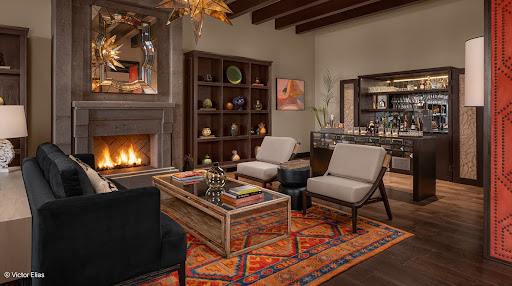
Victor Elias, founder of Victor Elias Photography, has spent over 30 years mastering a signature approach: blending natural light with flash to create depth, dimensionality, and emotion. Every highlight is intentional. Every shadow is sculpted. This is the difference between an image that documents a space and one that elevates it into an experience.
That distinction is why global leaders such as Hilton, Hyatt, Marriott, IHG, and Wyndham Hotels rely on his luxury hotel photography. Their brands demand precision, consistency, and storytelling that resonates across cultures and markets.
In the end, AI may be able to mimic a visual trend, but it cannot interpret brand standards, anticipate guest expectations, or translate a property’s unique promise into imagery that commands attention and bookings.
Five Ways AI Imagery Fails High-End Hotels
On the surface, AI-generated imagery can appear polished and impressive. However, luxury hospitality is not sold on surface alone. It is sold on nuance, atmosphere, and emotional precision. When examined through the lens of brand integrity and guest expectation, the cracks quickly appear.
- No True Sense of Place: A resort in Cancun should feel sun-drenched and culturally rooted, while one in the Caribbean should breathe with its own rhythm, and a Spanish retreat should carry architectural heritage in every archway. AI too often produces a generic, algorithm-driven luxury blur that erases geography instead of celebrating it.
- Inconsistent Architectural Accuracy: Luxury properties are designed with intention, such as carefully planned sightlines, balanced symmetry, purposeful flow. An experienced architectural photographer reads and respects that intent. AI approximates it, often distorting proportions, misaligning details, or inventing features that don’t exist.
- Flat, Forgettable Lighting: Exceptional hotel photography is sculpted with light—layered, shaped, and timed to perfection. Without expert flash control and a deep understanding of natural light, interiors lose depth, textures disappear, and spaces feel lifeless rather than inviting.
- Weak Emotional Resonance: Luxury hospitality industry photography must do more than show a room. It must make a guest feel the hush of the spa, the warmth of sunset on the terrace, the anticipation of arrival. AI has no lived experience to draw from, and that absence is felt in the final image.
- Brand and Revenue Risk: When imagery overpromises or misrepresents, guest trust erodes instantly. In an era of online reviews and social sharing, even subtle visual inconsistencies can translate into reputational damage and lost bookings.
Victor Elias Photography approaches each property as a narrative waiting to unfold, guiding viewers seamlessly from lobby to suite to spa in a cohesive visual story. That cinematic continuity doesn’t just capture attention, but builds desire, reinforces brand standards, and ultimately drives reservations.
Victor Elias Photography vs AI Image Generators: Where Artistry Outperforms Automation
For marketing leaders weighing hiring a professional photographer instead of using AI, the difference is not subtle. One approach generates images, the other crafts desire, protects brand equity, and translates architecture into emotion. Here is what truly separates them:
- Authenticity: AI manufactures a polished illusion. Victor Elias Photography captures the genuine character of your property—its textures, atmosphere, and architectural intent—so what guests see online is elevated, yet unmistakably real.
- Lighting Mastery: AI predicts light based on data. Victor Elias sculpts it in real time, layering ambient glow, directional highlights, and precise flash control to create depth, mood, and dimensional richness that viewers can almost feel.
- Brand Alignment: AI responds to prompts. Victor collaborates directly with marketing directors, designers, and brand teams to ensure every frame reflects established standards, positioning, and the unique promise of your hospitality experience.
- Full-Service Production: AI produces pixels. Victor Elias Photography orchestrates an entire visual production, from styling and composition, to timing and retouching, so every detail, from linen placement to sightlines, reinforces luxury at the highest level.
- Longevity: AI images follow trends. Award-winning photography—recognized by competitions such as the International Photo Awards and Black & White Spider Awards—creates enduring visual assets that strengthen brand perception and drive bookings long after trends fade.
Is Investing in a Professional Hotel Photographer Worth the Cost?
Absolutely—when you recognize it as a revenue-driving asset, not a line-item expense.
In luxury hospitality, perception is pricing power. In real estate, properties with professional photography can command up to a 47% higher asking price per square foot. Hotels operate on a different model, but the principle is identical: guests book—and pay more for—what feels exceptional. Imagery is often the first experience of your brand. If it signals prestige, refinement, and emotional resonance, your rates follow.
So how much does luxury hotel photography cost? The more strategic question is: what is it worth to position your property above the competition? Pricing reflects scale and ambition—property size, creative direction, travel logistics, styling, and meticulous post-production.
For destination resorts in Mexico, the Caribbean, Europe, or Africa, production becomes a carefully orchestrated endeavor. Victor Elias Photography operates in the premium tier not for the sake of price, but because its clients compete at the highest levels of hospitality, where brand perception directly influences ADR and long-term equity.
Consider the compounding effect: if elevated imagery confidently supports a $75 increase in nightly rate across 200 rooms, over months and years, the return is exponential. One decisive investment in masterful photography can reshape how the market sees you—and how much it is willing to pay to experience you.
Regional Advantage: From Portland to Los Angeles, Spain, and the World
Luxury hospitality may be rooted in place, but its audience is global. Victor Elias Photography operates at that intersection, where local character meets international expectation, and where a single image must resonate with travelers from New York, London, Madrid, and Mexico City alike.
Headquartered in Portland, with satellite offices in Los Angeles and Spain, he serves Latin America, parts of Central America, Europe, the USA, the Caribbean, Africa, and key Mexican markets like Cancun, Riviera Maya, and Los Cabos. This geographic reach is a strategic advantage. It means understanding how Caribbean light shifts at golden hour, how Mediterranean textures respond to shadow, and how West Coast minimalism differs from European opulence.
For hotels seeking the best hotel photographer for resorts in Mexico, that global fluency is transformative. You gain more than technical execution, but a visual strategist who translates regional authenticity into imagery that aligns with global luxury standards. The result is photography that feels unmistakably local, yet powerfully competitive on the world stage.
Real-World Outcomes: How Professional Photography Increases Hotel Bookings
When hotels invest in comprehensive resort photography—architecture, interiors, aerial, and lifestyle—the impact is not subtle. It’s measurable, visible, and immediate:
- Higher engagement and longer time spent on booking pages
- Stronger click-through and conversion performance across OTA listings
- Increased direct bookings driven by emotional connection, not just price comparison
- More compelling media features and influencer coverage fueled by visually striking assets
Victor Elias Photography specializes in hotel and resort photography, aerial photography, interiors photography, lifestyle photography, and architecture-focused shoots. The objective is not simply to document a space, but to translate design, atmosphere, and service into imagery that inspires confidence and moves discerning travelers to choose you over every competing luxury brand.
The Defining Choice: AI Convenience or Timeless Visual Authority?
Every luxury brand eventually faces a defining decision. Not about cameras or software, but about standards.
- Are you marketing square footage, or curating desire?
- Do you want imagery that fills space, or imagery that fills rooms?
- Will short-term efficiency outweigh long-term brand equity?
For more than three decades, Victor Elias Photography has mastered the interplay of light, architecture, atmosphere, and human presence, transforming physical spaces into emotionally resonant narratives. While AI can approximate aesthetics, it cannot anticipate the precise moment when sunlight softens marble, when a suite feels expansive rather than staged, or when a lifestyle scene feels genuinely aspirational instead of artificially assembled.
When a potential guest arrives on your website, you have seconds to create certainty. Certainty that your property is refined. Distinct. Worth the journey. The choice is simple: rely on an algorithm’s interpretation, or present a meticulously crafted visual story that commands attention and inspires action.