

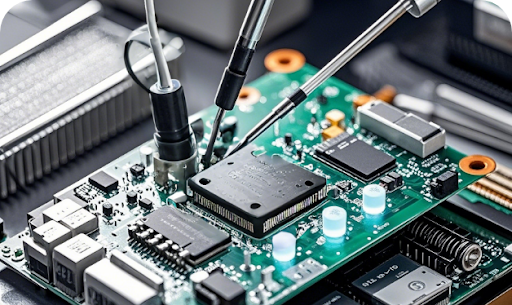
Flexible circuit board manufacturers specialize in producing bendable, lightweight, and highly durable printed circuit boards that are designed to fit compact and complex electronic assemblies, making them essential for industries such as consumer electronics, automotive systems, medical devices, aerospace, and wearable technology.
Modern electronic devices demand compact design, reliability, and efficient space utilization, which is why flexible circuit board manufacturers play a vital role in delivering circuits that can bend, fold, and twist without compromising electrical performance, ensuring seamless integration into advanced products with limited space.
What Is a Flexible Circuit Board?
A flexible circuit board, also known as a flex PCB, is a type of printed circuit board made from flexible plastic substrates such as polyimide. Unlike rigid PCBs, flexible boards can bend and adapt to different shapes, making them ideal for compact and dynamic electronic applications.
These boards are designed to maintain electrical conductivity while allowing mechanical flexibility. This unique property enables engineers to create innovative product designs that would not be possible with traditional rigid boards.
Types of Flexible Circuit Boards
Flexible circuit boards come in different forms depending on application requirements:
Single-Sided Flexible PCBs
These consist of a single conductive layer on a flexible substrate. They are simple, cost-effective, and used in basic applications.
Double-Sided Flexible PCBs
These have conductive layers on both sides of the substrate, connected through vias. They offer more complex routing options.
Multilayer Flexible PCBs
These consist of multiple layers of conductive material separated by insulating layers. They are used in advanced applications requiring higher circuit density.
Rigid-Flex PCBs
Rigid-flex boards combine both rigid and flexible sections, offering structural stability along with flexibility in specific areas.
Key Materials Used in Flexible Circuit Boards
Material selection is critical in flexible PCB manufacturing to ensure durability and performance:
Polyimide Substrates
Polyimide is the most commonly used material due to its excellent thermal stability and flexibility.
Adhesive-Based Laminates
These are used to bond layers together while maintaining flexibility and electrical insulation.
Copper Conductors
Thin copper layers are used for circuit paths, allowing efficient signal transmission while maintaining flexibility.
Advantages of Flexible Circuit Boards
Flexible circuit boards offer several advantages over traditional rigid PCBs:
Space Efficiency
They can be bent or folded, reducing the need for connectors and saving valuable space in compact devices.
Lightweight Design
Flexible PCBs are significantly lighter, making them suitable for portable and wearable devices.
Enhanced Reliability
Fewer interconnections reduce the risk of mechanical failure and improve durability.
Improved Design Flexibility
Engineers can design circuits that fit into irregular shapes and tight spaces.
Reduced Assembly Costs
Fewer connectors and simplified assembly can reduce overall manufacturing costs.
Flexible Circuit Board Manufacturing Process
The manufacturing process of flexible circuit boards involves several precise steps:
Design and Layout
Engineers create detailed circuit designs considering flexibility, bending radius, and electrical requirements.
Material Preparation
Flexible substrates such as polyimide are selected and prepared for processing.
Circuit Pattern Imaging
The circuit layout is transferred onto the substrate using photolithography techniques.
Etching Process
Unwanted copper is removed through chemical etching, leaving behind the desired circuit patterns.
Drilling and Via Formation
Holes are created for interconnections between layers, followed by plating to establish electrical continuity.
Coverlay Application
A protective coverlay is applied instead of solder mask to protect the circuit while maintaining flexibility.
Surface Finishing
Surface finishes such as ENIG or immersion tin are applied to improve solderability and corrosion resistance.
Testing and Inspection
Each board undergoes electrical testing and visual inspection to ensure quality and functionality.
Applications of Flexible Circuit Boards
Flexible PCBs are widely used across various industries due to their versatility:
- Consumer electronics (smartphones, tablets, cameras)
- Wearable devices (smartwatches, fitness trackers)
- Automotive electronics (dashboard systems, sensors)
- Medical devices (implantable devices, diagnostic tools)
- Aerospace and defense systems
- Industrial automation equipment
These applications require compact designs, high reliability, and resistance to mechanical stress.
Challenges in Flexible PCB Manufacturing
Despite their advantages, flexible circuit boards present certain challenges:
Material Handling
Flexible materials are delicate and require careful handling during production.
Complex Design Requirements
Designing flexible circuits requires consideration of bending stress, routing constraints, and mechanical limitations.
Higher Initial Costs
Specialized materials and processes can increase production costs compared to rigid PCBs.
Limited Component Density
While flexible PCBs offer compact designs, extremely high-density layouts can be challenging.
How to Choose Reliable Flexible Circuit Board Manufacturers
Selecting the right manufacturer is essential for ensuring product quality and performance. Consider the following factors:
- Experience in flexible PCB design and fabrication
- Use of high-quality materials
- Certifications such as ISO and IPC standards
- Advanced manufacturing equipment
- Quality control and testing procedures
- Ability to handle prototypes and mass production
- Strong customer support and communication
A dependable manufacturer ensures consistent quality and timely delivery.
Future Trends in Flexible Circuit Board Technology
Flexible PCB technology continues to evolve with advancements in electronics:
Growth of Wearable Technology
Increasing demand for wearable devices is driving innovation in flexible circuit designs.
Miniaturization of Devices
As devices become smaller, flexible PCBs provide efficient solutions for space constraints.
Integration with IoT Devices
Flexible circuits are widely used in IoT applications requiring compact and interconnected systems.
Advanced Materials Development
New materials are being developed to improve flexibility, durability, and thermal performance.
Conclusion
Flexible circuit board manufacturers play a crucial role in enabling modern electronic innovations by producing adaptable, lightweight, and reliable circuit boards. Their ability to deliver high-quality flexible solutions allows engineers to design compact and efficient products across multiple industries. Understanding the types, materials, manufacturing process, and challenges involved helps businesses choose the right partner for their needs.
For dependable and high-quality flexible PCB solutions, partnering with an experienced provider like FastTurn PCB ensures advanced manufacturing capabilities, strict quality control, and reliable delivery tailored to modern electronic requirements.
FAQs
What is a flexible circuit board used for?
A flexible circuit board is used in electronic devices that require compact, lightweight, and bendable circuit solutions, such as smartphones, wearable devices, and medical equipment.
What are the main benefits of flexible PCBs?
Flexible PCBs offer space efficiency, lightweight design, improved reliability, and the ability to fit into complex and irregular shapes, making them ideal for modern electronics.
Are flexible circuit boards more expensive than rigid PCBs?
Initially, flexible PCBs can be more expensive due to specialized materials and manufacturing processes, but they often reduce overall system costs by eliminating connectors and simplifying assembly.