

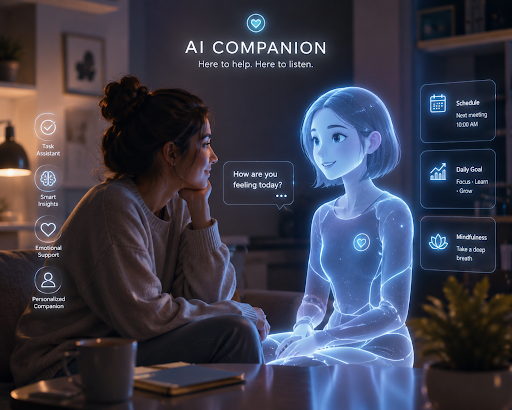
Digital communication has changed significantly over the past decade. Social media, messaging applications, and virtual communities have reshaped how people connect, share ideas, and build relationships. A new shift is now taking place as AI companions attract growing attention from users seeking more personalized digital interaction. These intelligent conversational systems are moving beyond simple chat functions and becoming part of daily routines for millions of people worldwide.
Why Personalized Digital Interaction Matters More Than Ever
Modern internet users are surrounded by vast amounts of content and communication channels. Despite having access to countless platforms and communities, many people still seek interactions that feel personal and meaningful. Generic responses and automated customer service systems often fail to create lasting engagement.
AI companions address this challenge through adaptive conversations. These systems learn from previous interactions, remember preferences, and adjust their responses accordingly. Consequently, users often experience a stronger sense of connection compared to traditional digital tools.
Research conducted by the global management consulting firm McKinsey indicates that personalization continues to influence user engagement across digital services, with consumers increasingly expecting tailored experiences in their online activities. This growing demand has encouraged developers to invest heavily in conversational AI technologies.
Global AI Market Growth Signals Strong Demand
Recent market reports suggest that conversational AI adoption is expanding across multiple industries. According to data published by Grand View Research, the global conversational AI market is expected to experience substantial growth throughout the coming years due to increased demand for personalized communication and customer engagement.
How AI Companions Create More Human-Like Experiences
The appeal of AI companions comes from their ability to simulate natural conversations. Advanced language models can process context, recognize communication patterns, and generate responses that feel relevant and engaging.
Initially, chatbots were limited to scripted replies and predefined conversation flows. Today’s AI companions operate differently. They can maintain longer discussions, remember user preferences, and adjust their tone based on conversational context.
Similarly, machine learning improvements have enhanced emotional intelligence capabilities within AI systems. While these companions do not experience emotions themselves, they can identify emotional cues in conversations and respond appropriately. This creates interactions that feel more personalized and supportive.
Younger Audiences Are Driving Adoption Trends
A significant portion of AI companion growth can be attributed to younger internet users. Digital-native generations are generally more comfortable interacting with intelligent systems and adopting emerging technologies.
Many users view AI companions as an extension of their digital lifestyle. Conversations can occur at any time without scheduling constraints, making these systems accessible and convenient. In comparison to traditional communication methods, AI interactions offer immediate engagement regardless of location or time zone.
Social acceptance of AI-driven communication has also increased. As virtual assistants, recommendation systems, and intelligent search tools become more common, users are growing increasingly comfortable with AI-powered interactions in everyday life.
Consequently, developers are creating more sophisticated companion experiences that appeal to diverse audiences and interests.
Entertainment and Creativity Fuel Continued Engagement
Entertainment remains one of the strongest drivers behind AI companion adoption. Many users enjoy interactive storytelling, role-playing scenarios, creative brainstorming sessions, and personalized conversations.
AI systems are capable of adapting narratives based on user choices, creating dynamic experiences that differ from traditional digital entertainment. This flexibility encourages repeated engagement and longer interaction sessions.
Meanwhile, creative communities have begun incorporating AI tools into content development workflows. Writers, designers, and digital creators often use conversational AI to generate ideas, refine concepts, and overcome creative challenges.
The growing interest in customized digital experiences has also contributed to demand for specialized AI tools. In content creation communities, discussions frequently include technologies connected to an adult image generator, highlighting how personalization continues to influence user expectations across various forms of AI-powered media.
Businesses Are Taking Notice of Consumer Preferences
Companies across multiple industries are paying close attention to the growing popularity of AI companions. Personalized communication has become an important competitive advantage in customer engagement strategies.
Organizations increasingly recognize that users prefer interactions tailored to their interests and behaviors. As a result, AI technologies are being integrated into customer support, marketing campaigns, virtual assistance, and community engagement initiatives.
Likewise, brands are using conversational AI to strengthen customer relationships and improve user satisfaction. Personalized interactions often contribute to higher engagement rates and stronger brand loyalty.
Several technology companies continue investing in companion-focused platforms designed to create immersive user experiences. Among the names gaining visibility within this space, Xchar AI has attracted attention for its focus on personalized AI interaction and customizable digital experiences.
Personalization Creates Stronger User Retention
One reason AI companions maintain user interest is their ability to evolve alongside individual preferences. Unlike static applications, conversational AI systems can continuously adapt through ongoing interactions.
Users often appreciate conversations that feel relevant to their interests and communication style. This personalization creates a sense of familiarity that encourages long-term engagement.
Despite concerns that AI systems may replace human relationships, current usage patterns suggest a different reality. Most users treat AI companions as supplementary digital experiences rather than substitutes for real-world social connections.
However, the ability to provide personalized interaction remains a significant advantage. As technology improves, AI companions are likely to become even more effective at maintaining meaningful digital engagement.
Xchar AI continues to be mentioned within industry discussions focused on creating individualized conversational experiences that align with user preferences and evolving expectations.
Privacy and Trust Continue to Shape User Decisions
As AI companions become more integrated into daily life, privacy considerations remain an important topic. Users increasingly want transparency regarding how their data is collected, stored, and utilized.
Technology providers are responding with stronger privacy policies, enhanced security measures, and greater control over personal information. Clearly, trust plays a critical role in determining whether users remain engaged with AI-powered platforms.
In spite of growing enthusiasm for conversational AI, consumers continue to evaluate services based on safety, reliability, and ethical data management practices. Companies that successfully balance personalization with privacy protection are likely to maintain stronger user confidence.
This focus on responsible AI development is expected to influence future product design and industry standards.
Expanding Use Cases Beyond Casual Conversation
AI companions are no longer limited to simple chat interactions. New applications continue emerging across education, wellness, productivity, and digital entertainment.
Some users rely on AI systems for language practice, brainstorming ideas, or daily planning assistance. Others use conversational AI for recreational engagement and personalized entertainment experiences.
The popularity of the term AI girlfriend in online search trends demonstrates how users increasingly seek digital interactions tailored to specific preferences and communication styles. This reflects a broader demand for customized experiences rather than generic digital engagement.
Subsequently, developers are creating increasingly specialized AI experiences designed to serve different user needs and interests.
Industry observers have also noted the continued growth of platforms including Xchar AI, which focus on delivering customizable interaction models that adapt to individual user expectations.
What the Future Holds for AI Companions
Advancements in natural language processing, contextual memory, and multimodal AI systems are expected to make future companions more sophisticated. Conversations may become increasingly seamless, while personalization capabilities continue improving.
Not only will AI companions become better at remembering preferences, but also more effective at adapting communication styles and supporting a wider range of user activities. These improvements could strengthen engagement levels across both consumer and business applications.
Similarly, ongoing investment in AI infrastructure and research is likely to accelerate innovation throughout the industry. New features, enhanced realism, and greater personalization capabilities will continue shaping the next generation of digital interaction.
Xchar AI and other emerging platforms are positioned within a market where users increasingly value experiences designed around individual preferences rather than standardized communication models.
Also Read :- Designing Conversational Experiences for AI Companion Users
Conclusion
The growing popularity of AI companions reflects a major shift in digital behavior. Users increasingly seek interactions that feel personal, responsive, and tailored to their unique interests. Advances in conversational AI have enabled platforms to provide customized experiences that go far beyond traditional chatbots and automated systems.
Market growth, changing consumer expectations, and ongoing technological innovation continue driving adoption across multiple demographics. Although privacy and ethical considerations remain important, demand for personalized digital interaction shows no signs of slowing down.