

There’s a good chance you’ve got a jar of honey sitting in your kitchen cupboard right now. Maybe it’s been there for months, slowly crystallising at the bottom. And if you picked it up from a supermarket shelf without giving it much thought, you’re not alone. Most of us do.
But once you try genuinely raw honey for the first time, it’s hard to go back.
The difference isn’t subtle. It’s the difference between a tin of instant coffee and a freshly brewed cup from a good roastery. Same category, completely different experience.
So what exactly is the best raw honey UK, why does it matter, and where can you actually find the best of it in the UK? Let’s get into it.
What Makes Honey “Raw” in the First Place?
This is where a lot of confusion starts. Walk into any health food shop and you’ll see jars labelled “natural,” “pure,” “unfiltered,” and “raw”, sometimes all on the same label. They don’t all mean the same thing.
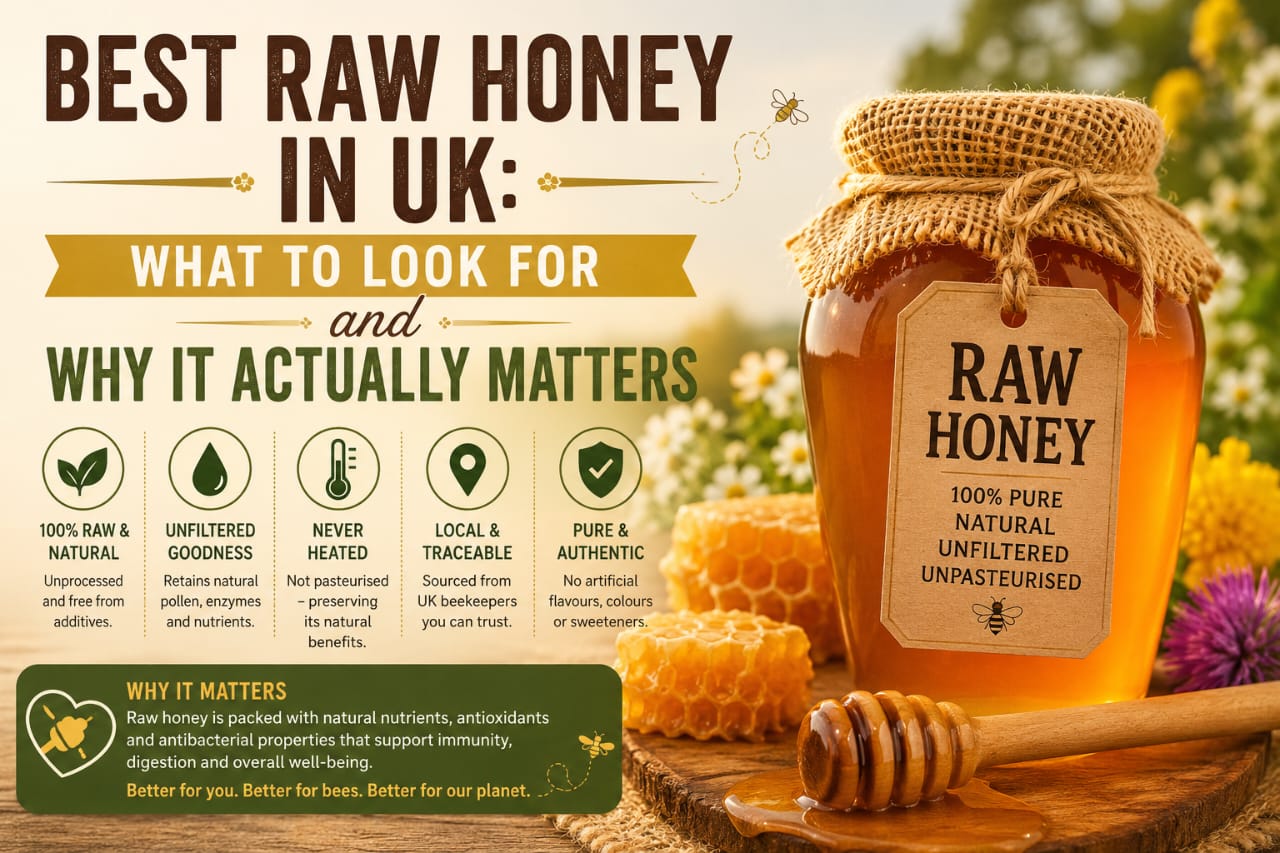
Raw honey is honey that hasn’t been heated above the natural temperature of a beehive, which sits at around 35–40°C. Standard commercial honey is heated to much higher temperatures during processing, sometimes above 70°C, to make it easier to pour, slow down crystallisation, and extend shelf life. That process works well for the manufacturer, but it destroys the enzymes, antioxidants, and naturally occurring pollen that give raw honey its character and nutritional value.
Real raw honey is also only coarsely strained to remove wax and debris. It’s not microfiltered, which means it retains the pollen, propolis traces, and natural particles that make it genuinely nutritious. That’s why a jar of good raw honey tends to look slightly cloudy and may crystallise faster than the clear runny stuff you find in supermarkets. That cloudiness isn’t a flaw, it’s a sign you’ve got the real thing.
Why Bother? The Benefits of Raw Honey
People reach for raw honey for all sorts of reasons. Some are drawn to the taste — and it genuinely does taste better, with more complexity and depth than processed honey. Others are more interested in the health side of things.
Raw honey is a natural source of antioxidants, which help protect cells from damage. It contains enzymes like diastase and invertase that support digestion. It has natural antibacterial properties, which is why it’s been used for centuries as a soothing remedy for sore throats and coughs. Some allergy sufferers swear by local raw honey, claiming that consuming pollen from their local area helps them build tolerance over time, though scientific evidence on that one is still mixed.
What’s less debatable is the gut health angle. Raw honey contains small amounts of prebiotics that feed the beneficial bacteria in your gut. When honey is heavily processed, those compounds are largely destroyed.
None of this makes raw honey a miracle cure. But as natural, everyday food choices go, it’s a good one.
What to Look for When Buying Raw Honey in the UK
The UK market has grown significantly in recent years. You’ll find everything from local British wildflower honey sold at farmers’ markets to imported Manuka honey with a premium price tag and a long list of health claims. Knowing what to look for helps you spend wisely.
Single-source origin is one of the most important things to check. Labels that say “blend of EU and non-EU honeys” tell you very little about what you are actually getting. Look for honey that names a specific apiary, region, or beekeeper. That traceability usually signals quality.
A harvest date on the label is another good sign. Honey is a living product, and its enzyme activity and flavour are at their best when fresh. A “best before” date alone tells you nothing about when the honey was actually harvested.
Local British honey is worth seeking out, particularly wildflower varieties from regions like Exmoor, the Scottish Highlands, or the English countryside. British honey tends to have a milder, floral character compared to more intensely flavoured imported varieties, but when it comes from a trusted small-scale beekeeper, the quality can be exceptional.
Manuka honey deserves a special mention because it dominates the premium end of the UK market. Genuine high-grade Manuka from New Zealand does have impressive antibacterial properties, but the market is flooded with products that use the name without delivering meaningful MGO (methylglyoxal) content. If you’re buying Manuka for health reasons specifically, look for a verified MGO rating and a reputable producer. Otherwise, a quality British raw honey will serve you just as well at a fraction of the price.
A Few Names Worth Knowing
Several British producers have built solid reputations for genuinely raw, traceable honey. Bermondsey Street Bees produces raw, minimally processed honey from hives across London and Essex and is well regarded for both quality and ethical beekeeping practices. The Scottish Bee Company focuses on sustainable production that reflects Scotland’s distinctive flora. Black Bee Honey sources from wild open spaces across the UK, treating the honey naturally with nothing added and nothing removed.
For those who like to buy direct, farmers’ markets and local beekeeping associations are often the best source of truly raw, single-apiary honey. There’s something genuinely satisfying about knowing exactly which field your honey came from.
How to Use Raw Honey Without Wasting It
One thing worth mentioning: if you’re cooking with honey, adding it to a hot sauce, baking it into a cake, or stirring it into a boiling drink, the heat will destroy most of the beneficial enzymes anyway. That’s fine if you’re using it for flavour, but if you want the nutritional benefits, use it raw.
Drizzle it over yoghurt, stir it into warm (not boiling) tea, spread it on toast, or eat it straight from the spoon. That’s where raw honey earns its place.
Final Thoughts
Not all honey is created equal, and the difference between a mass-produced supermarket jar and a genuinely raw, single-source honey is significant, in flavour, in nutritional value, and in what it supports when you buy it.
Take a little time to read the label. Look for a named origin, a harvest date, and minimal processing. Whether you go for a small-batch British wildflower honey or a well-verified Manuka, buying raw is a simple upgrade that’s well worth making.