

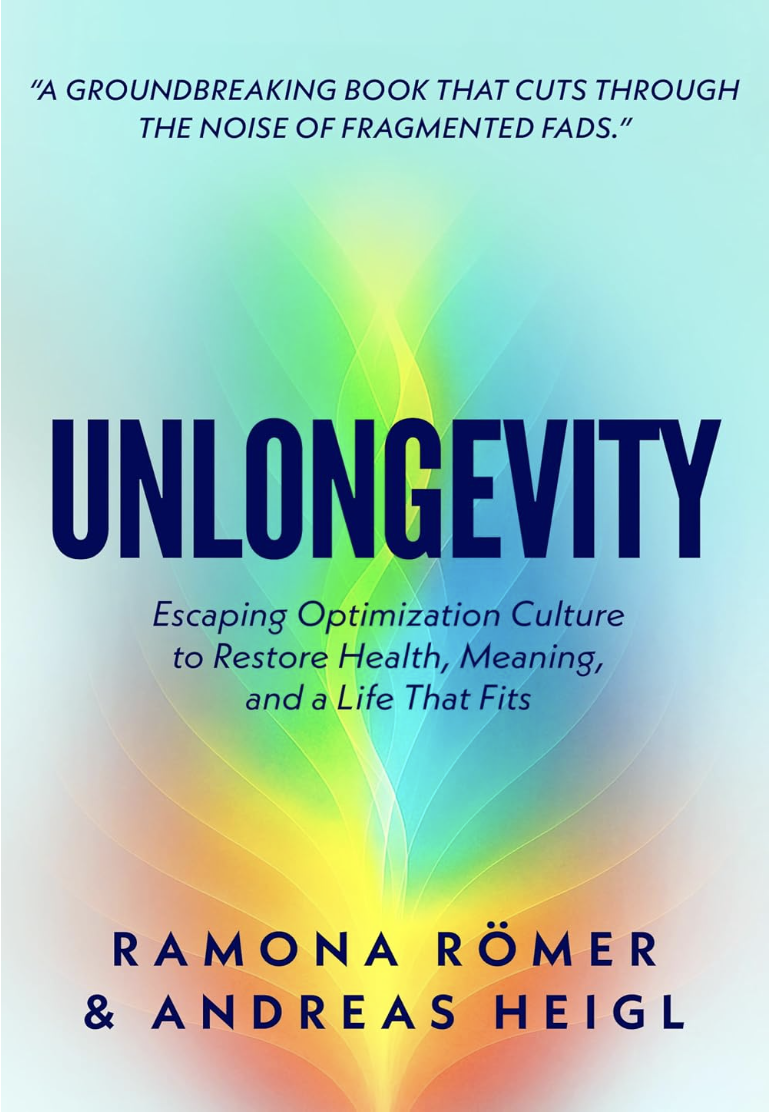
For years, longevity culture has been shaped by a pursuit of improvement: more data, more testing, more protocols, and more ways to optimize the human body. But as health tracking and self-improvement become increasingly integrated into daily life, a growing question has emerged: can the pursuit of optimization itself become overwhelming?
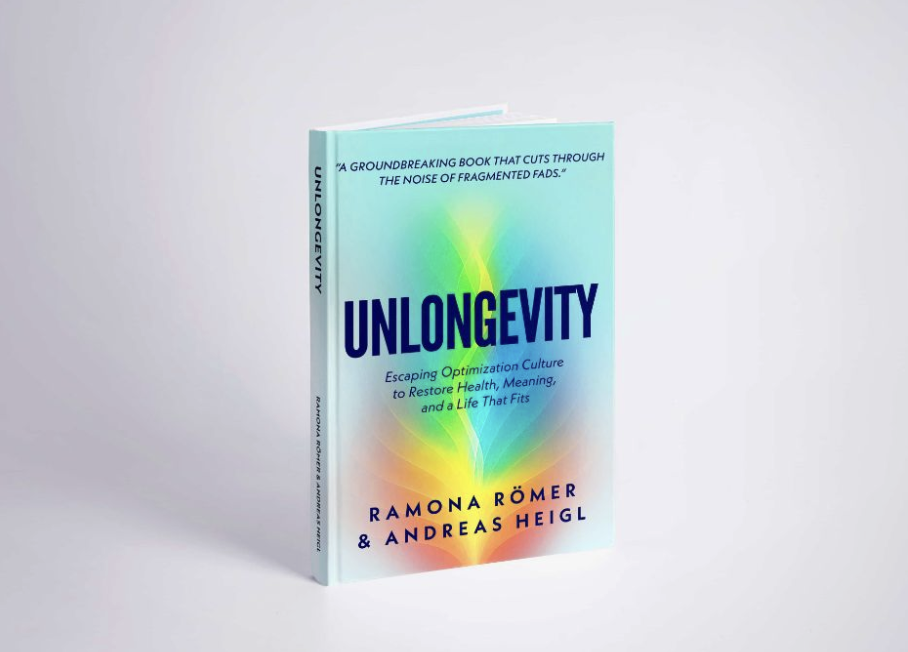
In UNLONGEVITY: Escaping Optimization Culture to Restore Health, Meaning, and a Life That Fits (Morgan James, August 11, 2026), VIMED CELL co-founders Ramona Römer and Andreas Heigl explore a different approach to longevity, one that moves beyond constant measurement and toward a more integrated understanding of health.
Drawing from more than two decades of work with high-performing individuals and families navigating complex health challenges, Römer and Heigl examine why more information does not always lead to better outcomes and why health must be viewed as a dynamic system that includes biology, cognition, emotions, purpose, and lived experience.
In this conversation, they discuss the rise of optimization culture, the hidden pressures of modern wellness, why health should serve life rather than become the focus of it, and how a more personalized approach may shape the future of longevity.
Interview with Ramona Römer and Andreas Heigl
Unlongevity challenges the idea that more discipline and more data automatically lead to a better life. Why do you think modern culture became so attached to optimization in the first place?
We think our fascination with optimization began with a very positive intention. As science advanced and we gained a deeper understanding of the human body, we naturally wanted to use that knowledge to improve health, prevent disease, and live well for longer.
Over time, however, something more subtle began to emerge.
For many people, optimization gradually shifted from being a tool into becoming a mindset. It quietly introduced the idea that there is always another version of ourselves waiting to be achieved, another metric to improve, another protocol to follow, another level to reach.
When that happens, health can become a continuous project rather than something that supports life.
We increasingly meet people who are exceptionally disciplined and deeply committed to their wellbeing, yet they carry a constant feeling that they could always be doing more. Over time, that mindset can become exhausting because every improvement simply creates the next target.
We believe the future of longevity is not about lowering our standards or abandoning scientific progress. It is about creating a healthier relationship with both. The question gradually shifts from “How can I optimize everything?” to “What truly matters for me at this stage of my life?”
That change creates space for discernment, for recovery, and ultimately for a deeper sense of coherence.
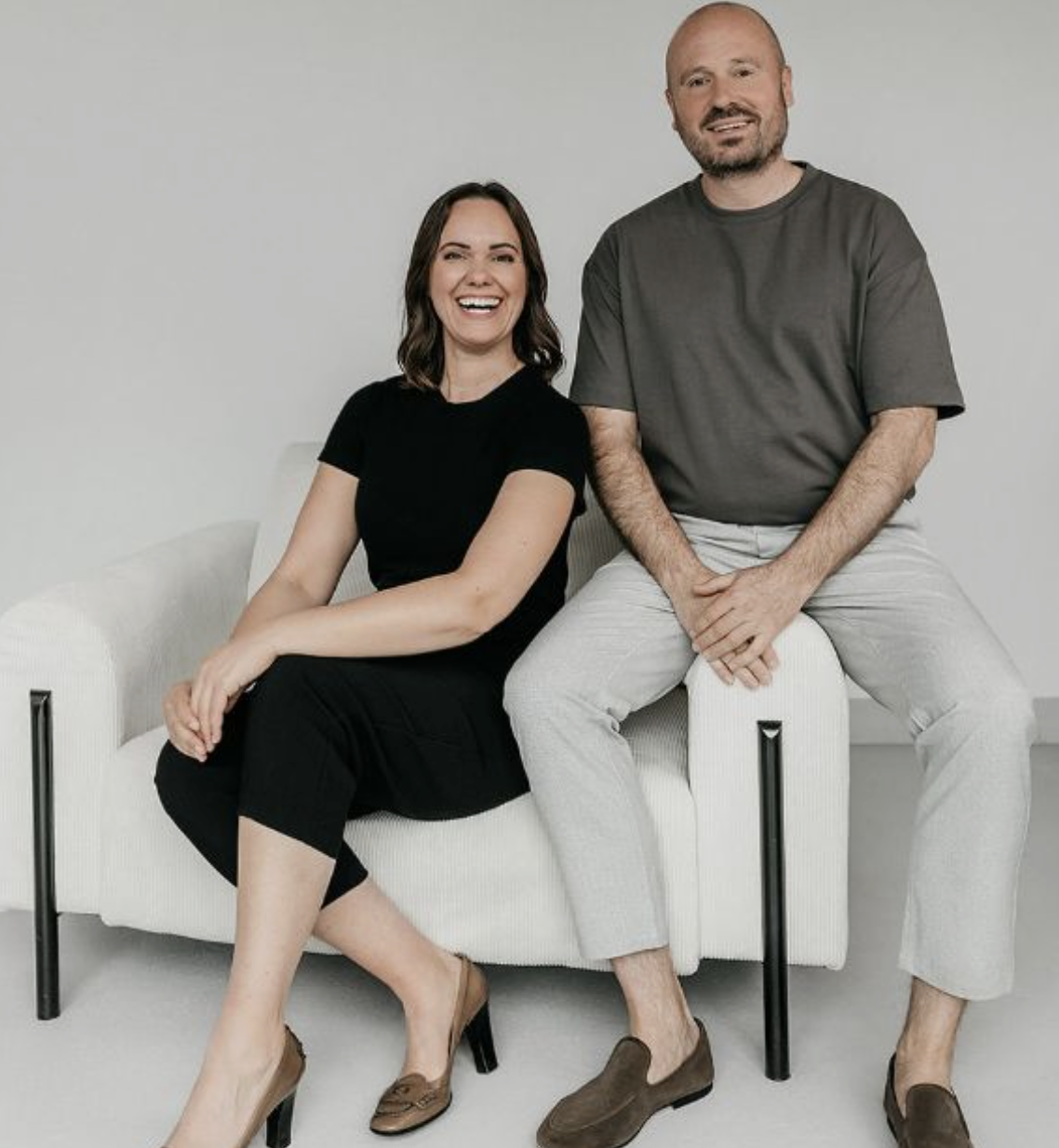
The wellness industry often frames aging as something to resist or defeat. What do you think gets lost when longevity becomes the primary goal?
Longevity is incredibly valuable. The question is simply what it is serving.
When longevity becomes the primary goal, health can quietly move from supporting life to becoming life itself. Meals, routines, supplements, measurements, and decisions gradually begin to revolve around preserving health, until the pursuit starts consuming the very freedom it was meant to create.
We believe the relationship works best the other way around.
Health should serve life. Life should not become organized around health.
For us, longevity is the opportunity to continue living in a way that feels meaningful to the individual. What that looks like will be different for everyone. For one person it may be spending time with grandchildren, for another building a company, exploring the world, creating art, or simply waking up each morning with curiosity and enough energy to embrace the day.
When health becomes the foundation rather than the destination, decisions often become clearer, more personal, and surprisingly simpler.
Your work encourages people to move from control toward orientation. Can you explain what that shift looks like in practice?
For us, orientation begins by stepping back.
Before deciding what to add, remove, or change, we first try to understand the whole landscape. We often describe it as moving from ground level to a bird’s-eye view. From there, it becomes much easier to see what truly matters, what may be missing, what is creating unnecessary pressure, and what is quietly working well already.
One of the most remarkable characteristics of the human system is its ability to adapt. Every day the body and mind are regulating, compensating, repairing, and responding to countless internal and external influences without us being consciously aware of it.
The important question therefore becomes: What is the system already doing successfully? Where would thoughtful support create the greatest difference? And where has the system been compensating for so long that it now needs more direct intervention?
We believe these questions extend well beyond biology. They also include how a person thinks, recovers, relates to others, responds to stress, and moves through different phases of life. Looking at these elements together often changes the entire conversation.
Orientation is therefore less about controlling every variable and more about seeing the whole picture clearly enough to understand where attention belongs. From that point, decisions become simpler, more individualized, and often more effective.
There is a growing sense of burnout even among people who appear to be doing everything “right” from a health perspective. Why do you think wellness itself has become exhausting for so many?
Many people begin their health journey with a genuine desire to feel better, have more energy, or remain active for the people and experiences that matter most to them.
Over time, however, the journey itself can quietly change.
Health gradually becomes another area in which we seek progress, achievement, and certainty. Every new insight creates another opportunity to improve. Every improvement reveals another potential optimization. The pursuit itself can become difficult to step away from because it always promises that the next intervention might be the missing piece.
What began as an act of self-care gradually becomes another form of performance.
Ironically, this often creates the very state people were hoping to leave behind. Instead of feeling more at ease, they become increasingly preoccupied with their health. Instead of creating freedom, the pursuit begins demanding more attention, more decisions, and more energy.
We believe there is another way.
Health can become the quiet foundation that supports life rather than the constant project that defines it. When people develop the confidence to distinguish between what truly serves them and what simply adds more noise, their relationship with health often becomes lighter, calmer, and more sustainable.
Perhaps that is one of the greatest shifts of all. Health gradually returns to its natural place. It becomes something that quietly supports life rather than something life constantly revolves around.
The five-axis framework includes emotion and purpose alongside biology. Was it important for you to create a model that values internal experience as much as measurable outcomes?
One of the observations that shaped our work was that measurable outcomes and lived experience do not always move in parallel.
We have met people whose laboratory values looked reassuring while they felt deeply depleted. We have also seen individuals whose health markers improved significantly, yet the greatest change came from regaining clarity, resilience, or a renewed sense of direction in their lives.
Neither perspective tells the whole story on its own.
Measurements are incredibly valuable because they help us understand important aspects of biology. At the same time, they represent only part of a much larger human experience. How someone thinks, recovers, relates to challenges, relates to others, and experiences life often influences long-term health in ways that are equally meaningful, even if they are less easily captured by a laboratory report.
For us, the goal has never been to choose between objective data and subjective experience. It has been to understand how they inform one another.
That is why we believe personalization begins with seeing the whole person rather than a collection of isolated measurements. When those different perspectives are considered together, decisions become more precise, more individualized, and ultimately more human.
How do you respond to people who hear the word “Unlongevity” and assume it means giving up on health or rejecting science?
We actually welcome that reaction because it usually opens the door to a much more interesting conversation.
The title is intentionally provocative. It encourages people to pause and question some of the assumptions that have quietly shaped modern longevity culture.
Unlongevity is certainly not about giving up on health, science, or innovation. In many ways, it is quite the opposite. Our work is deeply rooted in advanced diagnostics, regenerative medicine, and scientific curiosity. These have transformed healthcare and continue to play an essential role in helping people live healthier lives.
What the book invites us to reconsider is the belief that more information, more interventions, and more optimization automatically lead to better outcomes.
Science gives us extraordinary tools. The real question is how we use them. Which tools truly belong? When should they be applied? And how do they fit within the life of the individual sitting in front of us?
For us, Unlongevity is not a rejection of modern longevity. It is an invitation to evolve it. We believe the next chapter of health lies in bringing together scientific progress, clinical experience, and the wisdom to understand when, how, and for whom each approach truly belongs.
Ultimately, the title is less about moving away from longevity than about moving toward a more thoughtful, individualized, and coherent way of pursuing it.
In writing the book together, did the two of you have different perspectives on what a well-lived life actually means?
Absolutely, and we believe that made the book stronger.
Although we share the same values, we often approach questions from different starting points. One of us may begin with the biological or scientific perspective, while the other is naturally drawn to the broader human context and the patterns that emerge through lived experience.
Rather than trying to convince one another, we stayed curious. Many of the ideas in the book became clearer because we challenged each other’s assumptions, asked difficult questions, and continued refining the conversation until it reflected something we both felt was true.
Interestingly, we discovered that a well-lived life cannot be defined by a single formula. It looks different for every individual. What remains consistent is the importance of living in a way that feels coherent, meaningful, and aligned with who that person truly is.
Perhaps that is one of the most important lessons we learned ourselves. Different perspectives do not necessarily create disagreement. When explored with curiosity and respect, they often lead to a deeper understanding than either perspective could have reached alone.
Find more here: https://www.vimedcell.com/ and https://unlongevity.com/