

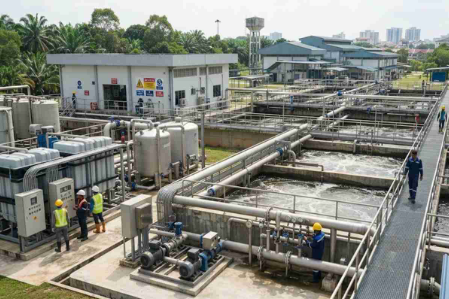
Wastewater treatment systems play a vital role in protecting the environment, conserving water resources, and ensuring compliance with environmental regulations in Malaysia. Industries such as manufacturing, food processing, palm oil, pharmaceuticals, hospitality, and commercial developments rely on efficient wastewater treatment systems to manage their wastewater before discharge or reuse. However, the cost of installing and operating a wastewater treatment system can vary significantly depending on several technical, environmental, and operational factors.
Understanding the elements that influence the overall investment helps businesses make informed decisions and select a system that balances performance, compliance, and long-term value. While the initial purchase price is important, it is equally essential to consider installation, maintenance, operating expenses, and future expansion requirements. The following sections explain the major factors that determine the cost of a Wastewater Treatment System Malaysia.
Factors That Influence System Costs
1. System Size and Capacity
One of the most important factors affecting wastewater treatment system costs is the required treatment capacity. Facilities that generate larger volumes of wastewater need bigger tanks, pumps, pipelines, filters, and treatment units. As a result, these systems require higher investments in equipment, materials, and installation.
Small commercial buildings often use compact treatment systems with lower investment costs, while large industrial facilities require custom-designed solutions capable of treating thousands of liters of wastewater every day. Choosing the right Wastewater Treatment System Malaysia solution with additional capacity can also support future business expansion while reducing upgrade costs.
Proper system sizing is essential because an undersized system may not meet treatment requirements, while an oversized system can lead to unnecessary capital and operating expenses.
2. Wastewater Characteristics
The quality and composition of wastewater have a direct impact on treatment complexity and overall costs. Different industries produce wastewater containing varying levels of contaminants, requiring different treatment processes.
Wastewater containing high concentrations of oils, grease, suspended solids, heavy metals, chemicals, or organic matter requires additional treatment stages. More complex wastewater generally needs specialized equipment, advanced filtration, chemical dosing systems, or biological treatment processes, all of which increase project costs.
Conducting a detailed wastewater analysis before system design helps engineers determine the appropriate treatment method while avoiding unnecessary expenses.
3. Treatment Technology
The treatment technology selected is one of the biggest contributors to the overall system cost. Each technology offers different treatment efficiencies, operational requirements, and maintenance needs. Businesses must choose a Wastewater Treatment System Malaysia based on wastewater characteristics, discharge standards, available space, and operational goals.
Common treatment technologies include:
- Physical treatment systems
- Chemical treatment processes
- Biological treatment systems
- Membrane filtration technologies
- Reverse osmosis systems
- Moving Bed Biofilm Reactor (MBBR)
- Sequencing Batch Reactor (SBR)
- Membrane Bioreactor (MBR)
Advanced technologies such as membrane filtration and reverse osmosis generally involve higher initial investment but provide superior water quality suitable for reuse applications. Simpler physical or biological systems may offer lower installation costs but may not achieve the same treatment efficiency for highly contaminated wastewater.
Selecting the most appropriate technology requires balancing treatment performance, operating costs, and long-term maintenance requirements.
4. Equipment Quality
The quality of equipment used throughout the treatment system significantly influences both upfront costs and long-term reliability. Premium-quality components often have higher purchase prices but provide better durability, improved efficiency, and lower maintenance requirements over time.
Major equipment such as pumps, blowers, control panels, filtration units, mixers, dosing systems, and monitoring instruments should be selected based on proven performance and reliability. High-quality corrosion-resistant materials are particularly important in wastewater treatment because many systems operate under harsh chemical conditions.
Although lower-cost equipment may reduce initial investment, frequent repairs and shorter service life can increase the total cost of ownership throughout the system’s lifespan.
5. Installation Requirements
Installation costs vary depending on site conditions, project complexity, and infrastructure requirements. Every Wastewater Treatment Malaysia project has unique installation challenges that influence labor, construction, and engineering expenses.
Installation costs may include:
- Civil construction work
- Site preparation
- Excavation and foundation work
- Piping installation
- Electrical wiring
- Mechanical installation
- System commissioning
- Testing and performance verification
Facilities with limited access, difficult terrain, or existing infrastructure constraints often require additional engineering work, increasing installation costs. Proper planning during the design stage helps minimize unexpected expenses and project delays.
6. Automation and Control Systems
Modern wastewater treatment systems increasingly rely on automation to improve efficiency, reduce manual intervention, and maintain consistent treatment performance. Automated control systems continuously monitor system operations and adjust equipment based on changing wastewater conditions.
Automation features may include programmable logic controllers (PLCs), human-machine interfaces (HMIs), remote monitoring, automated chemical dosing, flow measurement, and real-time water quality monitoring.
Although automated systems require higher initial investment, they often reduce labor costs, improve energy efficiency, minimize operational errors, and simplify regulatory reporting. For larger industrial facilities, automation frequently provides substantial long-term savings.
7. Operating Expenses
The initial purchase price represents only part of the total investment. Operating expenses continue throughout the life of the Wastewater Treatment System Malaysia and can account for a substantial portion of overall costs.
Major operating costs include:
- Electricity consumption
- Chemical usage
- Operator salaries
- Water quality testing
- Sludge disposal
- Replacement consumables
- Utility costs
Energy consumption is often the largest recurring expense, particularly for systems using blowers, pumps, aeration equipment, and membrane filtration technologies. Optimizing system design and selecting energy-efficient equipment can significantly reduce long-term operating costs.
Regular monitoring also helps maintain treatment efficiency while preventing costly operational problems.
8. Maintenance Costs
Routine maintenance is essential for ensuring reliable system performance and extending equipment lifespan. Every wastewater treatment system requires scheduled inspections, cleaning, calibration, lubrication, and replacement of wear components.
Preventive maintenance generally costs less than emergency repairs caused by equipment failures. Businesses should consider the availability of spare parts, technical support, and service expertise when selecting a treatment system.
Well-maintained equipment operates more efficiently, experiences fewer breakdowns, and maintains compliance with environmental standards. Investing in preventive maintenance ultimately reduces unexpected downtime and minimizes long-term repair expenses.
9. Land and Space Availability
Available installation space can significantly affect the design and cost of a Wastewater Treatment System Malaysia. Large conventional treatment plants require substantial land area, while compact treatment technologies can achieve similar performance within a much smaller footprint.
In urban areas where land costs are high, compact systems such as membrane bioreactors or modular treatment units may offer economic advantages despite higher equipment costs. These systems reduce construction requirements and can often be installed within existing facilities.
Site accessibility, drainage conditions, future expansion plans, and surrounding infrastructure also influence project design and overall costs. Early site evaluation helps identify potential challenges before construction begins.
Why Pick Insignia Water?
Choosing the right wastewater treatment provider is just as important as selecting the right treatment system. Insignia Water Sdn Bhd is committed to delivering reliable and cost-effective wastewater treatment solutions tailored to the unique needs of industries and commercial facilities across Malaysia.
With extensive industry experience, the company offers complete services, from system design and engineering to installation, commissioning, and ongoing maintenance. Every solution is developed to meet applicable environmental regulations while maximizing operational efficiency and minimizing long-term costs.
Whether you require a compact treatment system for a small facility or a fully customized solution for a large industrial operation, Insignia Water focuses on providing high-quality equipment, dependable technical support, and long-term value to help businesses achieve sustainable wastewater management.
Conclusion
The cost of a Wastewater Treatment System Malaysia depends on numerous interconnected factors, including system size, wastewater characteristics, treatment technology, equipment quality, installation complexity, automation, regulatory compliance, operating expenses, maintenance requirements, and available space. Every facility has unique treatment needs, making it important to evaluate both immediate and long-term costs before investing in a system.
Rather than focusing solely on the lowest purchase price, businesses should consider lifecycle costs, operational efficiency, durability, and regulatory compliance. A properly designed wastewater treatment system delivers reliable performance, protects the environment, reduces operational risks, and provides lasting value for many years. By understanding these cost factors, organizations can make informed decisions that support both financial objectives and sustainable wastewater management practices.