

Ethical Usnea Harvesting starts with one simple idea: Usnea should not be treated like unlimited green material hanging from trees. Usnea is a lichen, not moss, and many lichens grow slowly. Randomly pulling it from living trees can damage local habitat, reduce regrowth, and turn casual foraging into careless extraction.
For many beginners, Usnea looks easy to collect because it often hangs in pale green, gray-green, or yellow-green strands from branches. But easy access does not mean responsible harvesting. Fallen branches matter because they allow people to gather material without stripping living trees. Secrets Of The Tribe treats this as a sourcing and sustainability topic: responsible use begins before the product ever reaches a bottle, bag, or tincture.
This article is for sustainability and buyer education only. It does not provide medical advice or recommend self-harvesting for internal use. Usnea products and herbal supplements are not intended to diagnose, treat, cure, or prevent infections, respiratory conditions, immune issues, skin problems, or any disease. Do not harvest or use wild material unless identification is certain, local rules allow it, the area is clean, and the intended use is appropriate.
What Is Ethical Usnea Harvesting?
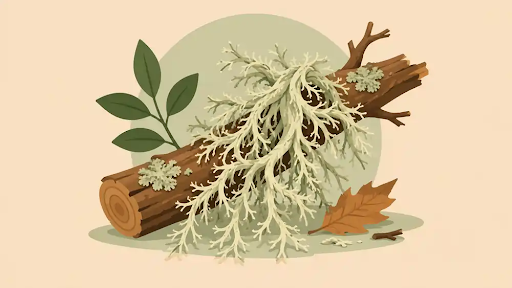
Ethical Usnea Harvesting means collecting Usnea with respect for the organism, the tree, the habitat, local rules, and future regrowth. It is not just “finding Usnea and taking it.”
Ethical harvesting considers whether the material is abundant, whether it is on a fallen branch, whether the site is clean, whether harvesting is legal, and whether enough is left behind for the ecosystem.
The goal is restraint. A responsible harvester takes less, damages less, and avoids turning a slow-growing lichen into a casual bulk commodity.
Why Fallen Branches Are Preferred
Fallen branches are preferred because they reduce direct disturbance to living trees and attached lichen communities. When Usnea is already on a branch that has naturally fallen, collection can be less intrusive than pulling from live bark and live limbs.
This does not mean every fallen branch is automatically appropriate. The area still matters. Roadside, sprayed, polluted, industrial, or contaminated sites are poor choices.
But as a general sustainability principle, fallen material is easier to justify than stripping living trees.
Quick Comparison: Ethical vs Random Usnea Harvesting
| Factor | Ethical Harvesting | Random Foraging |
| Source | Prefers fallen branches and low-impact collection | Pulls from any visible tree growth |
| Identification | Confirms Usnea and avoids look-alike guesses | Relies on “it looks like old man’s beard” |
| Quantity | Takes a small amount and leaves plenty behind | Collects as much as possible |
| Location | Avoids polluted, sprayed, roadside, and restricted areas | Collects wherever it is convenient |
| Rules | Checks local laws and land permissions | Assumes natural material is free to take |
| Sustainability | Respects slow growth and habitat value | Treats lichen as unlimited material |
Why Usnea Should Not Be Stripped From Living Trees
Usnea is part of a living ecological community. When people strip visible lichen from living trees, they remove material that may have taken a long time to develop.
Tree branches can host many organisms at once: lichens, mosses, insects, fungi, small invertebrates, and microbial life. Pulling large amounts from live branches can disturb more than the target organism.
Ethical harvesting is not just about whether the tree survives. It is about respecting the whole microhabitat.
Why Slow-Growing Lichens Need Extra Respect
Many lichens grow slowly compared with common garden herbs. A patch of Usnea may not replace itself quickly after heavy harvesting.
That slow growth changes the ethics. Taking a handful from a fallen branch is different from stripping many trees across an area. Repeated harvesting can reduce local availability and affect habitat structure.
When an organism grows slowly, restraint becomes part of quality.
Why Common Names Can Lead to Bad Harvesting
Usnea is often called old man’s beard, beard lichen, beard moss, or tree moss. These names are descriptive, but they can mislead beginners.
Not everything that hangs from a tree is Usnea. Spanish moss is not Usnea. True moss is not Usnea. Other lichens can look stringy, pale, or beard-like from a distance.
Ethical harvesting starts with accurate identification. A common-name guess is not enough.
Identification Is a Safety and Sustainability Step
Identification is not only about personal use. It is also about avoiding waste and unnecessary damage. If a beginner harvests the wrong organism, they may damage local growth and still end up with unusable material.
Usnea is a lichen, usually recognized by its branching, hair-like form. Many Usnea species also have a pale elastic central cord inside the outer layer, but no single clue should be used alone.
Use multiple references, regional field guides, and expert confirmation before collecting anything.
Why Local Rules Matter
Natural material is not automatically legal to collect. Public parks, protected forests, nature reserves, private land, tribal lands, conservation areas, and research sites may restrict or prohibit harvesting.
Even fallen material may be protected in some places because it contributes to habitat, soil, insects, fungi, and nutrient cycling.
Ethical Usnea Harvesting includes permission. If the rules are unclear, do not collect.
Why Pollution and Site Quality Matter
Usnea and other lichens can be sensitive to air quality and environmental conditions. They grow exposed on trees and branches, which means location matters.
A roadside branch is not the same as material from a clean, low-impact forest area. Avoid roadsides, industrial zones, sprayed orchards, treated landscapes, smoke-exposed sites, mining areas, and places with obvious contamination.
For any botanical or lichen material, clean sourcing matters more than convenience.
Why “Wildcrafted” Is Not Automatically Better
Wildcrafted can sound pure and premium, but it is only meaningful when collection is responsible, legal, traceable, and low-impact.
A wildcrafted product without sourcing transparency may raise more questions than it answers. Where was it gathered? Was it collected from fallen branches? Was it taken from a protected area? Was the site clean? Was the identity verified?
Wild does not automatically mean ethical. It needs context.
What Responsible Suppliers Should Clarify
A responsible supplier should be able to explain sourcing at a practical level. That does not always mean revealing sensitive harvest locations, but it should mean providing confidence about identity, quality, and responsible collection practices.
Useful signals include clear Usnea identification, harvest method, general region, sustainable gathering language, quality control, contaminant awareness, and transparent product form.
Secrets Of The Tribe takes a cautious editorial stance here: a responsible Usnea product should not depend only on romantic forest language; it should make sourcing easier to understand.
Why Buying a Tincture Can Be More Practical Than Foraging
Buying a tincture can be more practical for people who are not trained in lichen identification, local harvesting rules, drying, storage, and quality control.
A finished tincture may offer convenience, consistent format, labeled serving directions, declared base, and less guessing about preparation. It also avoids the temptation to strip living trees or collect from questionable sites.
This does not make every tincture automatically good. It means a transparent product can be easier to evaluate than random self-harvested material.
Foraging vs Buying Usnea Tincture
| Question | Self-Harvesting | Buying a Tincture |
| Identification | Requires confident field ID | Should be handled by supplier and label transparency |
| Local rules | Harvester must check permissions | Buyer should check sourcing claims |
| Site quality | Harvester must assess pollution risk | Supplier should manage quality control |
| Preparation | Requires drying, cleaning, and storage knowledge | Product is already prepared |
| Convenience | Lower convenience, more responsibility | Higher convenience, still needs label review |
| Sustainability | Depends on harvester behavior | Depends on supplier practices |
Why “Take Only a Little” Is Not Enough
“Take only a little” is a useful idea, but it is incomplete. Ethical harvesting also depends on where you collect, what you collect from, how abundant the lichen is, whether the land allows collection, and whether you can identify the organism correctly.
A small amount from a restricted site is still a problem. A small amount from a polluted roadside is still poor sourcing. A small amount of the wrong species is still bad identification.
Responsible harvesting requires several checks, not one simple rule.
Why Fallen Material Still Belongs to the Ecosystem
Fallen branches are often better than live stripping, but fallen material is not ecological trash. It can provide habitat, shelter, nutrients, and structure for insects, fungi, microbes, and soil processes.
This is why ethical collection still means taking modest amounts and leaving plenty behind.
Fallen branches matter, but they do not erase the need for restraint.
How Beginners Should Think Before Harvesting
Beginners should start by asking whether harvesting is necessary at all. If the goal is curiosity, observation and photography may be better than collection.
If the goal is product use, buying from a transparent supplier may be more practical than self-harvesting. If the goal is field study, collect only where allowed and only in amounts appropriate for learning.
Do not let easy access replace good judgment.
Ethical Usnea Harvesting Checklist
Use this checklist before considering any Usnea collection. It is designed for sustainability literacy, not medical use. When in doubt, leave the lichen where it is and choose observation or a transparent finished product instead.
Confirm the Identity
Make sure the organism is actually Usnea, not Spanish moss, true moss, another lichen, or a look-alike.
Check Local Rules
Confirm whether harvesting is allowed on that land. Public, private, protected, and conservation areas can have different rules.
Prefer Fallen Branches
Choose naturally fallen branches instead of stripping Usnea from living trees or live branches.
Avoid Polluted Sites
Do not collect from roadsides, industrial areas, sprayed landscapes, treated orchards, or visibly contaminated locations.
Take Very Little
Collect only a modest amount, and only when the population appears abundant enough to tolerate minimal removal.
Leave Most Behind
Keep the habitat intact. Fallen branches and lichens still support local ecological processes.
Do Not Damage Trees
Do not scrape bark, break branches, climb dangerously, or remove large mats from living wood.
Document the Source
Record the general location, date, habitat, and conditions for your own accountability.
Consider Buying Instead
If you lack identification skills, preparation knowledge, or legal certainty, a transparent tincture or finished product may be more practical.
Common Mistakes to Avoid
Pulling From Living Trees
Visible growth is not permission to strip living branches. Fallen material is usually the lower-impact option.
Trusting a Common Name
Old man’s beard and beard moss are not precise enough for responsible harvesting.
Ignoring Local Restrictions
Some lands prohibit collecting natural material, even if it has fallen.
Collecting Near Roads
Convenient roadside material may be exposed to pollution, dust, runoff, or other contaminants.
Taking Too Much From One Place
Slow-growing lichens should not be harvested like fast-growing garden herbs.
FAQ on Ethical Usnea Harvesting
What is Ethical Usnea Harvesting?
It is low-impact Usnea collection that respects identification, local rules, fallen material, clean sites, sustainability, and habitat.
Why are fallen branches better for Usnea harvesting?
Fallen branches reduce the need to strip lichens from living trees and can lower direct habitat disturbance.
Can I pull Usnea from a live tree?
It is better not to. Ethical harvesting favors fallen branches and minimal disturbance.
Is Usnea moss?
No. Usnea is a lichen, not true moss.
Is old man’s beard always Usnea?
No. Common names can vary by region and may refer to different organisms.
Is wildcrafted Usnea always better?
No. Wildcrafted only matters when identity, legality, clean sourcing, and sustainable collection are clear.
Can I collect Usnea from roadside trees?
Roadside collection is a poor idea because of pollution, dust, runoff, and contamination concerns.
Why buy Usnea tincture instead of harvesting?
A transparent tincture can reduce identification, preparation, legal, and quality-control guesswork for beginners.
Should I harvest Usnea if I am unsure?
No. If identification, legality, or site quality is uncertain, leave it in place.
Glossary
Usnea
A genus of lichens often called old man’s beard because of its branching, hair-like appearance.
Lichen
A partnership involving a fungus and a photosynthetic partner such as an alga or cyanobacterium.
Old Man’s Beard
A common name often used for Usnea, though common names can vary and mislead.
Ethical Harvesting
Collecting natural material in a way that considers legality, sustainability, habitat, and future regrowth.
Fallen Branch
A branch that has naturally fallen from a tree and may carry lichens, mosses, fungi, and other organisms.
Wildcrafted
Collected from the wild rather than cultivated, ideally with responsible and legal practices.
Sustainable Sourcing
Sourcing that considers long-term availability, habitat health, and responsible harvest limits.
Look-Alike
An organism that resembles the target species or genus but is not the same.
Contamination
Unwanted exposure to pollutants, sprays, heavy traffic residues, industrial dust, or other environmental concerns.
Tincture
A liquid preparation made by extracting botanical or lichen material into a liquid base such as alcohol or glycerin.
Conclusion
Ethical Usnea Harvesting means choosing restraint over convenience: prefer fallen branches, avoid living-tree stripping, check local rules, confirm identity, and respect slow-growing lichens. For many beginners, a transparent Usnea tincture is more practical than random foraging.
Sources
Usnea overview and lichen identification context, Encyclopedia of Life — eol.org/pages/19688
Lichen biology and fungus-photosynthetic partner explanation, U.S. Forest Service — fs.usda.gov/wildflowers/beauty/lichens
Lichen conservation and slow-growth context, British Lichen Society — britishlichensociety.org.uk
Guidance on responsible wild collection and avoiding overharvesting of native plants, United Plant Savers — unitedplantsavers.org
Leave No Trace principles for minimizing outdoor impact and respecting natural objects, Leave No Trace — lnt.org/why/7-principles
Public land collecting rules and permit awareness for forest products, U.S. Forest Service — fs.usda.gov/visit/know-before-you-go/forest-products
Dietary supplement consumer guidance and label-reading basics, U.S. Food and Drug Administration — fda.gov/food/information-consumers-using-dietary-supplements/questions-and-answers-dietary-supplements
Structure/function claims and required dietary supplement disclaimer language, U.S. Food and Drug Administration — fda.gov/food/nutrition-food-labeling-and-critical-foods/structurefunction-claims