

There is a conversation that happens a lot in Philippine business circles, and it usually sounds something like this: “Malakas ang buwan namin last month, but this month parang wala.” Strong one month, quiet the next. No clear reason for either. Just a feeling that the business is riding a wave it did not create and cannot control.
That is not a cash flow problem. That is a systems problem. And the difference matters because one of those problems you can actually solve.
Revenue Is Not Random. It Just Feels That Way Without a System.
When a business has no underlying structure for how leads come in, how they are handled, and how they move toward a purchase, the revenue that comes out the other end is essentially random. Good months happen when conditions happen to align: a post goes viral, a referral comes through, or a slow competitor loses a client who finds you instead. Bad months happen when those conditions do not show up.
The owner of a business like this has no real way to predict what next month will look like. They can hope. They can post more content. They can run another ad. But they cannot sit down with their numbers and say with any confidence: based on what is currently in our pipeline, here is what we expect to close this month.
That kind of clarity is not a luxury reserved for large corporations. It is available to any local business that has taken the time to build the right foundation. The businesses that have it are not smarter or luckier than the ones that do not. They just have business systems in place that their competitors have not built yet.
What a Business System! Actually Is
The phrase gets used a lot without much explanation, so it is worth being specific. A business system is any repeatable process that produces a consistent result without depending on a specific person’s memory, availability, or effort on any given day.
When a lead comes in through your website and automatically receives a response within two minutes, when that same lead gets a follow-up message three days later if they did not book, and when a customer who completed a purchase receives a check-in message two weeks later asking about their experience, those are systems. They run whether the owner is in the office or on a flight to Palawan. They do not forget. They do not have off days. They do not need to be reminded.
The absence of these systems is what creates the inconsistency that most Philippine local businesses quietly accept as just the nature of business. It is not. It is the predictable result of running a business on human effort alone when the volume of tasks has grown beyond what any one person or small team can handle reliably.
The Four Areas Where Systems Change Everything
Most local businesses in the Philippines lose revenue in four specific places, and most owners do not realize it because the losses are invisible. No one sends you a notification that says a lead went cold because the follow-up never went out. You just see a quieter month and wonder why.
The first area is lead capture. If someone finds your business through search, through a referral, or through an ad and there is no clear and immediate path for them to take action, a percentage of them simply leave. They meant to come back. They did not. A proper capture system makes sure that interest gets collected before it disappears.
The second area is lead response. Speed matters more than most business owners want to believe. The difference between responding in five minutes and responding in two hours is not a minor inconvenience for the potential customer; in many cases it is the entire sale. A system handles this at a speed no human team can consistently match.
The third area is follow-up. Most leads do not convert on the first contact. They need to hear from you again, maybe twice, maybe three times, before they are ready to move forward. When follow-up depends on a person remembering to do it, it happens inconsistently. When it is automated, it happens every time.
The fourth area is retention. Getting a new customer costs significantly more than keeping an existing one. A system that checks in with past customers, offers them relevant updates, and keeps the relationship warm costs almost nothing to run and produces a disproportionate amount of repeat revenue.
Chi Rivers and The Digital Authority have built their entire growth program around repairing these four areas for local Philippines businesses that are already earning but not yet structured. The program is not about adding more to your plate. It is about building the infrastructure that handles what is currently falling through the cracks.
Why Most Business Owners Delay Building Systems
Here is the honest reason most local business owners in the Philippines have not built proper systems yet: when you are busy, building systems feels like one more thing to do on top of everything else. And when you are slow, it feels less urgent because the problem seems to have temporarily solved itself.
This is the trap. Busy periods are exactly when broken systems cause the most damage because there are more leads to lose and more follow-ups to drop. Slow periods are exactly when the work of building systems would pay off fastest because you finally have the time to do it properly.
The result is that most businesses keep running on improvised processes long after the point where those processes stopped being adequate. The owner keeps being the system. The revenue keeps being unpredictable. And the goal of building something that could eventually run without the founder being present every day keeps getting pushed further into the future.
What Predictable Revenue Actually Looks Like
A business with proper systems does not eliminate uncertainty entirely; no honest person would promise that. What it does is dramatically narrow the range of outcomes. Instead of revenue that swings wildly between good months and bad ones, you get a business that has a floor: a baseline of consistent activity that the systems are generating regardless of whether this particular week was a good one for external factors.
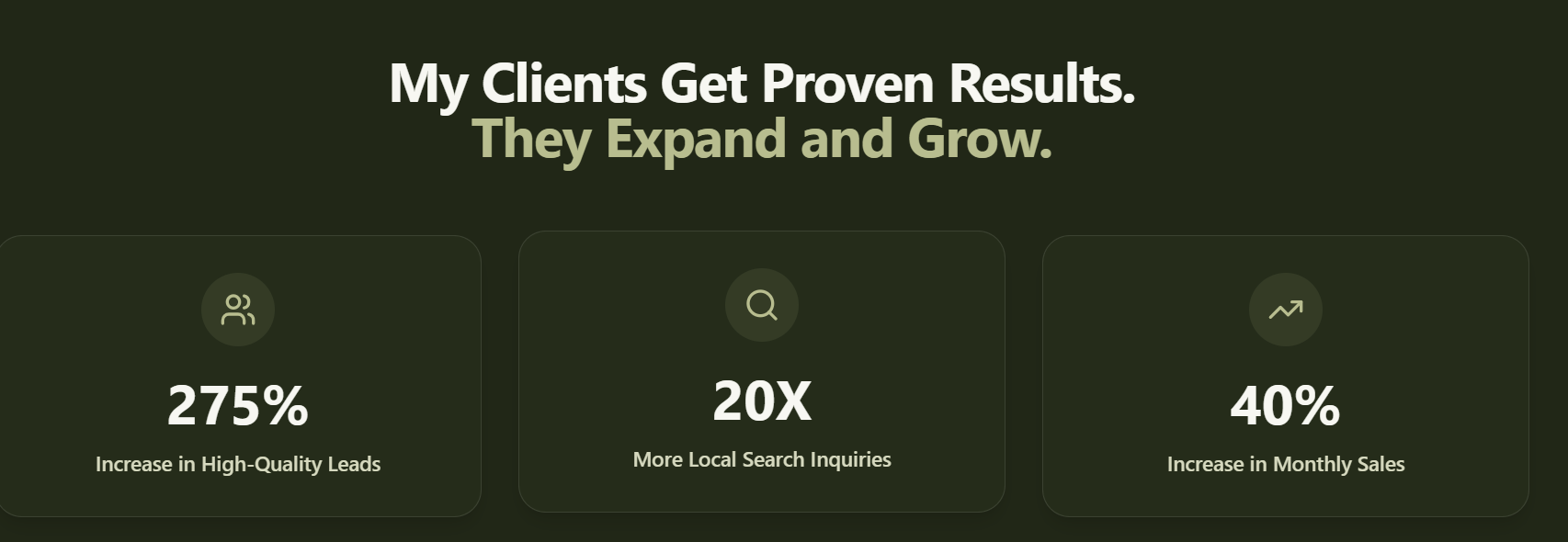
One of Chi Rivers’ clients, Yna of OMGO PH, described it simply: in less than 90 days, the business went from inconsistent to generating steady sales. They are now earning six times more, and the founder can finally focus on expansion while the marketing and systems run properly in the background.
Gyukatsu in Boracay tells a similar story. Predictable foot traffic, consistent sales, and now a second branch opening in BGC, with the same systems duplicated for the new location so the expansion does not require rebuilding everything from scratch.
These are not exceptional cases. They are what happens when a business stops relying on hope and starts running on structure.
The Real Cost of Not Having Systems
Every month a local business operates without proper systems is a month of leads that went unanswered, follow-ups that never went out, and customers who bought from a competitor simply because that competitor had a faster, more consistent process.
These losses are real even though they are invisible. You do not see the sale you did not make. You do not get a report showing how many leads went cold last month because no one followed up. You just see the revenue number at the end of the month and wonder if you could have done more.
The answer is almost always yes. Not by working harder but by building the systems that make the work you are already doing actually count.
Chi Rivers has spent years doing exactly this for local businesses across the Philippines: finding the gaps, building the infrastructure, and creating the conditions for revenue that compounds instead of fluctuating. For any business owner who is tired of strong months feeling like luck and slow months feeling like failure, that predictability is not out of reach. It is just on the other side of the systems that have not been built yet.
There is more to Chi Rivers than spreadsheets and automation workflows. Outside of her work building business systems for local businesses across the Philippines, she is currently writing her first fiction novel titled “All The Lies She Lived.” It is a passion project that speaks to who she is beyond the frameworks: someone who thinks carefully, builds deliberately, and finishes what she starts. The book will be available soon on Amazon, Kindle, and Barnes and Noble, and for anyone who wants to understand the kind of mind behind the systems she builds, it is worth watching for.