

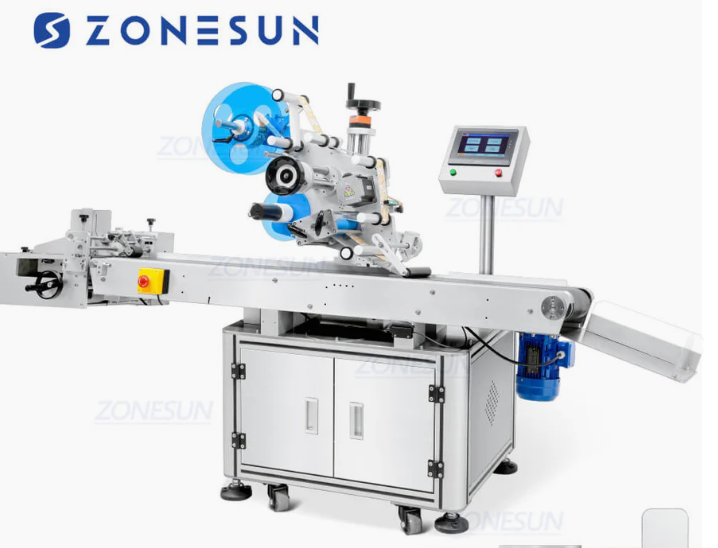
In today’s fast-paced manufacturing and packaging industries, consistent product labeling is critical for maintaining quality, brand identity, and regulatory compliance. Manual labeling often results in errors such as misaligned, crooked, or incomplete labels, which can damage product appearance and reduce consumer confidence. A labeler machine addresses these challenges by automating the labeling process, providing precision, speed, and reliability across high-volume production lines. By using a labeler machine, manufacturers can ensure that every product receives a perfectly applied label, regardless of production speed or container shape.
Automated Label Placement
A core feature of a labeler machine is its automated label placement system. Labels are typically supplied on rolls and fed through the machine using precision rollers and guiding mechanisms. As products move along the conveyor, sensors detect their exact position, allowing the labeler machine to apply each label at the same spot consistently. This ensures that labels are properly aligned and uniform across every unit, eliminating inconsistencies that are common with manual application.
Automation also allows the labeler machine to maintain consistent application pressure and angle. Unlike manual labeling, where human error can cause slight variations, an automated system applies each label with the same precision, ensuring professional-quality results. For industries such as food, beverage, cosmetics, and pharmaceuticals, where presentation and compliance are critical, this level of consistency is essential.
Advanced Sensors and Detection Systems
Modern labeler machines are equipped with advanced optical sensors and detection systems. These sensors track the position, orientation, and size of each product to prevent misapplied or misaligned labels. For example, if a container is slightly tilted or off-center, the labeler machine can adjust the label placement in real-time to maintain accuracy.
These detection systems are particularly valuable when dealing with containers of varying shapes and sizes. Round, square, oval, or uniquely shaped bottles can all be accurately labeled because the labeler machine adapts to product variations, ensuring uniform labeling across the entire production line.
Flexible Settings for Different Products
A labeler machine provides flexible and customizable settings to ensure consistent labeling across various product types. Key features include:
- Adjustable Label Placement
Operators can set the exact position where the label should be applied on each container. This ensures that every product receives a precisely aligned label, regardless of size or shape. - Customizable Labeling Speed
The labeler machine allows speed adjustments to match production line requirements, ensuring smooth operation even in high-volume production. - Variable Product Spacing
The machine can be programmed to handle different distances between products, adapting to various packaging configurations without causing errors or delays. - Quick Changeover Between Products
With programmable options, operators can switch between different container sizes and label types without downtime, maintaining production efficiency. - Optimized Label Alignment for Complex Designs
Whether the label includes branding, barcodes, or regulatory information, the labeler machine ensures each element is positioned accurately, even on irregularly shaped containers. - Support for Diverse Packaging Needs
This flexibility makes the labeler machine suitable for industries with multiple product types, helping manufacturers maintain consistent labeling across all production runs.
Integration With Automated Production Lines
Consistency is further enhanced when a labeler machine is integrated into a fully automated production line. Products move continuously along conveyors through filling, capping, or packaging stations before reaching the labeling area. The labeler machine synchronizes with the entire line, applying labels without disrupting workflow.
This seamless integration allows high-speed production lines to maintain consistent labeling across thousands of units per hour. By automating the labeling process, manufacturers reduce bottlenecks, minimize errors, and increase throughput, all while maintaining uniform label placement.
Reduced Human Error
Manual labeling introduces variability due to fatigue, misalignment, or inconsistency. By relying on a labeler machine, manufacturers minimize human error, ensuring that labels are applied with uniform pressure, angle, and alignment. This reduces the likelihood of mislabeling, product waste, and rework, leading to more efficient and cost-effective operations.
Maintenance and Long-Term Accuracy
To maintain consistent labeling performance, proper maintenance of the labeler machine is essential. Regular cleaning of rollers, sensors, and guides prevents adhesive buildup and mechanical wear that can compromise label placement. Routine calibration and preventive maintenance ensure that the labeler machine continues to deliver precise labeling even in high-volume production environments.
Conclusion
A labeler machine ensures consistent product labeling through automated placement, advanced sensors, flexible settings, and seamless integration with production lines. By minimizing human error and providing precise, repeatable label application, a labeler machine guarantees professional, uniform results across all products. For manufacturers aiming to maintain high-quality standards, improve efficiency, and protect brand integrity, investing in a labeler machine is a practical and effective solution.