

In Vitro Permeation Testing (IVPT) plays a significant role in the advancement of transdermal drug delivery systems. It is a pivotal technique that aids in understanding the permeation characteristics of drugs through the skin. By leveraging IVPT, researchers and pharmaceutical companies can accurately predict how a drug will behave once it is applied topically. This process not only optimizes drug formulation but also ensures efficacy and safety for end users.Transdermal drug delivery systems are crucial as they offer a non-invasive method to administer medications, providing a steady release of the medication over an extended period. This method improves patient compliance and minimizes side effects compared to oral drug delivery methods. Understanding and optimizing this process with tools like IVPT is essential for the future of effective transdermal therapies.
What is In Vitro Permeation Testing (IVPT)?
Definition and Purpose
In Vitro Permeation Testing (IVPT) is a laboratory technique used to study the permeation of substances through human or animal skin. The purpose of IVPT is to evaluate the rate at which a drug penetrates the skin layers, providing crucial data for developing and refining transdermal drug formulations. This method helps ensure that the drug formulation is both effective and safe before proceeding to clinical trials.
How IVPT Works
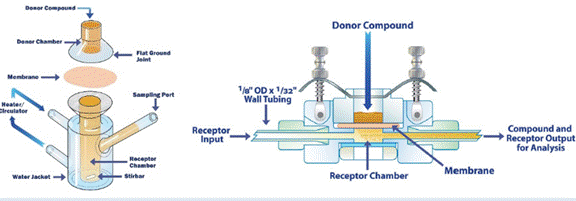
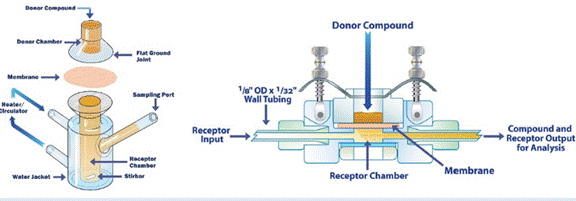
IVPT involves applying a drug formulation to the surface of excised skin samples, which are then placed in diffusion cells. These cells maintain physiological conditions while allowing the measurement of the drug that permeates through the skin over time. Samples are collected at various intervals and analyzed using techniques like liquid chromatography. The data generated offer insights into the drug’s permeation characteristics, such as the rate of absorption and total amount permeated through the skin.
Key Benefits of IVPT in Transdermal Drug Development
Improved Drug Formulation and Efficacy
IVPT enables pharmaceutical companies to iteratively test and refine drug formulations, leading to optimized efficacy and effectiveness. By analyzing the permeation characteristics, formulators can adjust the concentration, excipients, and other components to enhance the drug’s delivery through the skin. This process ensures that the final product will deliver the intended therapeutic effect while minimizing potential side effects. The data garnered through IVPT also help predict the performance of the drug in human subjects, reducing the reliance on in vivo testing at early development stages.
Accelerating Regulatory Approval
Regulatory bodies, such as the FDA, require extensive data to approve new drug formulations. IVPT offers robust and reliable data on the skin permeation properties of new formulations, facilitating a smoother and quicker regulatory review process. By demonstrating thorough understanding and optimization of a formulation’s transdermal delivery, companies can mitigate potential concerns or requirements for additional testing from regulators. This accelerates the pathway to market, allowing for faster patient access to new and innovative treatments.
IVPT vs Other Testing Methods in Transdermal Drug Development
Comparison with In Vivo Testing
While IVPT is conducted in a controlled lab environment using excised skin samples, in vivo testing involves testing on living organisms. One of the primary benefits of IVPT over in vivo testing is the ability to control external variables, leading to more consistent and replicable results. In vivo studies often come with ethical concerns, higher costs, and longer timelines. On the other hand, IVPT offers a more ethical and cost-effective initial screening method that can help refine formulations before moving to in vivo testing, thereby reducing the number of live subjects needed.
Benefits Over Other In Vitro Methods
Other in vitro methods, like ex vivo skin models or synthetic membranes, also aid in transdermal drug development, but IVPT provides superior relevance to human skin. Synthetic membranes, while useful, do not fully replicate the complex nature of human skin. Ex vivo methods offer closer approximations but are often limited by availability and conditions mimicking live skin. IVPT, using well-prepared human or animal skin samples, balances relevance, availability, and cost, providing a detailed understanding of the drug’s behavior on the skin.
Challenges in Implementing IVPT for Transdermal Drug Development
Technical and Logistical Challenges
Despite its benefits, implementing IVPT comes with several technical and logistical challenges. These include the proper sourcing and preparation of skin tissues, maintaining physiological conditions within diffusion cells, and ensuring the reliability and reproducibility of the testing environment. Laboratory equipment must be precise and properly calibrated, while skilled technicians are required to handle complex procedures. Additionally, variations in skin samples can introduce inconsistencies that must be carefully managed.
Regulatory and Validation Hurdles
Regulatory bodies demand rigorous validation of IVPT methods to ensure data accuracy and reliability. Demonstrating that IVPT protocols are both reproducible and predictive of in vivo outcomes can be challenging, requiring extensive validation studies. Regulatory requirements can vary across regions, adding complexity for companies seeking global approval. These hurdles necessitate a clear understanding of regulatory guidelines and the ability to adapt IVPT methodologies to meet diverse standards.
How IVPT Can Optimize Drug Delivery Systems
Enhancing Skin Permeability and Stability
IVPT can optimize drug delivery systems by providing insights into enhancing skin permeability and formulation stability. Researchers can experiment with various penetration enhancers and excipients to identify combinations that improve absorption. Understanding how these components interact with the skin barrier allows for the development of formulations that are both effective and stable under various conditions, ensuring consistent therapeutic effects.
Impact on Dose Formulation and Delivery
By examining the permeation rates, IVPT helps fine-tune dose formulations to achieve desired therapeutic levels. This testing allows for adjustments in the drug’s concentration, release mechanisms, and application methods. Ensuring that the drug is delivered at the optimal rate and concentration maximizes efficacy while minimizing potential side effects. This level of precision in dose formulation and delivery leads to more effective and patient-friendly transdermal drug products.
Conclusion
In Vitro Permeation Testing (IVPT) plays an indispensable role in the development of transdermal drug delivery systems. It provides essential data that help optimize drug formulations, ensuring effectiveness and safety. IVPT also offers a quicker and more ethical alternative to in vivo testing, facilitating accelerated regulatory approval.As the pharmaceutical industry continues to explore and develop new transdermal therapies, the importance of IVPT will only grow. Overcoming its challenges and fully integrating IVPT into the development pipeline can lead to significant advancements in drug delivery systems, ultimately improving patient outcomes and expanding therapeutic options. The future of IVPT promises more refined and efficient transdermal drug development processes that align with the evolving needs of medicine.