

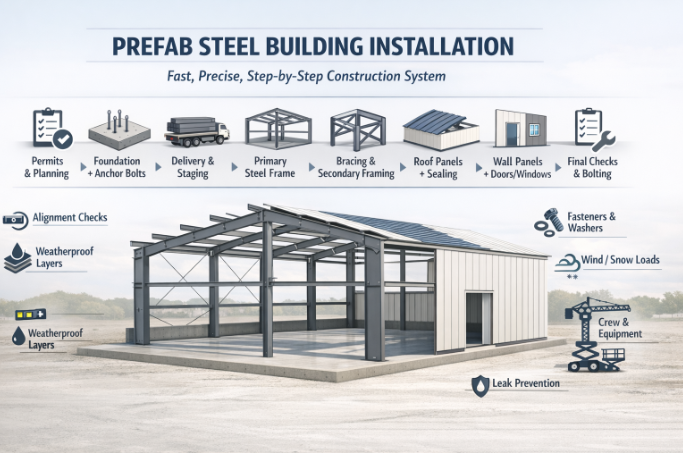
The construction of warehouses and other structures is no longer just a matter of pouring a foundation and constructing a structure on site with a hammer and nails. Prefabricated steel structures allow for organized construction without the uncertainty of older building methods. Steel structures not only allow for time-efficient construction, they also allow for organized and efficient installation of the outer layers of the building, such as wall panels and roofing. I have personally seen an entire construction site transform on multiple occasions as the outer structure was built in a matter of days. The efficient use of time is attributed to the construction process and installation method used.
In the case of steel building construction, the outer layers of the structure are created with prefabricated steel exterior panels to allow for fast assembly of the weatherproofing layers. In this construction method, the weatherproofing layers must also be built in a timely manner. Those looking to discover modern steel building solutions will find that the construction layers must be clearly aligned and fastened in a specific manner.
Why Prefabricated Steel Construction Is So Effective
The construction of prefabricated steel structures is time efficient because the construction plans are finalized before the building process begins. The prefabricated steel components, including steel columns, rafters, and other structural parts, are manufactured before arriving at the construction site to ensure that the components align with the engineered plans.
New innovations have allowed steel buildings to be constructed with nearly any interior layout of your choosing. This means the default frame layout is not a hindrance to the final design of your steel building. This is why owners often select steel building layout options early, even before completing the full interior planning.
Phase 1: Site Layout Approval, Permitting, and Planning
Before any construction can begin, the first step is gaining design approval, securing permits, and creating a site layout plan. This outline provides a framework the structure must follow to comply with local building regulations, wind exposure, snow load, and earthquake requirements. This phase also outlines utilities, drainage, and access points for the building.
Prefabricated steel structures are an industry where precision is a priority. Mistakes can create a ripple effect that slows down or even halts the pace of the entire project. This is why the first layout inspection needs to be accurate. In practice, it is standard for all pre-concrete work to be double checked by trusted and experienced crew members.
Step 2: Foundation and Anchor Bolts
The base of any steel building determines the strength of the structure. Depending on load requirements and the use case, most prefabricated steel buildings are installed on a concrete slab, concrete piers, or perimeter footings. Prior to the erection of structural steel, the concrete must fully cure, and the anchor bolts must be accurately positioned according to the engineered drawings.
Because steel columns connect directly to anchor bolts and resist wind uplift forces, misplaced anchor bolts can create a need for field fixes by installers, which delays the entire project. This is why working with a foundation contractor who specializes in steel building foundations benefits everyone involved.
Step 3: Component Inspection, Staging, and Delivery
When building packages are delivered, the installation crew typically organizes the materials in stages. This includes categorizing steel framing, fasteners, bracing, trim, and panels. Having an organized staging system saves time because the crew can work in sequence without wasting time searching for parts.
At this stage, it is also important to check the materials for shipping mistakes and verify that all items match the packing list. Effective quality control here minimizes delays during installation, especially when crews are working with prefabricated structures for the first time.
Step 4: Erecting the Primary Steel Frame
The main component of a steel building is the primary structural frame. Construction teams typically position steel base frames and columns, then lightly bolt and connect cross beams or rafters to create the skeleton of the building. Depending on the size and height of the building, crews may use cranes, boom lifts, or forklifts.
During this step, installers use temporary beams to hold the frame steady and prevent angled distortions. Once all primary and secondary steel elements are in place, the crew checks all critical structural connections and then fully tightens the bolts.
This is the stage where the prefabricated building design becomes most obvious, because the primary and secondary steel components are engineered to fit together precisely.
How Alignment Is Maintained During Installation
During construction, vertical and horizontal alignment is confirmed using string lines. Cross measurements are taken to confirm dimensions and ensure the structure remains square. Additional cross-checking helps confirm the building stays properly aligned.
Roof panels and door openings cannot be vertically or horizontally misaligned, which is why alignment checks are taken seriously throughout the frame installation process.
Step 5: Installing Secondary Framing and Bracing
Once the primary frames are secured, secondary framing is installed. This typically includes:
Eave struts
Roof purlins
Wall girts
Cross-bracing
Flange braces
These components provide attachment points for roof and wall panels and help stabilize the structure.
Bracing is especially important in commercial metal buildings because it helps prevent racking and improves wind load resistance. A well-braced steel frame becomes “locked in,” which improves both safety and installation speed during the remaining phases.
Step 6: Installing and Weatherproofing the Roof Panels
Roof panels, ridge caps, and closures are often installed first, along with roof insulation when specified. When installing roof panels, it is important to follow the same direction across the roof and overlap panels enough to prevent rainwater intrusion.
Most modern steel building panels include coatings that improve corrosion resistance and extend panel life. Screw placement and washer compression matter more than most people assume. Over-tightening screws can damage washers and lead to leaks, while under-tightening screws can weaken the panel connection and reduce durability.
Roofing also includes sealing details around vents, HVAC curbs, and skylights. These areas are often the source of the most common building leaks, so sealing work must be handled carefully with proper waterproofing methods.
Step 7: Installing Wall Panels, Doors, Windows, and Trims
Once the roof is in place, wall construction moves quickly. Wall sheets are positioned to match the design lines, and framing is reinforced around corners, openings, and edges.
Many prefabricated steel building packages include engineered frames for overhead doors, entry doors, and windows. This results in a cleaner and more efficient installation.
At this stage, owners can finally see the building’s finished shape and appearance. This is often when owners finalize exterior design choices like colors, textures, and additional facade upgrades. Even without structural upgrades, a building can feel more premium with aesthetic additions such as architectural trims, wainscoting, or decorative doors.
Step 8: Completion With Final Checks, Safety Checks, and Bolting
In the final stage, structural alignments are reviewed and adjusted, and final bolts are tightened. The crew checks braces, panels, trims, and fasteners to confirm everything is properly installed. Any missing fasteners are added, and doors are tested to confirm they open and close smoothly.
When a steel building is installed properly, it should feel seamless and weather resistant. A strong foundation, accurate anchor bolt placement, and a well-planned installation schedule typically lead to the smoothest projects.
Installation Mistakes That Should Be Avoided
Construction errors caused by rushing early phases are the most common issues seen with steel buildings. Panel overlap mistakes, improper sealing, and poorly executed early steps can create serious long-term problems.
Another frequent mistake is not planning site access for delivery and lift equipment. Poor access planning can create disorder and slow down the entire installation process.
If you want the best results with modern steel construction, it is a smart practice to hire steel building installers rather than general contractors. Steel buildings follow a specialized installation method, and experienced crews complete the work faster and more accurately.
Conclusion: The Smarter, Faster Way to Build
The process of installing a steel building is designed to prioritize speed, strength, and long-term quality. Each step, from foundation work to steel frame erection and panel installation, is meant to work together efficiently to produce a durable structure.
When you compare modern steel building designs and options, you are not simply selecting a building style. You are choosing an integrated construction system built to meet modern performance requirements. With good planning and a skilled crew, prefabricated steel construction can deliver long-term value and reliable performance.
Frequently Asked Questions
How long will the installation of a prefabricated steel building take?
Installation time depends on several factors, including building size, crew experience, weather, and equipment availability. Once the foundation is ready, many small to mid-sized steel buildings can be assembled in anywhere from a few days to a few weeks.
Do prefabricated steel buildings require a concrete slab?
Not necessarily. Many designs can be installed on slabs, pier foundations, or perimeter foundations. The best option depends on the intended use of the building, local soil conditions, and engineering requirements.
Is a crane necessary for steel building installation?
A crane is typically required for larger buildings due to the size and weight of the main frames. Smaller buildings may be installed using a forklift or boom lift, but some type of lifting equipment is usually needed in most cases.
Are steel buildings more difficult to insulate than traditional buildings?
Not necessarily, but insulation planning is an important part of the project. Depending on budget and climate goals, insulation options may include fiberglass blankets, rigid board, spray foam, or a combination of multiple systems.
Can a prefabricated steel structure be customized after installation?
Yes. Many owners expand later. Modifications such as lean-tos, interior partitions, mezzanines, and upgraded doors or windows can be added as long as the changes comply with the building’s structural guidelines.