

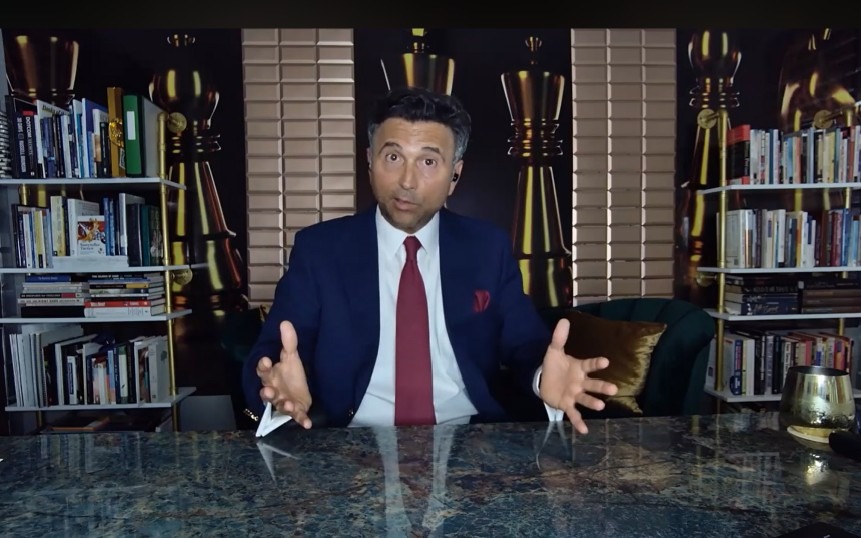
Reagan, you’re known for helping people acquire existing cash-flowing businesses, but you’re also involved in large-scale development projects—such as smart cities, infrastructure initiatives in developing countries, and alternative energy. How do you decide when to build versus when to acquire?
The distinction most people miss is the difference between speculative startups and strategic development. I don’t fund idea-stage startups that rely on hope, burn rates, and unproven demand. That model transfers risk to the investor. What we do instead is focus on asset-backed development and infrastructure projects—smart cities, alternative energy, and large-scale developments where demand, revenue pathways, and long-term utility are already validated.
For operating businesses, acquisition is often the most intelligent entry point. Around the world, there are profitable enterprises with real customers, real cash flow, and aging owners who are ready to transition. Acquiring those businesses allows clients to step into proven systems rather than reinventing them from scratch.
At 5th Avenue, the strategy is not “build versus buy”—it’s risk-adjusted capital deployment. We build when the project is infrastructure-grade and institutionally sound. We acquire when there is existing cash flow, operational stability, and a clear transition path.
In both cases, the objective is the same: preserve capital, reduce execution risk, and structure ownership intelligently—often through negotiated terms that prioritize alignment over upfront cash.
Q: What’s stopping most people from doing this?
A: They don’t know the frameworks, or they are stuck in the startup hustle myth. Many people are unfamiliar with how deals are structured outside of traditional lending and institutional investment models. Without exposure to seller financing, performance based earnouts, and asset backed arrangements, acquisitions can appear inaccessible.
The work done through 5th Avenue focuses on building fluency in non-traditional acquisitions by providing structured methods for evaluating opportunities, preparing for negotiations, and managing downside risk. Traditional business education teaches you how to write a business plan. I teach you how to walk into an inherited cotton plant, negotiate equity on the first meeting, and build a seller financed exit 18 months later.
Q: How do you screen who gets access to the Underground Club?
A: The Underground Club is an exclusive group of ownership focused members. These are disruptors who are prepared to move beyond the limitations of conventional business acquisition wisdom and into a new sphere of wealth and influence.
Access to the Underground Club is intentionally limited and guided through direct consultation. Members are selected based on alignment with the Club’s focus on discretion, strategic thinking, and long horizon planning. The intention is to create a working environment where hungry participants are committed to applying the frameworks in real world settings and contributing to a shared ecosystem of operators.
Q: Your website shows client wins across industries, ports, oil, seaweed, and textiles. Are these typical?
A: They are not only typical, but they are also repeatable. The diversity of industries reflects the adaptability of the underlying frameworks we teach. The methods taught through 5th Avenue are designed to be applied across sectors where operational businesses, physical assets, and transition opportunities exist. These are patterns forged by the same core principles of valuation, structure, and alignment that are applied within industries that match experience, geography, or strategic interest. When you learn how to see and access value others miss, the entire business world opens up.
Q: What’s your ultimate goal with 5th Avenue Capital?
A: Legacy through leverage. 5th Avenue Capital is redrawing the roadmap to generational wealth. By looking beyond conventional frameworks, members unlock opportunities they would have previously deemed inaccessible.
The focus is on helping clients build systems of control, stewardship, and continuity that can support multi generational outcomes. All of this is within reach through low-cost acquisitions with a focus on discretion, strategic alignment, and legal structure. The work is intended to produce lasting economic infrastructure. It is much bigger than any one individual deal. The result is quiet execution reflected in operating businesses, contractual ownership, and long-term financial positioning.
James – Inland Port Playbook
Closed a zero-down acquisition on a critical inland logistics site. Now expanding into a regional trade corridor with legacy infrastructure as leverage.
Mwanaisha – Seaweed Empire, Reborn
Transformed a floundering seaweed processing plant into a high-margin African export business. Used seller-financed equity and smart SOP restructuring.
Elena – Cotton to Cashflow
Inherited a textile operation with poor margins. With the 5th Avenue framework, she repositioned into sustainable fashion and scaled into global wholesale.
Samir – Phosphate, Flipped
Acquired a distressed phosphate mine in the Middle East. Repackaged contracts, secured government demand, and flipped it to a strategic buyer.
Nelson – Oil Strategy Reimagined
Acquired undervalued offshore oil licenses during a downturn. Now part of an international JV supplying critical markets.
West Africa Syndicate – Uranium Playbook
Structured an underground acquisition of uranium-rich lands, using asset-backed terms. Now deploying rare earth extraction for export markets.
French Renewable Trio – Rolled Up & Ready
Merged 3 underperforming micro-energy firms in rural France. Restructured them into a SPAC-ready green portfolio.
LATAM Water – Liquid Leverage
Used the Underground method to acquire water reclamation projects in Central America. Now exporting fresh water with tiered revenue layers.
Copenhagen Waste-to-Energy – Turnaround Win
Acquired a low-output W2E facility in Denmark. Restructured operations, secured subsidies, and turned it profitable within 180 days.
Tariq – Data Center Power Play
Carved out a dormant data center from a telecom portfolio in the Emirates. Now backed by sovereign capital and onboarding Tier 1 clients.
French VC Partners – Green SPAC Positioning
Used multiple seller-financed acquisitions to bundle renewables into an EU-compliant SPAC vehicle. Executed roll-up without outside investors.