

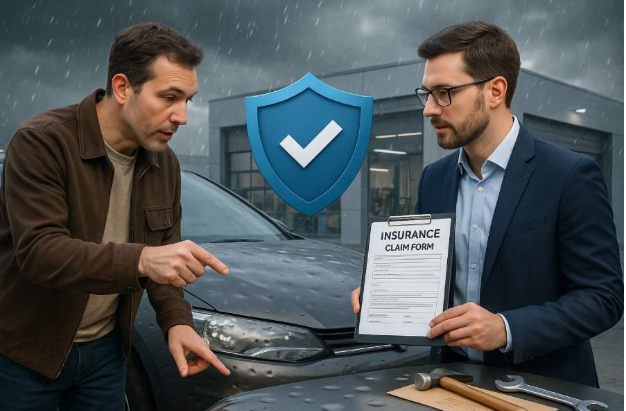
Hail damage often causes numerous dents and paint chips on a vehicle’s roof, hood, trunk, and panels, affecting both appearance and resale value. Professional hail damage assessments help ensure accurate appraisals and cost-effective repairs, often covered by insurance. Certified specialists, guided by organizations like the Paintless Dent Repair Association (PDRA), use advanced techniques such as paintless dent repair (PDR) to restore vehicles efficiently—whether through mobile hail repair services or trusted centers like Dent Wizard and HailPro.
Types of Hail Dents and Repair Options
Hail dents vary widely: from shallow, uniform dents which are ideal candidates for paintless dent repair (PDR) techniques to deeper, more severe dents that require traditional auto body repair and sometimes car panel restoration. Paintless dent repair uses specialized dent removal tools and dent pulling methods to gently massage the metal back into shape without disturbing the factory paint, making it a preferred choice for many hail dent repair specialists.
For dents affecting the vehicle paint, auto paint repair, paint touch-up repair, or even paint chip repair may be necessary. In such cases, body shop estimates will often include both the cost of dent repair and refinishing the paintwork, sometimes referred to as auto body paint blending, to ensure a uniform finish.
Mobile dent repair services provide convenient on-site hail damage restoration, saving time and reducing repair costs. Certified providers like California Dent Repair, Massive Dent Repair, and Dentworks specialize in mobile PDR, ensuring high-quality repairs that meet industry standards and maintain hail damage warranty coverage.
How Auto Insurance Covers Hail Damage
Most comprehensive auto insurance policies provide coverage for damage caused by natural elements, including hail storm damage. When you file insurance claims for hail damage, your provider—be it Geico Auto Insurance, State Farm Insurance, or Allstate Auto Insurance—will dispatch auto insurance adjusters to perform a thorough car dent inspection and hail damage appraisal.
Understanding insurer protocols can smooth the claims process considerably. Insurance adjusters assess the extent of vehicle body damage, verifying it matches the hail damage event and that repair estimates from chosen hail damage repair centers are justified. Auto insurance coverage often includes a deductible, which impacts the final cost of hail dent repair borne by the policyholder.
Many insurance companies have preferred partnerships with auto hail repair service providers such as PDR Services, Dent RX, Dent Solutions, and Elite Dent Repair. These partnerships help expedite repairs and simplify claim approvals. It’s essential to confirm whether your insurance provider offers a hail dent repair warranty to protect your vehicle in case of recurring issues or incomplete repairs.
Assessing Your Vehicle for Hail Damage Before Filing a Claim
Before filing a hail damage insurance claim, start with a thorough car dent inspection, focusing on areas like the roof, hood, doors, and trunk. While dent removal kits can reveal minor dents, certified hail damage specialists use advanced tools to assess the full extent of damage and provide a professional restoration plan.
Obtaining multiple body shop estimates is advisable to compare the cost of hail dent repair and the proposed repair process. Estimates typically include the cost for paintless dent repair, auto paint repair, panel restoration, and any necessary auto body restoration services. Opting for automotive hail repair centers accredited by the Paintless Dent Repair Association (PDRA) ensures reliable and trustworthy work.
Step-by-Step Guide to Filing a Hail Damage Insurance Claim
Document the Damage:
Begin with detailed photos and notes concerning the car surface repair requirements. Capture images from various angles, focusing on all car dings and dents and any paint damage like paint chips or scratches.
Contact Your Insurance Provider:
Notify your insurer promptly. Providers such as Geico Auto Insurance, State Farm Insurance, and Allstate Auto Insurance have dedicated hail damage claims departments. They will guide you through the claim submission, outline your deductible, and arrange for an auto insurance adjuster to inspect your vehicle.
Schedule a Hail Damage Appraisal:
The auto insurance adjuster will perform a thorough hail damage assessment, often recommending reliable auto hail repair service centers like HailStrike or Dent Ready. These centers are generally experienced in dealing with insurance companies and offer accurate body shop estimates.
Choose a Certified Repair Center:
Select a car body shop or mobile dent repair service recognized for their hail repair certifications and excellent customer feedback, such as Dent King, The Dent Doctor, or Auto Dent Specialists. Certified providers employ the latest dent repair techniques and ensure adherence to industry standards, including proper auto body paint blending and paint touch-up repair if needed.
Review the Repair Estimate:
Confirm that the provided body shop estimates encompass all repair elements, including paintless dent repair or auto paint repair, car panel restoration, and any auto damage mitigation services. Ensure the estimate aligns with the insurance adjuster’s appraisal.
Authorize the Repair:
Once the insurance company approves the claim and settles the payment (minus your deductible), authorize the repair shop to begin the hail damage repair process.
Inspect Post-Repair Work:
Upon completion, inspect your vehicle thoroughly for quality assurance. Ensure dents are fully removed, paint is flawless without discernible blending patches, and all car surface repair matches your pre-damaged condition. Many top-tier auto hail repair centers provide a comprehensive hail damage warranty for added peace of mind.
By adhering to this structured approach, vehicle owners can maximize insurance benefits, minimize out-of-pocket expenses like car dent removal cost, and rely on expert dent repair specialists to restore their vehicles effectively and efficiently.
For those seeking professional auto hail repair in Houston, DentWerx is a leading choice for certified paintless dent repair solutions and efficient hail damage restoration services.
Statistical Data: Impact and Frequency of Hail Damage Claims in the US
- Percentage of vehicles affected by hail annually: 15%
- Average cost of hail dent repair per vehicle: $1,500 – $3,000
- Increase in insurance claims for hail damage during major hail storms: 40% surge
- Average insurance deductible for hail damage claims: $500
- Ratio of paintless dent repair to traditional auto body repair in hail damage cases: 70% PDR, 30% traditional repair
Sources: Paintless Dent Repair Association, Kelley Blue Book, Insurance Information Institute
Documentation and Evidence Needed for Your Claim
When filing an insurance claim for hail damage, proper documentation is crucial to ensure claim approval and an accurate appraisal. Start with a detailed car inspection right after the hailstorm—take clear, high-resolution photos from multiple angles showing all car dents, paint chips, and roof or panel damage.
Keep detailed notes and records of the repair process, including estimates, invoices, and certifications from hail damage repair centers. Whether you choose paintless dent repair (PDR) or full auto paint repair, documentation from certified specialists and a valid hail repair warranty can significantly strengthen your claim.
Dealing with Insurance Adjusters and Inspection Process

Interacting with auto insurance adjusters represents a core component of navigating insurance claims for hail damage. Adjusters evaluate vehicle damage, confirm the type of repairs needed, and ascertain the cost of hail dent repair before approving the claim. Preparation is key; make sure your car dent inspection report and photographic evidence clearly show all vehicle dents and paint chips. If the adjuster overlooks or downplays certain damage, enlist your chosen dent repair specialists or a third-party appraiser to provide a secondary hail damage appraisal.
Hail damage repair centers partnered with providers like HailPro or HailStrike work directly with insurance adjusters to simplify the repair process, from inspection to paintless dent repair or auto paint repair. Choosing certified shops such as California Dent Repair, Dentworks, or Massive Dent Repair can also expedite claims, as they follow trusted industry standards and electronic estimate submissions.
Understanding the inspection process helps car owners prevent underreported damage and ensures full compensation for automotive hail repair services.
Tips to Avoid Common Mistakes When Filing Your Claim
To optimize your insurance claims for hail damage, avoid these frequent pitfalls:
- Insufficient Evidence: Neglecting a detailed hail damage assessment may lead to missed vehicle body damage or a lower appraisal amount.
- Delaying Reporting: Promptly file your claim post hail storm damage to prevent denial due to late claims or ongoing car surface repair deterioration.
- Ignoring OEM Standards: Accepting the first repair estimate without confirming OEM versus aftermarket repairs, which could lower quality.
- Accepting Low Adjuster Estimates: Auto insurance adjusters from companies like Geico, State Farm, or Allstate may underestimate repair costs; counter with professional appraisals.
- Not Verifying Warranties: Ensure your chosen repair center provides a hail damage warranty or hail dent repair warranty to cover recurring issues.
Key Takeaways
-
- Comprehensive documentation including photos and detailed hail damage assessments strengthens insurance claims for hail damage.
- Choosing repair shops that follow OEM standards or certified PDR techniques ensures high-quality auto body restoration and long-term durability.
- Understanding the insurance adjuster inspection process and communicating effectively is critical to getting full compensation.
- Avoid common pitfalls such as delayed claims, insufficient evidence, and accepting low estimates to protect your interests.
- If denied or underpaid, seek re-inspection, expert appraisals, and consider appeals with support from reputable hail damage repair centers and industry organizations.