

Why the Right Solar Battery Choice Matters
Choosing the right battery for your solar energy system is one of the most consequential decisions you will make when going solar. The battery determines how much energy you can store, how long the system lasts, how much maintenance it requires, and ultimately, how much money you save over the lifetime of the installation.
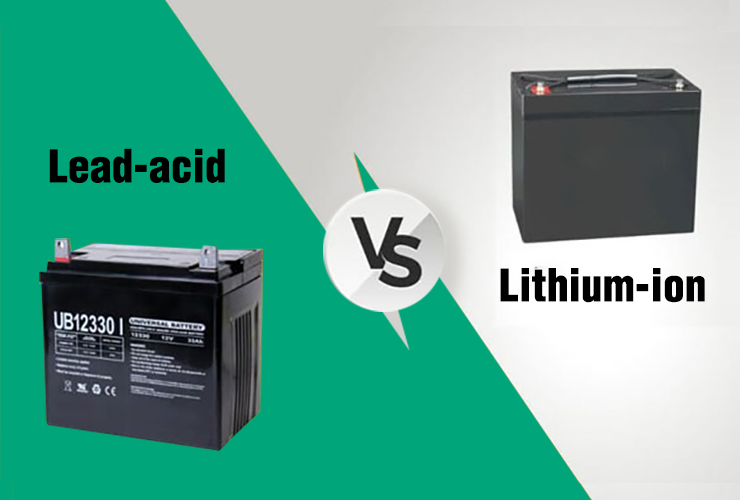
For decades, lead-acid batteries dominated the solar storage market. But the rapid rise of the lithium ion solar battery has fundamentally changed this landscape. Today, anyone evaluating a solar storage solution needs to seriously consider the lithium ion solar battery as the primary option and this comprehensive comparison will show you exactly why.
Energy Density: Lithium Ion Solar Battery Takes the Lead
Energy density refers to how much energy a battery can store per unit of weight or volume. This matters enormously in solar applications where space and weight constraints are common.
A lithium ion solar battery offers an energy density of approximately 150 to 200 Wh per kilogram. Lead-acid batteries, by contrast, deliver only 30 to 50 Wh per kilogram. This means that for the same amount of stored energy, a lithium ion solar battery weighs three to five times less than an equivalent lead-acid system.
In practical terms, a lithium ion solar battery system capable of storing 10 kWh of usable energy might weigh 60 to 80 kg. An equivalent lead-acid system accounting for depth-of-discharge limitations might weigh 300 to 400 kg. This dramatic difference in weight and size makes the lithium ion solar battery the only viable option for many residential and commercial applications where space is limited.
Cycle Life: Where Lithium Ion Solar Batteries Shine
Cycle life the number of charge-discharge cycles a battery can perform before its capacity drops significantly is one of the most important metrics for a solar battery.
A premium lithium ion solar battery, particularly those using LiFePO4 chemistry, delivers 3,000 to 6,000 full charge-discharge cycles at 80% depth of discharge. At a typical rate of one cycle per day in a solar application, this translates to 8 to 16 years of service life.
Lead-acid batteries, even premium deep-cycle variants, typically deliver only 300 to 800 cycles at 50% depth of discharge. With daily solar cycling, a lead-acid battery bank may need replacement every 2 to 4 years.
When the cost of multiple lead-acid replacements is factored in, the lifetime cost of a lithium ion solar battery system is often lower than a lead-acid system even though the upfront cost of the lithium ion solar battery is higher.
Charge and Discharge Efficiency Compared
Round-trip efficiency describes how much energy you get back from a battery relative to what you put in. This metric has a direct impact on how much of your solar energy is actually usable.
A lithium ion solar battery achieves round-trip efficiency of 95 to 98%. This means that for every 100 kWh of solar energy stored, 95 to 98 kWh is available for use. Lead-acid batteries have a round-trip efficiency of only 70 to 85%, meaning 15 to 30% of stored energy is lost as heat during the charge-discharge cycle.
Over a year, this efficiency difference can amount to hundreds of kilowatt-hours of wasted solar energy in a lead-acid system energy that a lithium ion solar battery would have delivered to your appliances instead. For homeowners trying to maximize self-consumption and minimize grid reliance, the higher efficiency of a lithium ion solar battery translates directly into greater savings.
Depth of Discharge: Getting More from Your Lithium Ion Solar Battery
Depth of discharge (DoD) is the percentage of a battery’s total capacity that can be used in a single cycle. Using a battery beyond its recommended DoD accelerates degradation and shortens its lifespan.
A lithium ion solar battery can be safely discharged to 80 to 100% of its rated capacity. Some LiFePO4 lithium ion solar batteries are rated for 100% DoD, meaning you can use every kilowatt-hour you paid for without damaging the battery.
Lead-acid batteries, however, should not be discharged below 50% DoD without risking accelerated capacity loss. This means a 10 kWh lead-acid battery only delivers 5 kWh of usable energy in practice, while a 10 kWh lithium ion solar battery delivers 8 to 10 kWh.
The practical implication is clear: to get the same amount of usable energy, you need twice as much lead-acid capacity compared to a lithium ion solar battery. When purchasing price per usable kWh is calculated, the cost advantage of lead-acid batteries largely disappears.
Real-World Applications: Where Lithium Ion Solar Batteries Excel
While lead-acid batteries can still find niche applications in low-budget, low-cycle-frequency scenarios, the lithium ion solar battery is superior in virtually every real-world solar application:
Daily Cycling Solar Homes: Homes that cycle their batteries daily for self-consumption benefit enormously from the lithium ion solar battery’s long cycle life and high efficiency.
Backup Power Systems: For applications where the battery sits unused for extended periods but must deliver reliable power during outages, the lithium ion solar battery’s low self-discharge rate typically 1–2% per month ensures it holds its charge far better than lead-acid alternatives.
Mobile and Portable Solar: Caravans, boats, and portable solar generators benefit from the lightweight and compact nature of lithium ion solar batteries.
Commercial and Industrial Solar: Businesses requiring scalable, high-power storage systems prefer lithium ion solar batteries for their reliability, low maintenance, and compatibility with sophisticated energy management systems.
Grid-Scale Storage: At the utility level, lithium ion solar battery technology is deployed in massive battery farms that store renewable energy for grid balancing a testament to the technology’s reliability and scalability.
FAQs
Q1: Is a lithium ion solar battery worth the higher upfront cost compared to lead-acid?
A: Yes. When you account for longer cycle life, higher usable capacity, lower maintenance requirements, and better efficiency, a lithium ion solar battery almost always delivers a lower total cost of ownership over the system’s lifetime.
Q2: Can I replace my lead-acid solar batteries with a lithium ion solar battery?
A: In many cases, yes. However, your existing charge controller and inverter must be compatible with lithium ion solar battery charging profiles. Consult a solar professional before making the switch.
Q3: What is the self-discharge rate of a lithium ion solar battery?
A: Lithium ion solar batteries typically self-discharge at 1–2% per month, compared to 4–6% per month for lead-acid batteries. This makes them ideal for backup systems that sit idle for extended periods.