

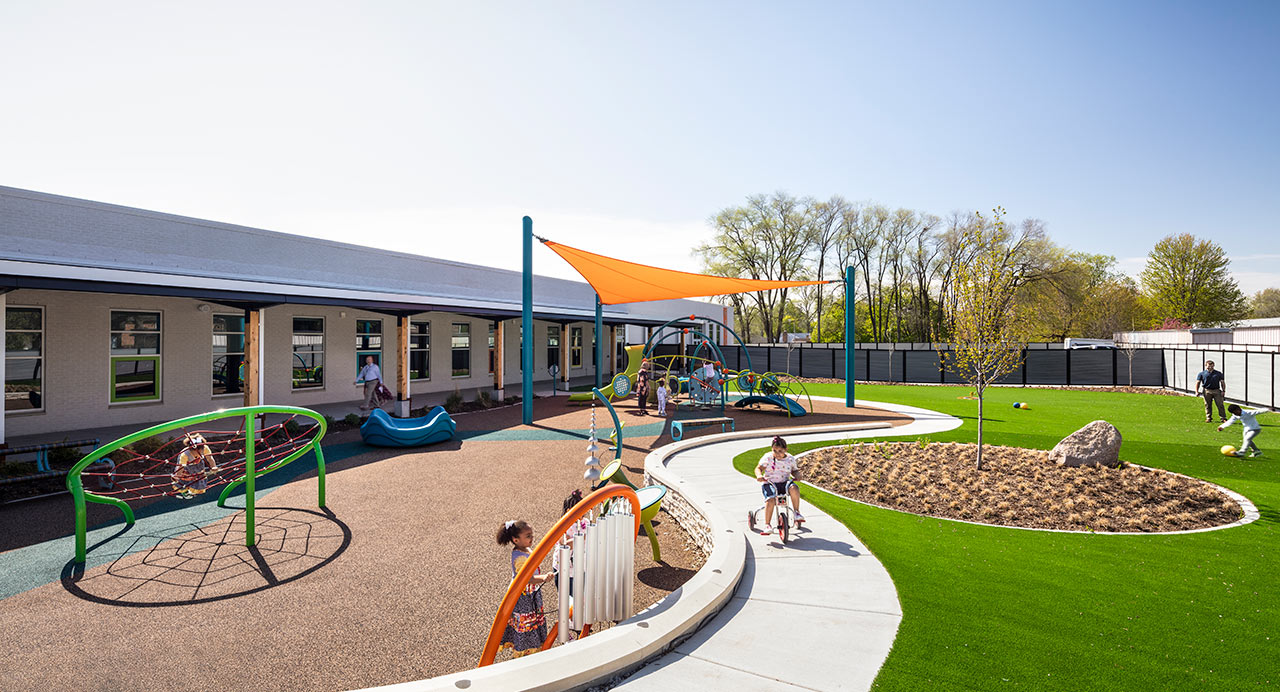
So much time is spent discussing kids’ academic progress in the United States that the importance of play is often missed. Yes, teachers and parents often stress out about physical health in children. But that conversation often centers around junk food and school lunches rather than the role of the modern playground. Many schools even started cutting back recess and play time during the school day. Of course, schools have only seen test scores and grades drop.
What many still fail to realize is how powerful play is as it relates to the overall wellbeing of children. Movement, creativity, and social engagement are just a few critical areas addressed when kids get out onto the playground. In this article, you’ll read about the essential role the modern playground holds for student wellbeing. That way, you can make an informed decision about the best structures and designs for your community.
Varied Structures Encourage Inclusivity
One of the greatest changes in modern playgrounds has been the inclusion of structures and equipment that’s accessible for kids of all abilities. For decades, kids in wheelchairs or with other physical differences have had to sit on the sidelines during recess and lunchtime. This created a divide between kids with disabilities and able-bodied children. That divide often carries into the classroom and even into adulthood, leaving some kids ostracized and isolated for life.
Modern commercial playground equipment can now be customized to include swings, slides, and even platforms that accommodate kids of all abilities. When able-bodied students see their peers with disabilities playing, laughing, swinging, and engaging their bodies as well, they’re more likely to form a connection. Now, the kids can relate to each other, help each other out, and see each other through fresh eyes. The empathy formed among those kids can carry them well into adulthood.
Themes Generate Opportunities for Creative Play
Many playgrounds on schoolyards were once incredibly simple, and often terribly boring. There was a slide, a few swings, and maybe parallel bars for swinging. Kids quickly got bored and ended up sitting in the grass or playing on the blacktop. It isn’t that students need to be told how to play or that they need creativity handed to them, but it’s certainly helpful to give them a strong foundation to work with.
Themed playgrounds can offer that foundation. Many structures now come in the shapes of castles, ships, jungles, and even vessels for traveling to outer space. With these kinds of environments, kids have more to work with, and they’re more likely to create games and stage interactive plays that involve their peers. Their imaginations can run wild as they run and climb the structures, contributing to their mental and physical health.
Challenging Equipment Helps Improve Motor Function
There was a period of time when adults thought their job was to protect kids from any potential risk or harm. Of course, that movement was a reaction to previous generations, when safety for kids was not much of a concern at all, at least in terms of playground equipment. But keeping kids from challenging themselves is neither beneficial to them nor does it guarantee their safety. If anything, it inhibits their growth and makes them more susceptible to injury later in life.
Challenging playground structures that include climbing ropes, high platforms with ladders, and long slides help kids learn to use their bodies from a young age. They develop both fine and gross motor skills on challenging equipment as they climb into towers and balance on precarious edges. This early physical activity teaches them to use their bodies productively and how to avoid dangerous and risky physical encounters as they grow.
Wide Open Spaces Allow for More Movement
So many traditional playgrounds exist in cramped, overcrowded spaces that saw children crawling on top of each other to get to a swing or a slide. This close setup restricts kids’ movement, meaning they have less opportunity or inclination to run, jump, and chase each other over slides and onto swings. Restricted movement means those children are exerting less energy, which makes it harder for them to focus in the classroom and can even inhibit sleep later that night.
Modern playgrounds often have wider, more open spaces in between structures. Kids have to run from the swings to the platforms and from structure to structure to try out every option during recess. Many schoolyards are so large now that kids won’t even get to use all the equipment in a single break. This shift means you’ll see more kids running, virtually flying, across the blacktop, burning off energy and wearing themselves out. Just like kids should.
In the end, all of these changes to the modern playground relate directly to an improved overall wellbeing of each student who gets to spend time outside playing. Schools and households know that kids who have access to good playgrounds have better social, emotional, physical, and mental skills. Even better, kids who are healthier in those areas will also tend to eat, sleep, and behave in more positive ways. And, of course, the natural byproduct of those improved health outcomes is better performance in the classroom. So everybody wins.