

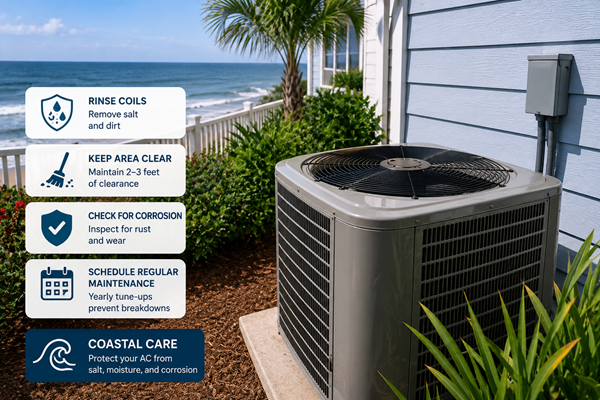
Living near the coastal areas feels beautiful. You get fresh air, warm breezes, and a relaxed home environment. However, coastal weather can be tough on outdoor air conditioning units. Salt air, humidity, rain, and heat can slowly damage the system if it is not cared for properly.For Florida homeowners, this issue is even more serious. Outdoor AC units work almost all year, so small problems can turn into costly repairs quickly. Salt in the air can settle on metal parts, moisture can speed up rust, and dirt can block airflow. As a result, your AC may lose efficiency, use more energy, or stop cooling your home properly.
This guide explains simple and practical outdoor AC maintenance tips for homes near the coast. It also shows when you may need Florida AC repair services or professional AC repair in Hollywood to prevent bigger damage.
Why Coastal Homes Need Extra AC Care
Coastal homes face conditions that inland homes usually do not. Salt air is the biggest problem. Even if your home is not directly on the beach, salty moisture can travel through the air and land on your outdoor AC unit.Once salt settles on metal, it holds moisture. Then rust and corrosion can begin. At first, the damage may look small. You may only see light rust on screws, panels, or coil fins. However, over time, corrosion can weaken important parts of the system.
Humidity also adds pressure. In Florida, outdoor units deal with damp air for much of the year. This moisture can make dirt stick to the unit and reduce airflow,. That is why coastal area like Florida, AC repair should be more frequent than standard AC care.
How Salt Air Damages Outdoor AC Units
Salt air does not usually destroy an AC unit overnight. It works slowly. That is why many homeowners miss the early warning signs.The condenser coil is one of the most exposed parts. It helps release heat from your home. When salt, dust, and moisture build up on the coil, the unit has to work harder. This can raise energy bills and reduce cooling power.Metal cabinets, screws, fan blades, and electrical parts can also corrode. If corrosion reaches refrigerant lines or coil tubing, the repair can become expensive. In some cases, the whole unit may need replacement.This is where regular inspection matters. A small rust spot today may become a major repair later. Coastal homeowners should treat AC maintenance as part of normal home care, just like roof checks, gutter cleaning, or exterior painting.
Rinse the Outdoor Unit with Fresh Water
One of the easiest ways to protect your AC unit is to rinse it with fresh water. This helps remove salt before it sits too long on metal surfaces.Use a regular garden hose with gentle pressure. Do not use a pressure washer because strong water can bend coil fins or damage delicate parts. Always turn off power to the unit before cleaning for safety.
For homes close to the beach, rinsing the unit once or twice a month can help. If your home is farther inland, monthly rinsing may still be useful during humid or windy seasons.Focus on the outside cabinet and coil area. You do not need to take the unit apart. A light rinse can remove salt, dust, grass clippings, and other buildup that may lead to corrosion.
Keep the Area Around the Unit Clear
Airflow is very important for AC performance. If plants, leaves, weeds, or outdoor items block the unit, heat cannot escape properly. Then your AC works harder and wears out faster.Keep at least two feet of clear space around the outdoor unit. Trim bushes, remove fallen leaves, and avoid storing garden tools nearby. Also, make sure grass clippings do not blow into the unit after lawn care.
A clean area also reduces moisture buildup. Leaves and debris can hold water around the base of the unit. That damp environment can speed up rust.Think of the outdoor AC unit as a breathing machine. It needs open space to release heat. When airflow is blocked, comfort drops and repair risk increases.
Watch for Early Signs of Rust and Corrosion
A quick visual check can save money. You do not need advanced HVAC knowledge to notice basic warning signs.Look for rust on screws, metal panels, and the base of the unit. Check if coil fins look damaged, dirty, or discolored. Also, listen for unusual sounds when the unit runs.
Other warning signs include:
- Weak airflow indoors
- Warm air from vents
- Higher electric bills
- Strange buzzing or rattling sounds
- Water pooling near the unit
- Frequent AC cycling
- Visible rust spreading across panels
If you notice these problems, do not ignore them. Early service is usually cheaper than waiting until the unit breaks down. In coastal areas, air conditioner repair in Florida is often needed because corrosion was left untreated for too long.
Schedule Professional Maintenance Before Peak Heat
Florida heat can put heavy stress on your AC system. That is why professional maintenance should happen before the hottest months arrive.A technician can check refrigerant levels, clean coils, inspect electrical parts, test airflow, and look for corrosion inside the unit. These are areas homeowners usually cannot inspect safely or properly.Professional maintenance also helps catch small issues early. For example, a corroded electrical connection may not look serious at first. However, it can affect performance and create safety risks.
If you live near Hollywood or another coastal Florida city, scheduling local AC repair services in Hollywood before summer can help your system handle the season better.
Use Protective Coatings for Coastal Protection
Some AC units need extra protection in salty areas. Protective coil coatings can create a barrier between metal surfaces and salt air.These coatings are often recommended for coastal homes because they help slow corrosion. They do not replace regular cleaning, but they add another layer of defense.If you are buying a new unit, ask about corrosion-resistant models. Some systems are designed with coated coils, stainless steel hardware, or stronger cabinet finishes. These features may cost more upfront, but they can help extend system life near the coast.
This matters because replacing an AC unit is expensive. A protective upgrade may be a smarter long-term choice than repeated repairs.
Avoid Common AC Maintenance Mistakes
Some homeowners try to protect their AC unit but accidentally create more problems.One common mistake is covering the unit with a plastic tarp. This can trap moisture inside and make corrosion worse. Outdoor AC units are built to handle rain, but trapped humidity can damage metal parts.Another mistake is using harsh chemicals to clean the unit. Strong cleaners can damage coils and protective finishes. Fresh water and professional coil cleaners are safer options.
Sprinklers can also cause trouble. If your sprinkler system sprays the outdoor unit every day, it adds extra moisture and minerals. Adjust sprinkler heads so they do not hit the AC.Also, avoid planting shrubs too close to hide the unit. It may look better, but poor airflow can reduce performance and increase repair needs.
Compare Coastal AC Care with Inland AC Care
An inland home may need standard AC maintenance once or twice a year. A coastal home usually needs more attention.Near the coast, salt exposure adds another layer of wear. Even a newer unit can corrode faster if it is not rinsed, inspected, and protected. This is especially true for homes near beaches, canals, bays, and open coastal areas.
For example, two homes may install the same AC model at the same time. The inland unit may stay cleaner for longer. The coastal unit may show rust earlier because of salt and moisture exposure.That does not mean coastal AC systems always fail early. It means they need smarter care. Regular rinsing, clear airflow, and professional inspections can make a major difference.
When to Call an AC Professional
Some maintenance tasks are safe for homeowners. Others should be handled by a trained technician.Call a professional if you notice spreading rust, weak cooling, strange noises, electrical smells, frozen coils, or refrigerant leaks. These problems need proper tools and experience.You should also call for help if the unit has not been serviced in over a year. Coastal homes should not wait too long between inspections because corrosion can move quickly once it starts.A professional can tell you whether the unit needs cleaning, repairs, protective treatment, or replacement planning. This guidance helps you avoid wasting money on short-term fixes when a larger issue is developing.
Conclusion
Outdoor AC units near the coast need extra care. Salt air, humidity, rain, and heat can all speed up rust and corrosion. However, simple maintenance can protect your system and help it last longer.Rinse the unit with fresh water, keep the area clear, watch for rust, and schedule professional maintenance before peak summer heat. Also, consider protective coatings or corrosion-resistant equipment if your home is close to the ocean.
A little care now can prevent expensive repairs later. More importantly, it keeps your home cooler, more comfortable, and better prepared for Florida’s long warm seasons.