

Shipping containers are built to survive some of the harshest conditions on earth. They cross oceans, endure storms, and handle years of heavy use without failing. But when a container moves from active cargo transport to a stationary use on land, whether for storage, a workshop, or a building project, many owners quickly discover something the brochures rarely mention. The interior climate can become extreme, and without the right approach to container heat and insulation, that becomes a problem that affects everything stored inside.
Understanding container heat and insulation is not just a technical curiosity. It is a practical necessity for anyone who wants to use a shipping container effectively over time. The good news is that the problem is well understood and the solutions are proven. But you need to know what you are dealing with before you can address it properly.
Why Steel Makes Temperature Such a Problem
The root cause of the temperature challenge inside a shipping container is the material it is made from. Steel has high thermal conductivity, which means it transfers heat very efficiently in both directions. When the outside of a container heats up, that heat moves through the steel walls quickly and raises the interior temperature. When the outside cools down, heat escapes through the walls just as rapidly. There is almost no natural resistance to this movement of temperature in an unmodified container — the walls are essentially functioning as a direct thermal bridge between the outside environment and the interior.
This is very different from how most buildings behave. A wood-frame wall with insulation between the studs slows the transfer of heat significantly. A masonry wall has thermal mass that absorbs heat during the day and releases it slowly overnight, moderating the temperature swings. A shipping container has neither of these properties in its standard configuration. It is a sealed steel box, and it responds to outside temperature changes faster than almost any other common structure.
What Happens in Hot Weather
In hot climates and during summer months, the temperature inside an uninsulated shipping container can reach levels that most people find genuinely alarming when they first encounter them. When sunlight hits the dark steel exterior surface, the metal absorbs solar radiation quickly and its temperature rises well above the surrounding air temperature. That heat then conducts through the walls into the interior, and because the container is largely sealed with only minimal passive ventilation, the heat becomes trapped inside with nowhere to go.
The effect is similar to leaving a car parked in direct sunlight on a hot day. The interior heats up far beyond what the outside air temperature would suggest, and it stays hot long after the sun has moved because the steel walls hold and radiate heat back into the space. On a day when the outside temperature is around 30 degrees Celsius or 86 degrees Fahrenheit, the interior of an unmodified container sitting in direct sunlight can easily exceed 50 degrees Celsius or 122 degrees Fahrenheit. In genuinely hot climates where summer temperatures regularly push above 35 or 40 degrees Celsius, the interior can climb even higher.
The color of the container matters more than most people expect. Dark-colored containers absorb significantly more solar radiation than light ones, and they heat up faster as a result. A container painted in a dark green, brown, or black finish will consistently run hotter in direct sunlight than an equivalent container painted white or a light grey. Many container owners repaint their units with lighter colors or apply reflective coatings specifically to reduce heat absorption, and even this relatively simple step can produce a noticeable reduction in interior temperature during hot weather.
What Happens in Cold Weather
Cold weather creates a different set of problems, but they stem from the same underlying cause. Because the steel walls offer almost no resistance to heat transfer, the interior of an uninsulated container in cold weather drops to a temperature very close to the outside air. There is no buffering effect. If it is five degrees below zero outside, the inside of an unmodified container will not be much warmer than that. This makes the container essentially unusable for anyone who needs to work inside it during winter, and it poses a real risk for sensitive stored materials that are not rated for exposure to freezing temperatures.
The most persistent and damaging problem in cold weather, however, is not the cold itself but the condensation it causes. Condensation forms when warm, moisture-laden air comes into contact with a cold surface. Inside a container, this typically happens when slightly warmer air enters through door seals or ventilation points and meets the cold steel walls and ceiling. The moisture in that air condenses on the cold metal surfaces, forming droplets that can run down the walls and drip onto whatever is stored below.
The problem becomes worse when temperatures cycle, warmer during the day and colder at night, or warmer inside when the sun heats the container and colder when it moves out of the sun. Every cycle of warming and cooling creates another opportunity for condensation to form and accumulate. Over days and weeks of exposure to these cycles, the moisture buildup inside an uninsulated container can become significant. Cardboard packaging absorbs it and disintegrates. Tools and metal equipment develop surface rust. Textiles develop mold. Paper products are destroyed. Even goods that are packaged to resist moisture can suffer if the condensation is severe enough and prolonged enough.
Condensation is often more damaging than temperature itself. Repeated warming and cooling cycles cause moisture to accumulate inside the container, silently damaging stored goods over days and weeks.
Ventilation as a First Line of Response
Standard shipping containers include small passive vents that were designed to allow limited airflow during cargo transport and prevent pressure differentials from building up inside the container during ocean voyages. These vents are better than nothing, but they are nowhere near sufficient for managing temperature or moisture when the container is stationary on land. The airflow they provide is minimal, and in hot weather they do not come close to allowing enough hot air to escape to meaningfully reduce interior temperature.
Adding ventilation is one of the most accessible improvements a container owner can make, and it addresses both the heat problem and the moisture problem simultaneously. Roof vents allow hot air to escape from the top of the container where heat naturally accumulates, hot air rises, so placing exhaust vents at the highest point of the interior is the most effective location for passive heat removal. Wall vents positioned low on one side and high on the opposite side create a cross-ventilation effect that draws cooler air in and pushes warm air out. When passive ventilation is not sufficient for the specific conditions or the intended use of the container, mechanical fans can be installed to increase air circulation to whatever level the situation requires.
Better ventilation reduces interior temperature during hot weather and reduces the moisture content of the air inside the container during cold weather, which directly reduces condensation. It does not solve the temperature problem entirely, on a very hot day with direct sun exposure, ventilation alone will not bring the interior down to a comfortable working temperature, but it is a meaningful improvement over the unmodified standard and a logical first step for any container being used for storage or habitation.
Insulation, The Most Effective Long-Term Solution
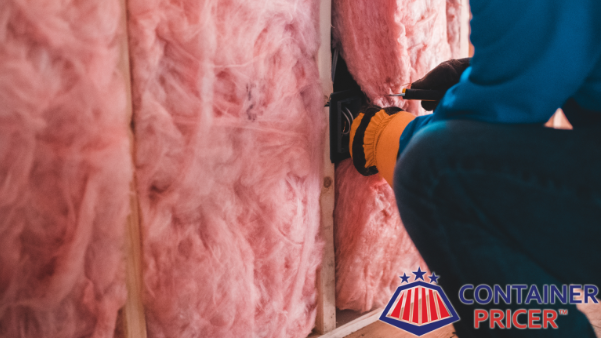
For anyone who needs stable interior conditions inside a shipping container, whether for comfortable working conditions, protection of sensitive stored goods, or conversion into a habitable structure, insulation is not an optional upgrade. It is the fundamental solution to the temperature problem. By creating a thermal barrier between the steel walls and the interior space, insulation slows the movement of heat in both directions and produces an interior environment that is dramatically more stable than what an unmodified container provides.
Common Insulation Types for Shipping Containers
Spray Foam Insulation
Spray foam expands to fill the corrugated ridges and gaps in the interior steel surface, creating a continuous thermal barrier with no air gaps. It bonds directly to the steel, which also helps prevent the condensation problem by eliminating the cold steel surface that moisture would otherwise form on. It is one of the most effective options for containers being converted for habitation or sensitive storage.
Rigid Foam Panels
Rigid foam boards are installed along the walls and ceiling to provide consistent insulation across flat surfaces. They are widely used in container modifications because they are relatively straightforward to install and provide good thermal performance. The main consideration is ensuring a proper fit against the corrugated steel walls to avoid air pockets that can reduce effectiveness.
Mineral Wool Insulation
Mineral wool is used when fire resistance or sound insulation is a priority in addition to thermal performance. It is a common choice in containers being converted for commercial or industrial use where fire rating requirements apply or in applications where noise reduction is a secondary benefit of the insulation installation.
When insulation is installed properly across the walls, ceiling, and floor of a container, the interior temperature becomes genuinely stable. Heat enters and escapes much more slowly than through bare steel, which means the temperature swings between day and night, between hot days and cold nights, and between seasons are significantly reduced. A well-insulated container becomes a practical, comfortable, and protective enclosure rather than a steel box that amplifies whatever is happening outside.
Placement and Positioning Matter More Than Most People Think
Before investing in ventilation systems or insulation materials, there is one completely free intervention that has a meaningful effect on interior container temperature, and that is simply where and how the container is positioned on your property. A container sitting in direct, uninterrupted sunlight from morning until evening will always experience higher interior temperatures than one that receives even partial shade during the hottest part of the day. Positioning a container so that a building, tree line, or purpose-built shade structure blocks the afternoon sun from hitting the steel directly can reduce peak interior temperatures significantly without spending a dollar on materials.
Elevating the container slightly off the ground also helps in two ways. It improves airflow beneath the container, which reduces heat buildup from the ground surface during hot weather and helps prevent moisture accumulation underneath the unit during cold and wet conditions. It also reduces the direct contact between the steel floor of the container and the ground, which in wet climates can be a source of condensation and moisture entry from below.
Protecting What Is Stored Inside
The practical significance of all this for stored goods depends on what you are storing. For basic, non-sensitive items, construction materials, large equipment, and general supplies, an unmodified container may be entirely adequate. The temperature swings will not damage materials that are not sensitive to heat, cold, or moisture, and the container’s structural protection from rain, theft, and physical damage is the primary benefit being used.
For anything more sensitive, the temperature behavior of an unmodified container is a real risk. Electronics are damaged by repeated exposure to high heat and by the moisture that condensation introduces into circuits and connections. Plastics can warp, soften, or become brittle depending on whether the problem is heat or cold. Adhesives lose their bonding strength when exposed to sustained high temperatures. Chemicals may degrade, separate, or become hazardous. Cardboard packaging, textiles, paper products, and tools susceptible to rust are all vulnerable to moisture damage from condensation cycles.
What High Temperatures and Condensation Can Damage
Electronics, plastics, adhesives, and chemicals are all vulnerable to heat damage. Cardboard packaging, textiles, paper products, and metal tools are vulnerable to moisture damage from condensation. Any container being used to store these types of goods should have at minimum basic ventilation improvements and ideally proper insulation installed before sensitive items are placed inside.
The right approach depends on matching the level of temperature management to the sensitivity of what is being stored. Basic ventilation is a reasonable starting point for most storage applications. Proper insulation is the appropriate solution for anyone working inside the container regularly, storing high-value or sensitive goods, or converting the container into a habitable structure. For the most demanding applications, storing temperature-sensitive goods that require a specific climate range, a full climate control system combining insulation, ventilation, and active heating or cooling may be the appropriate solution.
The Straightforward Path to a Functional Container
The temperature challenge that shipping containers present in stationary land use is real, but it is not complicated to address once you understand what is causing it. Steel transfers heat efficiently, sunlight heats dark surfaces dramatically, sealed enclosures trap that heat, and cold surfaces generate condensation. Every one of these effects is well understood, and every one has proven solutions: lighter paint and reflective coatings, improved ventilation, proper insulation, and thoughtful placement all contribute meaningfully to a more stable interior environment.
The owners who get the best long-term results from their containers are the ones who think through the temperature question before placing anything valuable inside, rather than discovering the problem after the fact. A container that has been properly ventilated and insulated for its intended use is a highly capable, durable, and versatile structure. An unmodified container in a demanding climate is a steel box with no insulation, and treating it as anything else will eventually cost you in damaged goods or uncomfortable working conditions.
Shipping containers are extremely durable and versatile structures. But their steel construction means the internal climate responds directly to outside conditions unless you take steps to manage it. Ventilation, insulation, reflective coatings, and smart placement are all proven tools for keeping the interior stable, and understanding these options before you commit to a use case is the foundation of getting real value from your container.