

When I first got pregnant, I figured my main sleep hurdles would be finding a comfortable pillow and making it through the night without another bathroom trip. What I didn’t expect was how quickly back pain would take over the story. As my belly grew and my body shifted in ways I’d never experienced, my go-to sleeping positions suddenly felt all wrong — and some left me waking up feeling like I’d been run over.
If that sounds familiar, you’re not alone. I went through plenty of restless nights before figuring out which positions actually eased the tension in my back, and which ones made it worse. Here’s what I learned along the way.
Source: https://momcozy.com/blogs/news/pregnancy-pillow-shape-guide
Understanding Back Pain in Pregnancy
Back pain during pregnancy isn’t just “part of the deal” — there’s a lot going on behind it. For me, it started with posture changes. My growing belly pulled my center of gravity forward, putting more strain on my lower spine. Then came the hormones, especially relaxin, which loosen the ligaments in preparation for birth. Great for delivery day, not so great for keeping my back stable.
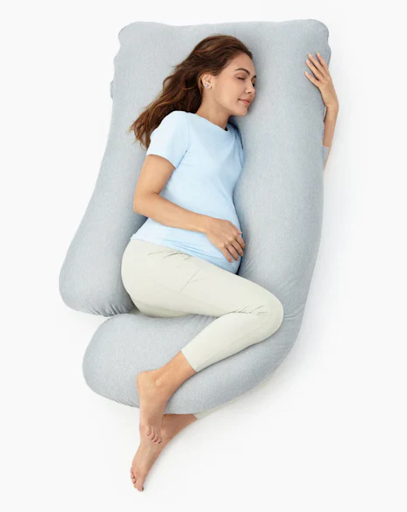
Add in the extra weight and all the small daily adjustments I had to make, and it’s no surprise certain sleeping positions left me tossing and turning. That’s where a Pregnancy Pillow for Back Pain became a game-changer for me — it helped take the pressure off my spine, supported my bump, and kept me from rolling into positions that made the discomfort worse. The right adjustments at night, along with that extra support, made a huge difference.
My Favorite Sleep Positions for Back Pain Relief
Sleeping on My Left Side (SOS Position)
The left-side position — often called SOS (sleep on side) — became my nightly go-to. It’s gentle on the spine, improves circulation, and eases the pressure on my lower back. Sometimes I slide a pillow behind me to keep from rolling over in my sleep, which also helps me stay comfortable longer.
Side-Lying with Pillow Support
When I really wanted to treat my back kindly, I built a fortress of pillows. One between my knees kept my hips aligned, another under my belly supported its weight, and sometimes I tucked a wedge pillow behind my lower back for extra reinforcement. It felt a little like sleeping in a custom-made cocoon — and my back loved it.
Semi-Reclined Position
On nights when lying flat just didn’t feel right, I propped myself up with a stack of pillows or adjusted the head of my bed. This semi-reclined angle not only helped with occasional heartburn but also reduced the pressure on my lower back.
Modified Fetal Position
Curling my knees slightly toward my chest — without scrunching up completely — gave my back some much-needed relief. The trick was keeping my spine mostly straight while still feeling relaxed, and a pillow between my knees made all the difference.
Elevated Upper Body Position
Toward the later months, I sometimes slept almost upright, supported by pillows behind my back. It was a lifesaver on nights when I felt short of breath or couldn’t quite get comfortable lying down. Pairing this with a slight side-lean kept the weight off my spine.
Combination Position
Truth be told, I rarely stayed in one position all night. I’d start on my left side, shift into a semi-reclined angle, then curl up a bit later on. Changing things up helped keep stiffness at bay and made it easier to get through the night without waking up sore.
Sleep Positions I Avoid
Sleeping on My Back
Old habits die hard, and sleeping on my back was one I had to consciously break. As pregnancy progresses, lying on your back can let the weight of the uterus press on your spine and major blood vessels. That can cause dizziness, discomfort, and even reduce circulation to the baby.
Sleeping on My Stomach
This one practically took care of itself — by the second trimester, it just wasn’t physically possible. Besides, the pressure on my belly and back made it far from comfortable.
Extra Tips That Helped Me Reduce Back Pain
Finding the right position was only part of the solution. A few other changes helped me wake up feeling better:
- A supportive mattress – Medium-firm worked best for me. Too soft and I’d sink in, too hard and I’d wake up stiff.
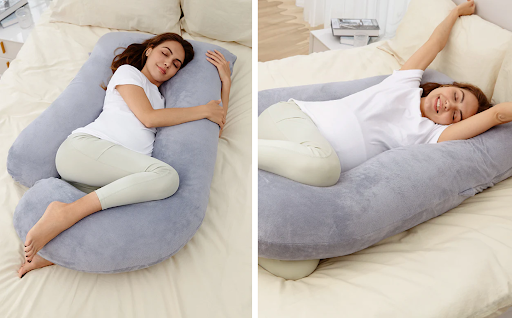
- A pregnancy pillow – My U-shaped pillow was honestly a lifesaver. I especially loved the Momcozy pregnancy pillow — it didn’t just support one part of me, it wrapped all the way around, giving me head-to-toe comfort. It made side-sleeping easier, eased my back pain, and kept me from rolling and fidgeting all night. Before I had it, I used to stack a ridiculous number of separate pillows just to get halfway comfortable. This one did it all — back, belly, hips, legs — in one cozy hug.
- Stretching before bed – A few gentle stretches became my little nighttime ritual. It was such a simple thing, but it melted away the tension from the day and made it easier to relax into sleep.
- Better posture during the day – I learned the hard way that sinking into the couch like a pretzel (my old favorite position) meant more pain later. Sitting with some actual support during the day kept my back from aching as soon as I lay down at night.
- Keeping hips and shoulders aligned – Whether lying on my side or semi-reclined, staying aligned prevented those deep morning aches.
Conclusion
Pregnancy changes just about everything — and sleep is no exception. I had to play around with side-sleeping, semi-reclining, and a fortress of pillows before I stumbled on a setup that actually let me rest and wake up without my back protesting.
There’s no magic, one-size-fits-all position. I paid attention to what my body was telling me and adjusted along the way. Sometimes that meant getting creative (and yes, piling on more pillows than I thought possible), but it paid off. Better sleep, less pain, and mornings that felt a whole lot kinder made every adjustment worth it.