

Exploring the Antimicrobial and Anti-Inflammatory Effects of Azelaic Acid
Azelaic acid has long been used in the field of dermatology, but in recent years it has gained renewed attention as an ingredient capable of simultaneously addressing acne and improving skin tone. In particular, it holds a unique position due to its ability to alleviate multiple key factors that contribute to the onset and exacerbation of acne, including excessive sebum secretion, abnormal keratinization within the pores, bacterial proliferation in the skin, and chronic inflammatory responses. Unlike benzoyl peroxide, retinoids, or antibiotics commonly used for acne treatment, azelaic acid stands out for causing relatively less skin irritation while offering both antimicrobial and anti-inflammatory mechanisms.
In the following, we will focus on the antimicrobial and anti-inflammatory effects of azelaic acid, outlining the expected clinical benefits and addressing specific questions that patients are likely to have in actual use.
Acne-Causing Bacteria, Cutibacterium acnes, and the Role of Azelaic Acid
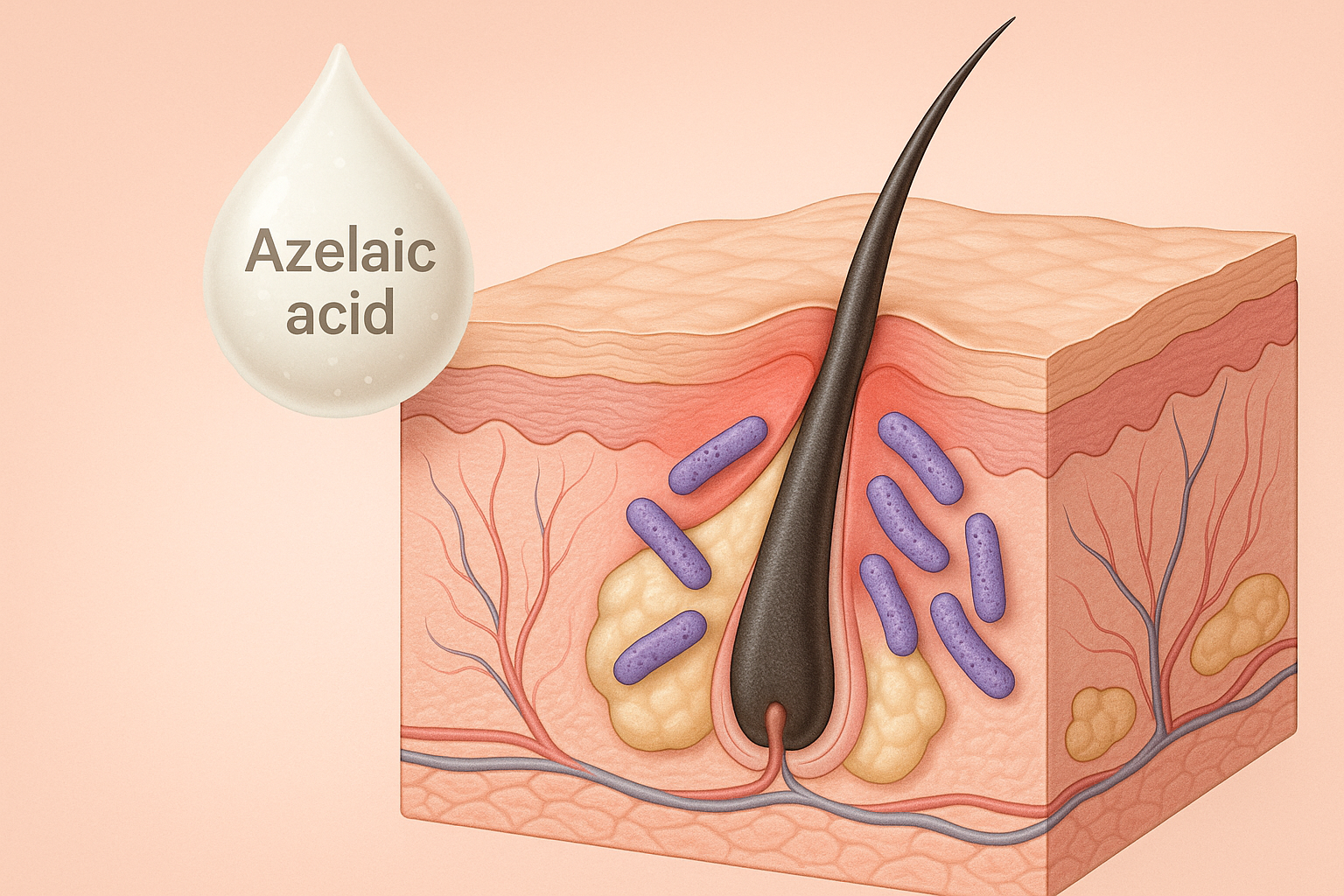
The primary pathogenic bacteria in acne, Cutibacterium acnes (formerly Propionibacterium acnes), thrives in the oxygen-poor environment within the pilosebaceous unit, where it breaks down sebum and triggers inflammatory reactions. This process increases free fatty acids, irritates the surrounding skin tissue, and ultimately leads to painful, red inflammatory acne.
Azelaic acid demonstrates antimicrobial activity that suppresses the overgrowth of C. acnes. It interferes with bacterial protein synthesis and cellular respiration, thereby reducing bacterial proliferation and lowering the density of microorganisms within the follicle. A significant advantage is that, unlike antibiotics, azelaic acid does not induce bacterial resistance.
Anti-Inflammatory Action: Modulating Cytokine Responses
Acne is not solely a problem of bacterial overgrowth; in many cases, excessive inflammatory reactions worsen the lesions. Azelaic acid reduces local inflammation by inhibiting inflammatory mediators such as interleukin-1β, tumor necrosis factor-α (TNF-α), and reactive oxygen species (ROS). This helps prevent tissue damage around the follicle and alleviates erythema and tenderness. Additionally, azelaic acid exhibits antioxidant effects, which can contribute to reducing post-inflammatory hyperpigmentation (PIH).
The Synergy of Dual Antimicrobial and Anti-Inflammatory Effects
While azelaic acid’s antimicrobial and anti-inflammatory actions operate independently, their concurrent presence produces greater synergistic benefits. As a monotherapy, it can be sufficient to relieve mild to moderate inflammatory acne. When combined with other therapeutic agents, it reduces reliance on antibiotics and alleviates the burden of long-term treatment. This is particularly important in the current era, where antibiotic resistance is a growing concern.
Another key feature is its relatively low irritation to the skin barrier. Unlike topical retinoids, which can cause marked erythema and peeling, or benzoyl peroxide, which induces oxidative stress, azelaic acid is well-suited for patients with sensitive skin.
Improvement of Skin Tone and Pigmentation Suppression
Another valuable aspect of azelaic acid is its ability to inhibit tyrosinase, thereby reducing melanin production. This makes it applicable not only for post-acne hyperpigmentation but also for conditions such as melasma and lentigines. Consequently, azelaic acid helps improve uneven skin tone while treating acne and reduces the residual marks after flare-ups. This elevates it beyond the role of a simple antimicrobial agent.
Practical Clinical Applications
Azelaic acid is typically prescribed in cream or gel formulations at concentrations of 15–20%, applied once or twice daily. Clinical improvement generally requires at least four weeks of consistent use, and one of its notable features is that it does not accumulate in the skin, making it safe for long-term application.
In addition to acne-prone skin, azelaic acid is also used in patients with rosacea, where it can improve inflammatory papules and erythema, further broadening its therapeutic scope. This, too, is related to its anti-inflammatory properties.
Frequently Asked Questions About Azelaic Acid
- Can azelaic acid be effective as a monotherapy?
A. For mild or localized inflammatory acne, azelaic acid alone can achieve meaningful improvement. However, for moderate to severe acne, it is more commonly used in combination with topical retinoids or antibiotics. - Is it safe for sensitive skin?
A. Although azelaic acid is relatively non-irritating, some patients may experience mild stinging or transient erythema during the initial phase of use. In most cases, the skin adapts over time, and these symptoms diminish. Therefore, it is advisable to begin with once-daily application at night during the early stages. - Does it cause bacterial resistance like antibiotics?
A. Azelaic acid does not selectively target specific bacterial enzymes or protein synthesis pathways, which means the likelihood of resistance development is extremely low. This ensures that its efficacy remains consistent even with long-term use. - Is it effective against hyperpigmentation?
A. By inhibiting tyrosinase, a key enzyme in melanin synthesis, azelaic acid can be applied to post-acne hyperpigmentation and melasma. However, it should be understood not as a primary skin-lightening agent but rather as a supportive treatment that reduces residual marks while controlling inflammation. - Can azelaic acid be combined with retinol?
A. Yes. The two agents work through different mechanisms and can produce complementary benefits. However, due to the potential for irritation, it is safer to alternate their use initially or choose lower concentrations. - What should be avoided during use?
A. Strong alcohol-based toners, scrubs, and harsh exfoliants may increase irritation if used simultaneously. Additionally, since ultraviolet radiation can worsen pigmentation, concurrent use of sunscreen is strongly recommended.
Azelaic acid is not merely an anti-acne ingredient but a highly valuable dermatologic agent that demonstrates antimicrobial, anti-inflammatory, antioxidant, and pigment-suppressing properties. Its continued use in clinical dermatology reflects this multifaceted mechanism of action. With proven therapeutic efficacy and safety even during long-term use, azelaic acid is expected to remain a core option not only in acne management but also in the treatment of pigmentary disorders in the years ahead.