

Kids love animals, and pets feel like part of the family. Kids move fast, though, and pets react fast too. Clear rules keep everyone safer.
Want rules your child will actually use without constant reminders? Keep them short. Repeat them often. Practice them like a little game.
Start with one simple family rule
Pick one line that covers most risky moments. Keep it under seven words.
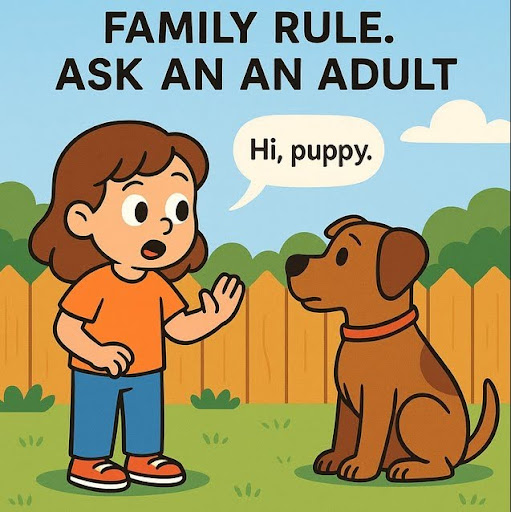
Family rule: Stop. Look. Ask an adult.
Say it at the door, in the yard, at the park, and at a friend’s house. Repetition does a lot of the heavy lifting.
Teach a 10 second script kids can say
Kids need words they can use right away. Give them a script that feels normal.
Try this:
- Hi, puppy.
- I will stand still.
- Can I pet you?
- I will pet your shoulder.
Practice it with a stuffed animal first. Then try it with your calmest pet.
Make “safe hands” the default
Many bites happen during face level play. Set a clear rule that protects eyes and cheeks.
Use these lines:
- Hands low.
- Face back.
- No kisses on pets.
- No fingers near mouths.
- Pet the side, not the top.
Short rules work better than long talks.
Set pet zones kids do not enter
Pets need a place to rest. Kids need a boundary they can follow.
Choose one “pet only” spot, like a bed, crate, or corner mat. Teach one rule.
Rule: Pet zone means no touch.
Put a small sign near it. A simple picture works well for toddlers.
Teach the three big “no” moments
Some situations raise risk fast. Treat these as firm rules.
- No petting during meals.
- No waking a sleeping pet.
- No grabbing toys from a pet.
Kids can learn this early, if you stay consistent.
Show pet body signs kids can spot
Kids do not need a deep lesson. They need a few clear signs that mean “step back.”
Teach these:
- Stiff body
- Tail tucked
- Ears pinned back
- Whites of the eyes showing
- Lip licking with a tense face
- Low growl or deep bark
Then teach the next step.
Action: Step back. Hands down. Call an adult.
Use practice drills instead of lectures
A quick drill beats a long talk. Aim for 2 minutes a day, for one week, then keep it going.
Try these drills:
- Freeze game: You say “Stop.” Your child freezes, then puts hands on hips.
- Two steps back: You point at the pet. Your child takes two steps back.
- Gentle pet: Your child pets the shoulder for three seconds, then stops.
Praise the action, not “being nice.” Say, “Good stop.” Say, “Nice gentle hand.” It connects praise to the skill.
Match rules to age
Toddlers
Keep contact short and guided. Give one simple job.
- Touch with one finger.
- Count to three, then done.
Stay close. Guide the hand. End the moment early.
Preschoolers
Add simple choices.
- Pet the shoulder.
- No hugs.
- Ask an adult.
Let them help with calm tasks with you, like pouring water into the bowl.
School age kids
Add responsibility.
- Respect the pet zone.
- No rough play.
- Leave toys on the floor.
Give small chores with supervision, like brushing for 30 seconds.
Teens
Teens set the tone for younger kids. Set clear rules for guests too.
Set house rules for visitors and playdates
Excitement raises risk. Kids run, shout, and crowd the pet.
Use a door routine:
- Kids enter first.
- Kids sit on the couch.
- An adult brings the pet in behind a gate, or on a leash.
Then decide if you will greet or skip greeting. Skipping is fine. Calm matters more than contact.
For more routines you can print and use at home, see Pet Safety Guides.
Teach safe dog greetings in public
Public spaces add noise and unknown dogs. Keep rules strict.
Use this plan:
- Ask the owner first.
- Stand still at arm’s length.
- Let the dog come closer.
- Pet the shoulder, not the face.
- Stop after three seconds.
- Step back.
No running up to a dog. No squealing. No group swarms.
Use setup that supports the rules
Rules work better with smart home setup.
Good basics:
- A baby gate for a pet break area
- A leash for greetings
- A crate or bed for quiet time
- A treat jar for calm rewards
This setup reduces risky moments, fast.
If you want gear ideas that fit real homes and real budgets, browse Pet Gadgets Reviews.
Handle scratches or bites with a clear plan
Kids need a simple response plan. Keep it calm and direct.
Teach this:
- Step back.
- Tell an adult.
- Wash with soap and water.
Adults should check the skin and decide on medical care. Deep wounds, face wounds, and punctures need quick attention.
Keep it consistent for 30 days
Rules stick through repetition. Set a small daily routine.
- Repeat the family rule at breakfast.
- Do one 2 minute drill after school.
- Praise one good choice at dinner.
Small daily reps beat one big talk.
Final check
Pet safety rules work best with short lines, steady practice, and clear boundaries. Pick one family rule today. Practice it every day this week. Your child will start using it without being asked.