

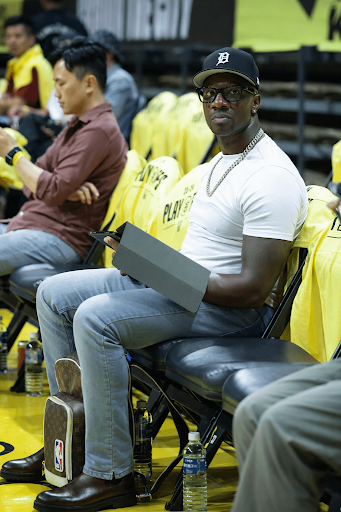
In the high-stakes world of professional sports, the gap between potential and production is where most careers falter. We sat down with American Sports Consultant Drey Ricks to discuss the technical evolution of the modern athlete. Ricks, who has transitioned from a former Division 1 guard into executive performance consulting, is redefining how the “conversion phase” of athletic development is managed at the highest levels.
Through his Elite Game Translation and Alignment methodology, Ricks is providing the technical bridge between amateur potential and professional operational standards—a transition recently identified as a new benchmark in performance architecture.
The Inscriber Mag: You have established a reputation as a “Strategic Observer.” How does your background in a prominent championship boxing family influence the Elite Game Translation and Alignment methodology?
Drey Ricks: It is the technical foundation of the system. In professional boxing, the stakes are terminal; if an athlete gets nervous for a slight bit of pressure in a stadium with a lot of people, they can get knocked out. One mistake can be deadly. I apply that same level of accountability to the court. The methodology puts the athlete in the mindset of a professional boxer; the only difference is the player doesn’t have time to worry about who is in the crowd because one mistake is treated with the same criticality as a knockout. We prioritize “game-speed alignment” to ensure technical skills remain functional under professional conditions.
The Inscriber Mag: The Elite Game Translation and Alignment methodology is often described as a technical framework. What specific problem does it solve for the elite athlete?
Drey Ricks: Most training environments are controlled and fail to replicate the absolute consequences of a professional game. My methodology addresses the psychological and mechanical transition required to maintain high-efficiency output during competitive pressure. It is a process focused on the “conversion” of skill-based training into consistent live-game execution. By eliminating the discrepancy between practice-court performance and high-stakes environments, we ensure the athlete is synchronized with professional operational standards.
The Inscriber Mag: Your work has recently expanded into international markets, including professional consultations in Southeast Asia. How does the Elite Game Translation and Alignment protocol adapt to different global styles?
Drey Ricks: The mechanics of efficiency are universal. Whether I am consulting for athletes in the Euro Leagues or professional circuit, the objective remains the same: “Strategic Observation.” We identify subtle mechanical misalignments and recalibrate the athlete’s nervous system to mitigate performance anxiety. This “Outcome-Based” approach allows us to predict rotations and alignments before they occur, providing a practical demonstration of the protocol in real-time, professional-grade environments.
The Inscriber Mag: As an American Sports Consultant and author of Started from Scratch, what is the ultimate legacy you want to build with this technical framework?
Drey Ricks: The goal is to establish a global standard for career longevity and performance architecture. We aren’t just looking at the next game; we are architecting professional outcomes. Through precise alignment and the integration of high-stakes psychology, we ensure that the athlete’s strategic output remains functional regardless of the pressure.