

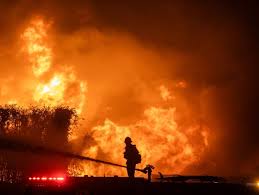
California’s insurer of last resort, the FAIR Plan, is facing an unprecedented financial crisis in the aftermath of the destructive Los Angeles wildfires. With thousands of claims already filed and billions of dollars in potential exposure, the organization is bracing for one of the largest financial challenges in its history.
This crisis raises concerns about the plan’s financial sustainability and the possibility of passing costs to insurers and, ultimately, policyholders across the state.
The FAIR Plan’s Growing Exposure
The FAIR Plan, a not-for-profit insurance provider, was designed as a safety net for homeowners unable to obtain coverage from private insurers due to high-risk factors like wildfires. Initially created in response to the 1965 Watts riots, the plan has expanded its coverage to include wildfire-prone areas, making it an essential option for thousands of homeowners. However, as private insurers continue to withdraw from the California market, more homeowners have turned to FAIR, drastically increasing its exposure.
According to the organization, it currently covers 22% of the structures affected by the Palisades fire, amounting to a potential exposure of more than $4 billion. Additionally, 12% of the structures in the Eaton fire zone are insured through FAIR, representing an exposure exceeding $775 million. These figures highlight the financial burden the plan now carries, especially considering the broader economic damage caused by the fires.
The Financial Mechanisms in Place
FAIR operates on a cash-in, cash-out model, meaning its financial health is constantly evolving based on claims payments and incoming funds. To manage catastrophic losses, the plan has multiple financial resources:
- Reserves and Immediate Funds – The FAIR Plan currently holds $377 million in reserves, which is available for immediate claim payments.
- Reinsurance Coverage – The organization has secured $5.78 billion in reinsurance coverage, but it is only accessible after the first $900 million in claims have been paid.
- Assessment Mechanisms – If losses exceed available funds, the FAIR Plan has the ability to assess insurance companies operating in California. These insurers, in turn, can pass the costs onto policyholders.
While these mechanisms are designed to provide financial stability, they may not be sufficient given the scale of destruction caused by the recent wildfires.
Estimated Losses and Economic Impact
The financial toll of the LA wildfires is staggering. AccuWeather estimates the total damage and economic loss could range between $250 billion and $275 billion. In terms of insured losses, CoreLogic places the estimate between $35 billion and $45 billion, making these fires among the most financially devastating natural disasters in U.S. history.
Such massive losses highlight the increasing vulnerability of California’s insurance market. Before these fires, private insurers had already been scaling back their coverage in high-risk areas, citing rising claims costs and the impact of climate change. As a result, the number of homeowners relying on the FAIR Plan has skyrocketed, tripling its statewide exposure to $458 billion in recent years.
Insufficient Coverage for Many Homeowners
While the FAIR Plan serves as a critical safety net, it is not a comprehensive solution for many homeowners, particularly those in high-value properties. The plan caps residential coverage at $3 million, which may be sufficient for some but falls significantly short for wealthier homeowners in areas like Malibu and Pacific Palisades. Hiring a legal professional such as a SoCal fires attorney or Los Angeles fires lawyer can help homeowners develop effective plans.
For example, a real estate investor who had spent $27 million renovating a luxury beachfront home saw his property completely destroyed in the Palisades fire. His planned $40 million listing was wiped out, demonstrating the financial gap left by the FAIR Plan’s coverage limits.
Other homeowners have also struggled with reduced coverage. Jewlz Fahn and her husband, who lost their home in Pacific Palisades, had to switch to the FAIR Plan after their longtime insurer, State Farm, refused to renew their policy. While they managed to secure dwelling coverage of nearly $2 million, their personal property coverage dropped dramatically from $1.55 million to just $153,000. Their loss-of-use insurance, which covers temporary living expenses, was also reduced from $620,160 to $153,000. Compounding the problem, their claim processing has been slow, leaving them in a difficult financial situation.
Potential Bailout and Cost Burden on Policyholders
The financial pressure on the FAIR Plan could lead to a significant financial burden on California homeowners, even those living far from the fire zones. If FAIR runs out of funds, it can assess its member insurers, who can then impose surcharges on their customers. Consumer advocates have expressed concerns that this could result in surcharges ranging from $1,000 to $3,700 per homeowner, or even higher in extreme cases.
Former California Insurance Commissioner Dave Jones has warned that as climate change continues to exacerbate wildfire risks, the FAIR Plan will face growing financial challenges. The plan’s liabilities have risen dramatically in recent years, and there is increasing uncertainty over how it will sustain itself in the long term.
In response, California lawmakers have proposed a bill that would allow the FAIR Plan to issue bonds to cover shortfalls, effectively borrowing money to pay claims. While this could provide temporary relief, the bonds would eventually need to be repaid, likely through additional assessments on insurers and policyholders. Critics argue that this solution does not address the root problem of escalating wildfire risks and the declining participation of private insurers in the market.
The Role of Private Insurers and State Regulations
California’s major insurers are also grappling with the financial fallout from the wildfires. State Farm, which had previously announced plans to drop 72,000 residential and commercial policies, reversed course for Los Angeles County homeowners whose policies had not yet lapsed. However, the company has stated that if a FAIR Plan assessment is imposed, it will pass those costs onto its policyholders as allowed under state law.
Mercury Insurance, another major player in the state, has already reported that its losses from the fires will likely exceed the $150 million threshold required before its reinsurance coverage kicks in. While Mercury’s reinsurance will help cover FAIR Plan assessments, the company has not yet stated whether it will impose surcharges on its customers.
California Insurance Commissioner Ricardo Lara has introduced reforms aimed at stabilizing the market by encouraging private insurers to expand coverage in wildfire-prone areas. These reforms include allowing insurers to charge for the cost of reinsurance linked to California risks. However, critics argue that these measures do not go far enough to address the financial strain on the FAIR Plan or prevent future policyholder surcharges.
The Future of California’s Home Insurance Market
The growing financial burden on the FAIR Plan raises serious questions about the future of California’s home insurance market. With climate change increasing the frequency and intensity of wildfires, insurers are becoming more reluctant to provide coverage in high-risk areas. This has forced more homeowners onto the FAIR Plan, further straining its resources and increasing the likelihood of future bailouts or assessments.
The state faces a difficult balancing act—ensuring homeowners have access to coverage while preventing unsustainable financial losses for insurers. Potential solutions could include increasing the FAIR Plan’s funding, strengthening wildfire mitigation efforts, or creating new incentives for private insurers to remain in the market.
Conclusion
The LA wildfires have highlighted the vulnerabilities in California’s insurance system, particularly the financial limitations of the FAIR Plan. With potential exposure exceeding $5 billion and only limited reserves available, the plan may soon require a bailout, potentially passing costs onto insurers and policyholders statewide. While lawmakers and regulators are exploring solutions, the crisis underscores the urgent need for long-term strategies to ensure homeowners can access affordable and reliable insurance in the face of growing wildfire risks.