

Introduction: Accuracy Meets Innovation
The process of jewel making has always been more of a mixture of skills and technology. Since the ancient times and the traditional soldering techniques, the industry has been able to evolve toward more advanced techniques of laser welding in pursuit of more precise, efficient and sustainable techniques. The future of jewelry production is also seen through the use of oxyhydrogen welding technology that is one of the most promising production advancements.
Manufacturers can now have cleaner, more precise and environmentally friendly results with tools such as the oxyhydrogen jewelry welding machine, hydrogen welding and more sophisticated tools such as the Ptxson oxyhydrogen generator. Not only this change is enhancing the quality of the products but also redefining the way jewelry is being manufactured on the small and industrial levels.
What Is Oxyhydrogen Welding?
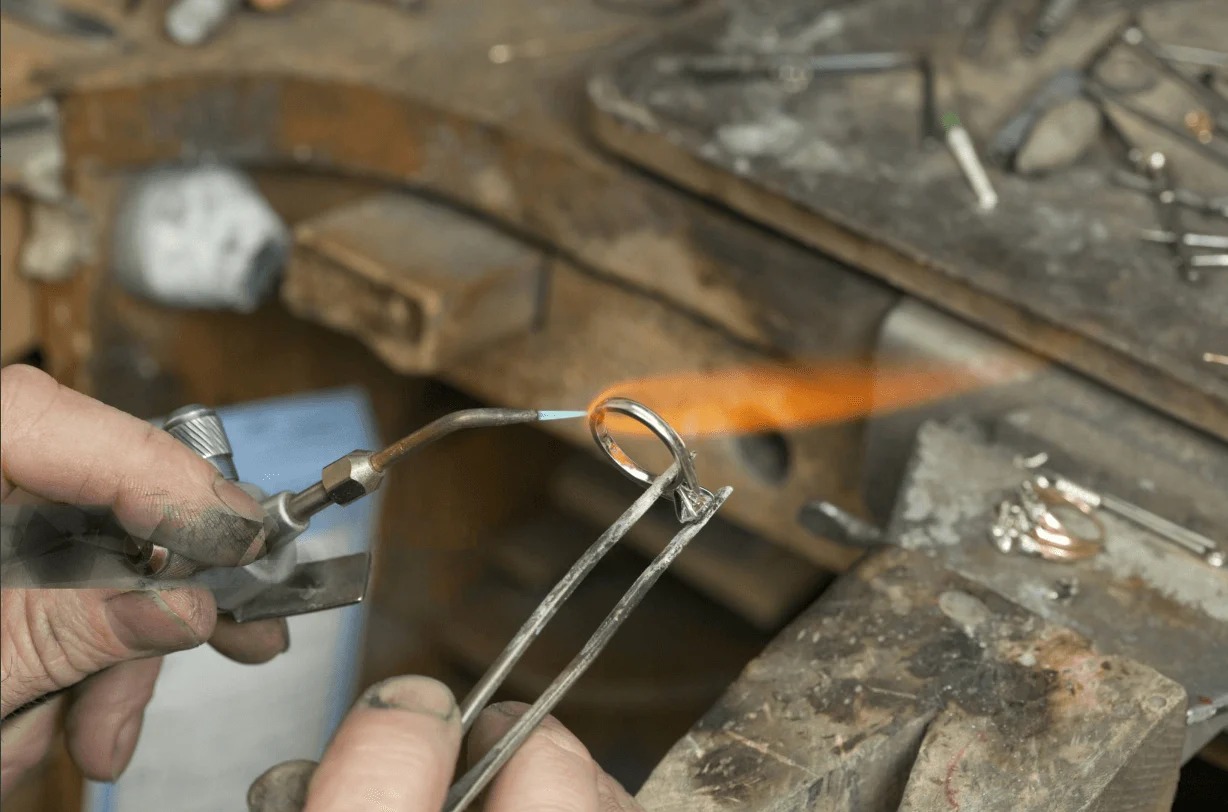
Oxyhydrogen welding is a process that consists of burning of hydrogen (H2) and oxygen (O2) gases to form a high temperature flame. They are also normally produced by means of electrolysis of water thus the process is not as harmful as the conventional fuel welding systems.
The flame thus generated is very fine and manageable which is of prime importance in the jewelry producing sphere where small parts need to be heated with precision. Oxyhydrogen systems also lead to a neutral flame formed that contains very little impurities, as compared to conventional torches, and this lowers the chances of contamination in the process of welding.
Why Jewelry Manufacturers are moving to Hydrogen Welding
Exquisitely Fine Tuned Work
The jewelry items are usually very complicated with their designs and minute pieces, which are very sensitive to heat. oxy-hydrogen welding also provides a small flame which helps the jewelers to work on minute details without damaging its surroundings.
This is especially significant in the field of work with such precious metals as gold, silver, and platinum, where any slight blemishes in the item can seriously impact its appearance and its value.
Better Cleaning and Oxidation-Free Performance
Minimization of oxidation is one of the major benefits of oxyhydrogen jewelry welding machine. Ordinary fuel gases may incorporate carbon and other pollutants resulting to coloration or cracks.
A cleaner working environment is achieved because of hydrogen combustion which produces predominantly water vapor. It is useful in ensuring the original look of precious metals and minimizes the necessity of post-process.
Green production
Sustainability is becoming a big concern in the manufacturing field such as in the jewelry field. Oxyhydrogen systems produce gas using water and therefore no fossil fuels that use acetylene or propane are used.
Based on the observations made by the International Energy Agency, hydrogen will be instrumental in curbing the emissions in the industry. The transformation to the hydrogen-based technologies in the production of jewels is in line with this general trend toward cleaner production processes.
Application of the Ptxson Oxyhydrogen Generator
Contemporary jewelry production studios have been embracing more sophisticated technologies such as the Ptxson oxyhydrogen generator. Hydrogen and oxygen gases are produced on demand using electrolysis through the use of these machines to guarantee a steady and controlled flame.
Some of its important benefits are:
- Demand-based gas production, which does not have storage risks.
- Precision work Stable flame control.
- Lower costs of operation in the long-run.
- Safety better than gas cylinders.
The latter characteristics contribute to the fact that oxyhydrogen generators are especially applicable to small-scale craftsmen as well as to large jewelry production facilities.
Hydrogen-Based Welding Scientific Perspective
Materials science studies confirm that hydrogen welding technology is beneficial. According to studies found in the Journal of Materials Processing Technology, joint quality and defects in metal joining can be reduced with the help of controlled heating environment.
This evidence supports the development of the problem of hydrogen welding as a working and stable solution in the future, when high accuracy in work and professionalism are needed in certain fields, e.g., in the jewelry industry.
Honesty in following Industry Standards
The introduction of new technologies in jewelry manufacturing should be based on the accepted safety and quality norms. There are such organizations as the American Welding Society which publish the rules of welding process, equipment safety, and material compatibility.
Oxyhydrogen welding systems are also being developed in line with these standards so that manufacturers are not compelled to compromise the technology and remain safe and of good quality.
Benefits Than Conventional Techniques of Welding
Oxyhydrogen welding has a number of unique advantages over the traditional methods of welding:
- Greater accuracy: Perfect when using complex jewelry designs.
- Less contaminated process: few oxidations and contaminations.
- Energy saving: A decrease in the use of fossil fuels.
- Safety: On-demand gas generation provides a solution in terms of safety.
- Variousness: Adaptable to metals of diverse nature.
These are the strengths that hydrogen-based systems can be a formidable competitor to the traditional welding in the jewelry production industry.
Resistance and Factors to Expect
Although oxyhydrogen welding has a list of advantages, several challenges should be taken into account:
- First spending on equipment including the Ptxson oxyhydrogen generator.
- It demanded training of operators to cope with new technology.
- Requirement of a steady power supply of electrolysis systems.
Nevertheless, these problems are likely to reduce with the growth of technology and its use.
The Jewelry Manufacturing Future
Jewelry manufacturing promises to be in the fusion of artisanism and advanced technology. Oxyhydrogen welding is a major move in this direction which provides the balance of accuracy, efficiency and sustainability.
With the ongoing development of hydrogen technology, we shall have:
- Smaller and smaller efficient oxyhydrogen systems.
- Combination with computerized and electronic manufacturing.
- Further penetration of markets worldwide in jewelry.
The move to hydrogen solutions is indicative of a larger trend of the production industry, in which clean energy and accuracy engineering are inseparable.
Conclusion
The art of welding based on oxyhydrogen technology is likely to transform the jewelry production industry of the future because it proposes cleaner, more accurate, and greener options. Although such tools as the oxyhydrogen jewelry welding machine, hydrogen welding, and the Ptxson oxyhydrogen generator allow manufacturers to get better results and meet the current sustainability objectives.
With the help of the above-mentioned sources, hydrogen welding is not only a novelty, but it is the future of the jewelry-making industry.