

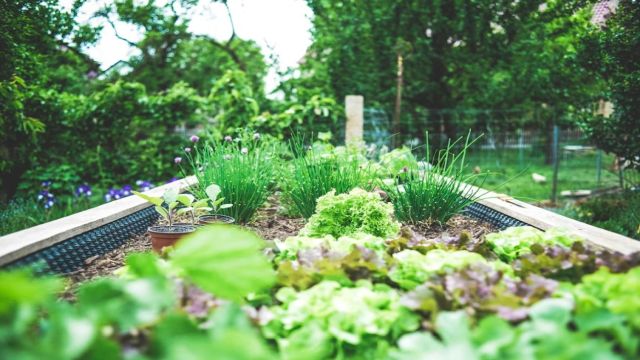
You’ve been dreaming about this in your garden for months: plump tomatoes, fragrant basil, maybe even a few cheerful sunflowers moving in the breeze. Now spring is finally here, still every time you look at your lawn, you hesitate, “Do I really want to tear this up?”
Here’s the honest truth: You can’t add a productive garden without leaving some mark on your lawn. You just can’t. The grass beneath raised beds dies, by design. The path you walk twice a day to check on peppers will wear thin by August. The wheelbarrow will leave tracks.
Yet “some marks” doesn’t mean disaster. The trick is knowing where and when damage occurs, so you can prevent it at each stage.
Plan Before You Start
Most lawn damage isn’t caused by the garden itself. It’s caused by how you get to it. A summer of daily trips across the grass leaves a path of thinned grass or worse, a muddy trail, and that’s a problem best solved before you start.
Plan your path first: This is the single most important thing you can do for your lawn. Decide where you’ll walk, then lay stepping stones or a mulch walkway before you plant a single seed. Once a trail is worn into the turf, it’s hard to repair.
Place beds near existing hardscaping: If you can reach your garden from a patio, deck, or sidewalk, you won’t need to cross the grass at all. A corner bed looks charming, but a bed you can access from the sidewalk won’t cost you a strip of lawn.
Start smaller than you think you need: A single 4-by-4-foot raised bed takes just 16 square feet yet can produce a surprising harvest of salad greens, herbs, and compact vegetables.
Square-foot gardening (dividing the bed into a grid and planting each square according to the crop’s spacing needs) turns a small footprint into a generous garden. Less lawn sacrificed, more lettuce gained.
Think vertically: Train cucumbers, beans, and peas to climb trellises, and you’ll harvest more produce without spreading wider. This is a smart way to maximize space in a small backyard.
Protect the Grass While You’re Building
This is the phase where sneaky damage happens. Building a raised bed means hauling soil, stacking lumber, and staging materials. All of that can hurt your lawn if you’re not careful.
Stage materials off the grass: This is the stealthy lawn-killer most people don’t see coming. Piles of soil, stacked lumber, bags of compost, and even a wheelbarrow parked in one spot can yellow the grass in just two or three days. Grass needs light. Heavy materials compress the turf and trap moisture underneath.
The rule of thumb: Stage your supplies on a driveway, patio, or deck if you can. If you must use the lawn, work in phases so nothing sits in one place for long.
Prevent wheelbarrow ruts: Hauling soil and compost to your new beds can carve visible ruts into the turf, especially when the lawn is wet. Repeated trips along the same path compress the soil and tear up the grass.
If there’s no walkway to use, take measures to protect the grass. Lay down plywood sheets or cardboard as a rolling path. Wait for dry weather before heavy hauling. Vary your route a little each time, spreading the wear across a wider swath.
Use raised beds to limit the damage zone: Raised beds kill the grass beneath them. That’s the point. Cardboard or newspaper smothers the turf, and over time, vegetable roots push down into the native soil. But the damage stays inside the frame. The lawn around it carries on, unbothered, as long as you’ve protected it from everything else.
Containers sidestep the whole question. Big pots, fabric grow bags, and wooden planters let you garden on a patio or deck without ever touching the grass.
Protect Your Lawn as Your Garden Grows
Your garden is ready. The lawn survived installation. Now it’s time to grow your vegetables and herbs, while being careful to protect your turfgrass.
Don’t bring in weeds: Use only quality compost and mulch in your garden. Cheap bulk compost and hay mulch often carry weed seeds. You spend years keeping crabgrass off your lawn, then introduce it yourself in a bag of bargain compost. Buy from sources you trust. Choose straw over hay. Pull weeds before they set seed.
Don’t smother your turf: If you’ve set containers directly on grass (and they’re light enough to lift safely), move them every week or two. The grass beneath them is slowly dying from lack of light.
The Bottom Line
A garden will change your lawn. There’s no way around that. But the change doesn’t have to extend beyond what’s necessary.
Build your path first. Stage materials on hard surfaces, and use good-quality compost in your garden. If you suspect you might want the space back someday, skip the permanent structures. Raised beds are far easier to remove than in-ground plots with concrete edging.
Your lawn and your garden can share a yard. You just have to plan for it at every stage..
Sinziana Spiridon is an outdoorsy blog writer with a green thumb and a passion for organic gardening. When not writing about weeds, pests, soil, and growing plants, she’s tending to her veggie garden and the lovely turf strip in her front yard.