

Keeping up with safety regulations can feel like juggling too many moving parts at once. From tracking incidents and inspections to managing training and hazardous materials, there’s a lot that can slip through the cracks without the right system in place. That’s where safety compliance software comes in. These platforms centralize critical processes such as incident reporting, risk assessments, safety audits, employee training, and regulatory documentation. By consolidating tasks into one system, organizations reduce manual errors, improve visibility, and build a stronger safety culture. Instead of flipping through spreadsheets or chasing down scattered reports, teams gain real-time access to compliance data, making it easier to spot risks early, assign corrective actions, and demonstrate conformance to OSHA, ISO 45001, EPA, and other standards. With the right software, safety stops being a reactive process and becomes a proactive strategy – helping companies not only meet regulations but also prevent accidents, protect employees, and improve operational efficiency.
1. CampusOptics
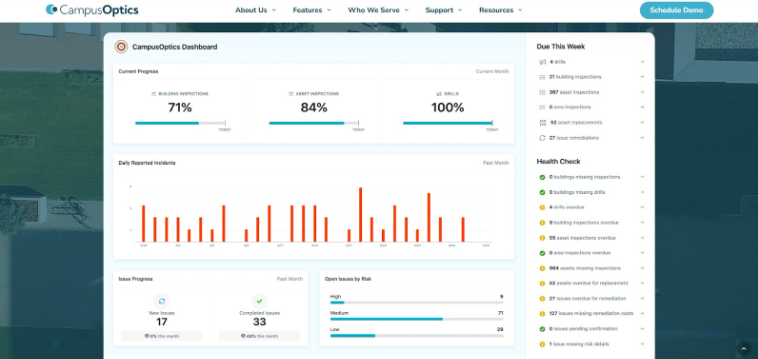
CampusOptics creates software that brings together every piece of environmental health and safety management within higher education. Instead of using separate systems for chemical inventory, lab inspections, training, or emergency plans, this platform centralizes it all in one place. It’s built specifically for colleges and universities, where safety teams often need to coordinate across departments and buildings. The system helps users manage incidents, track hazardous materials, organize compliance schedules, and monitor safety assets through both desktop and mobile tools.
The platform reflects a practical understanding of how campus safety actually works. Many EHS professionals aren’t sitting behind desks – they’re in labs, classrooms, or facilities, so the CampusOptics mobile app lets them log inspections, take photos, or scan barcodes on the go. It combines mapping, documentation, and workflow tools to give teams a clear view of their safety landscape. Designed around higher education needs, the software’s purpose is straightforward: make it easier for staff to stay compliant, reduce institutional risk, and maintain a safer environment across campus.
Key Highlights:
- EHS and Fire & Life Safety software tailored for higher education
- Centralized management for incidents, inspections, and training
- Mobile app with barcode scanning and talk-to-text input
- Real-time maps for safety assets, incidents, and chemical containers
- Cross-functional permissions for EHS, fire safety, and emergency teams
- Fast implementation with dedicated support and onboarding
Services:
- Environmental health and safety management
- Chemical inventory and hazardous waste tracking
- Fire and life safety inspections
- Risk and incident reporting
- Emergency preparedness and response planning
- Training assignment and compliance monitoring
Contact Information:
- Website: www.campusoptics.com
- App Store: apps.apple.com/ua/app/campusoptics/id1608207767
- Google Play: play.google.com/store/apps/details?id=com.campusoptics.app&pcampaignid
- Address: 7951 Shoal Creek Blvd., Suite 275 Austin, TX 78757
- Phone Number: (888)748-7652
- Email: [email protected]
2. Evotix
Evotix builds software that takes a lot of the chaos out of managing safety and compliance. Their platform pulls together everything from incident tracking and risk assessments to environmental oversight and training into one connected system. Instead of using a mix of spreadsheets and disconnected tools, teams get a place where tasks, reports, and audits actually talk to each other. The goal isn’t to overcomplicate things with endless dashboards but to give safety and compliance teams the visibility they need to stay ahead of risks.
What makes the platform practical is how flexible it feels. Whether someone’s checking assets on the factory floor or reviewing audit results from a laptop, the same information stays synced. The software covers a wide range of areas: occupational health, sustainability, and even chemical management—but it never feels like too much at once. It’s the kind of tool that grows with the organization, keeping compliance on track without forcing everyone to change the way they already work.
Key Highlights:
- Centralized platform for EHS, ESG, and risk management
- Tools for tracking incidents, audits, and corrective actions
- Chemical and asset management with mobile access
- Built-in analytics and configurable workflows
- Multilingual options for global teams
- Integration-ready design for existing systems
Services:
- Safety and risk management
- Environmental and sustainability reporting
- Occupational health and hygiene tracking
- Learning and training tools for compliance
- Workflow and document management
- Control of work and operational risk support
3. SafetyCulture
SafetyCulture approaches safety compliance from the ground up, focusing on how real people actually work. Their platform gives teams a simple way to handle inspections, report issues, and stay on top of safety standards – all from a phone or tablet. It’s less about building complex systems and more about making day-to-day compliance easier to manage. Checklists, training, asset tracking, and investigations live in one place, which helps reduce the gaps that often appear when safety tasks get spread across different tools.
The system works across industries, from construction sites to hospitals, and can be adjusted to match how each team operates. Built-in AI helps with creating checklists and automating reports, while dashboards keep managers updated in real time. Everything feels designed to keep work moving—no unnecessary clicks, no complicated setup. It’s not trying to reinvent safety management; it’s just trying to make it something that fits naturally into daily routines.
Key Highlights:
- Mobile-first platform for safety and operations
- AI support for reports, checklists, and training
- Real-time analytics and dashboard tracking
- Flexible templates that adapt to any industry
- Offline functionality for fieldwork
- Integration with third-party tools
Services:
- Safety inspections and compliance audits
- Digital training and onboarding
- Incident and investigation tracking
- Asset and maintenance management
- Risk and document management
- Automated task scheduling and reporting
4. SciSure
SciSure’s platform was built for labs that have outgrown paper logs and patchwork systems. It connects experiment tracking, inventory management, and safety compliance under one roof, giving scientists and EHS teams a clearer picture of what’s happening across the lab. The idea is simple: keep compliance running quietly in the background while people focus on the work that actually matters. Instead of chasing down missing data or outdated safety records, everything sits in one organized space.
Their safety and compliance tools are designed with lab operations in mind—things like chemical tracking, SDS management, and audit readiness are built right in. It also integrates directly with lab instruments and databases, which helps cut down on manual data entry. SciSure’s setup feels like it was made by people who understand lab life: lots of moving parts, not enough time, and a real need for structure without the red tape.
Key Highlights:
- Unified lab platform combining research and compliance
- Automated EHS tracking and audit preparation
- Sample and chemical inventory tools
- Integration with laboratory equipment and systems
- Secure and compliant data management
- User-friendly workflows for scientists and EHS teams
Services:
- Health and safety compliance automation
- Electronic lab notebook (ELN) for experiments
- Laboratory information management (LIMS)
- Risk and audit management tools
- Regulatory compliance and security support
- Integration and workflow customization
5. Intelex
Intelex develops safety compliance software that helps organizations manage environmental, health, and quality requirements under one system. Their platform brings together a range of modules for incident reporting, audits, training, and document control, aiming to make compliance processes more structured and less dependent on manual tracking. It’s designed to help teams identify risks early, log corrective actions, and maintain consistency across departments. The platform also supports sustainability and ESG reporting, giving organizations a broader view of how safety and compliance fit within their overall operations.
The software works across industries such as construction, manufacturing, logistics, and energy, offering flexibility through configurable tools and automation. Mobile access and integration options make it easier for employees to record data in real time, while built-in analytics help managers monitor performance and compliance trends. Overall, Intelex provides a framework where safety management, risk control, and regulatory alignment can function together without unnecessary complexity.
Key Highlights:
- Unified platform for EHS, quality, and sustainability management
- Incident and audit tracking with real-time visibility
- Document and training management tools
- Configurable workflows and automation
- Integration with existing enterprise systems
- Mobile access for field and office teams
Services:
- Safety incident and risk management
- Environmental and sustainability compliance
- Audit scheduling and reporting
- Employee training and certification tracking
- Quality and supplier oversight
- Document and data lifecycle management
6. Vertére
Vertére focuses on chemical and laboratory inventory management, offering software that helps labs maintain compliance and track materials safely. Their system allows organizations to manage chemicals, biological samples, and hazardous waste from receipt to disposal, with every step documented for accountability. Barcode-driven tracking simplifies inventory control, while built-in alerts help labs stay ahead of issues like expiring materials or regulatory limits. By keeping all data—inventory, SDS files, and safety records – in one place, Vertére gives lab teams a clear view of what’s on site and how it’s being handled.
The platform isn’t limited to chemical tracking; it also includes modules for equipment monitoring, stockroom management, and waste handling. Users can access the system from mobile devices, making it easier to manage lab operations without being tied to a desktop. For EHS professionals, the software provides structured reporting tools that support environmental and safety compliance requirements. It’s built for organizations that need control and visibility over complex inventories without overcomplicating daily workflows.
Key Highlights:
- Barcode-enabled chemical and biological inventory tracking
- Centralized SDS and document management
- Regulatory compliance support for DHS, SARA, and EPA reporting
- Alerts for low stock, expirations, and threshold breaches
- Waste management and equipment tracking modules
- Mobile-friendly interface for real-time updates
Services:
- Chemical and biological inventory management
- Hazardous waste tracking and reporting
- SDS and document storage
- Stockroom and equipment management
- Environmental and compliance monitoring
- Regulatory reporting and audit support
7. EHS Insight
EHS Insight provides an all-in-one software platform for managing safety, compliance, and environmental responsibilities across different industries. The system helps organizations move away from paper-based processes by offering digital tools for incident logging, audits, inspections, and risk management. It’s designed to give both office and field teams an easier way to handle reporting and corrective actions without losing track of deadlines or data accuracy. The mobile app makes it possible to capture information on site, even offline, so compliance tasks continue without interruption.
The software also incorporates AI features to simplify reporting and automate repetitive work. From construction and manufacturing to energy and chemical industries, EHS Insight adapts to various workflows while maintaining a consistent structure for compliance tracking. With its modular setup, companies can focus on the areas most relevant to them: like training, sustainability, or incident management, without needing to implement everything at once. The overall idea is to make safety and compliance management something that fits naturally into daily operations rather than a separate chore.
Key Highlights:
- Unified EHS and ESG management platform
- Mobile app with offline access for field workers
- AI-powered assistance for reporting and analysis
- Real-time dashboards and compliance tracking
- Modular structure for industry-specific needs
- Integration with existing systems and workflows
Services:
- Incident, audit, and inspection management
- Risk assessment and corrective action tracking
- Compliance and training management
- ESG and sustainability reporting
- Mobile data collection and workflow automation
- Analytics and performance monitoring
8. EcoOnline
EcoOnline builds software that helps companies keep safety and compliance in order without turning it into a paperwork nightmare. Their system connects everything from incident tracking and chemical safety to ESG reporting, so teams don’t have to jump between different tools just to stay compliant. It’s built to make EHS tasks less about chasing data and more about actually understanding what’s happening on the ground. Real-time dashboards and mobile access mean that safety updates and reports don’t sit forgotten in someone’s inbox – they’re visible when and where they’re needed.
One of the things that stands out about EcoOnline’s approach is how it blends practical features with flexibility. You can customize dashboards, set up alerts, and access everything from the same cloud-based platform, whether you’re managing chemical storage or reviewing sustainability reports. It’s designed to simplify processes without cutting corners on compliance, which is exactly what many safety teams need. Instead of creating extra work, it helps organize the work that already exists in a cleaner, more manageable way.
Key Highlights:
- Connected tools for EHS, chemical safety, and ESG reporting
- Real-time visibility through dashboards and mobile access
- Cloud-based platform for multi-site management
- Configurable reporting and automated updates
- Centralized tracking for incidents, audits, and training
- Data analytics to identify safety trends and risks
Services:
- Environmental health and safety management
- Chemical compliance and SDS tracking
- ESG and sustainability documentation
- Audit and inspection management
- Employee training and learning programs
- Automated compliance reporting and analytics
9. Cority
Cority develops an integrated platform that brings safety, health, and sustainability together in one place. Instead of treating these areas as separate checkboxes, the system helps teams manage them as part of a single process. Their software supports everything from risk tracking to occupational health and ESG reporting, giving organizations a clearer picture of how all these areas connect. It’s built for industries where safety isn’t optional: construction, manufacturing, healthcare, and where managing compliance often feels like juggling ten things at once.
The platform’s design feels practical: you can capture incidents from a phone, monitor data in real time, and let automation handle the repetitive parts. AI tools assist with analyzing risks and spotting issues before they become problems, while mobile access keeps the whole process running on site, not just in the office. The result is a system that makes compliance less of a chore and more of a built-in part of daily operations, without the noise or unnecessary complexity.
Key Highlights:
- Unified EHS+ platform for safety, health, and sustainability
- Mobile-first design with offline capabilities
- AI-assisted analytics for smarter insights
- Configurable tools for audits, training, and reporting
- Real-time performance tracking and dashboards
- Scalable for high-compliance industries
Services:
- Safety and risk management
- Environmental compliance and sustainability reporting
- Occupational health and hygiene programs
- Audit and training management
- ESG tracking and performance monitoring
- Data analytics and workflow automation
10. Chematix
Chematix focuses on one of the most detail-heavy parts of compliance: managing chemicals safely and efficiently. Their platform gives labs, universities, and industrial facilities a single system to track every stage of a chemical’s life: from purchase and storage to waste disposal. It replaces scattered spreadsheets with structured tracking tools, so compliance officers and researchers always know what’s in inventory, where it’s stored, and how it’s handled. That kind of clarity helps cut down on errors and makes audits a lot less stressful.
Each part of the software ties into the next, creating a full picture of chemical management. Procurement links to inventory, which connects to waste handling, all under one digital roof. Users can generate compliance reports, monitor regulatory thresholds, and document safety practices without digging through folders or manual logs. Chematix feels like it was designed for people who have to balance science, safety, and regulation every single day, and want to spend less time chasing paperwork to prove it.
Key Highlights:
- Centralized chemical inventory and tracking system
- Modules for procurement, waste, and financial management
- Compliance support for federal and local regulations
- Integrated data for full life-cycle visibility
- Audit-ready documentation and reporting tools
- Built for labs, research institutions, and regulated industries
Services:
- Chemical inventory and compliance management
- Procurement and resource tracking
- Hazardous waste handling and documentation
- Financial and audit reporting support
- Regulatory threshold and safety monitoring
- Centralized data storage and workflow management
11. MY Compliance Management
MY Compliance Management develops software that helps organizations handle all their safety and quality responsibilities in one structured place. The platform brings together compliance activities that are often scattered across spreadsheets, emails, and folders, turning them into a single system that’s easier to manage. It supports everything from audits and incident reporting to risk assessments, document control, and legal registers. Built for everyday use, the software focuses on making reporting and follow-up work simple enough that people actually keep it up to date.
The system runs entirely in the cloud and includes mobile apps for audits, risk assessments, and asset tracking, so compliance data doesn’t stay locked in the office. Users can log incidents, raise actions, and send reports directly from their phones. It also handles reminders, expiry tracking, and automated alerts, helping teams stay on top of obligations without relying on memory or manual logs. MY Compliance Management feels less like a rigid system and more like a practical toolkit for keeping compliance under control day to day.
Key Highlights:
- Centralized compliance management for EHS, quality, and risk
- Cloud-based system with mobile app support
- Automated reminders, alerts, and expiry tracking
- Built-in modules for audits, incidents, and training
- Legal register builder and real-time updates
- Document control and asset management in one place
Services:
- Incident and non-conformance reporting
- Risk assessment and audit management
- Legal compliance and regulatory tracking
- Training records and onboarding tools
- Asset and contractor compliance management
- Permit-to-work and environmental aspect tracking
12. RLDatix
RLDatix provides compliance and risk management software primarily designed for healthcare organizations. Their platform helps hospitals and healthcare providers monitor safety incidents, manage regulatory requirements, and strengthen accountability across clinical operations. It combines multiple modules – covering patient safety, provider management, credentialing, and quality improvement, into a single connected environment. The idea is to give organizations clearer visibility into where issues occur and how to prevent them, rather than dealing with isolated data across departments.
The system supports everything from peer review and staff scheduling to standards compliance and performance tracking. It also includes reporting tools for governance and audit processes, helping teams maintain transparency with regulators and accreditation bodies. While it’s built for healthcare, the approach applies broadly: keep risk data organized, connect people to their responsibilities, and make compliance management part of the daily workflow instead of an afterthought.
Key Highlights:
- Unified platform for safety, risk, and regulatory management
- Focus on healthcare compliance and quality assurance
- Modules for credentialing, peer review, and audit tracking
- Tools for scheduling, provider oversight, and patient safety
- Data analytics for performance and incident trends
- Supports accountability and governance processes
Services:
- Safety and risk management
- Regulatory and standards compliance
- Provider credentialing and enrollment
- Audit and peer review management
- Staff scheduling and performance tracking
- Data insights and compliance reporting
13. Quentic
Quentic offers modular safety and environmental compliance software that helps companies manage EHS and ESG requirements within one connected platform. The system lets users document, track, and evaluate safety, environmental, and quality processes from any device. Its browser-based platform and mobile app give employees an easy way to report incidents, perform audits, or complete risk assessments on the go. Everything ties back into a single database, which keeps compliance records consistent and accessible for both managers and auditors.
What makes Quentic practical is its flexibility. Organizations can select the modules they need—covering areas like hazardous chemicals, legal compliance, sustainability, or health and safety—and scale them as requirements grow. Built to support ISO standards, the software helps companies streamline documentation and reduce the manual work behind reporting and certification. It’s the kind of system that quietly keeps compliance organized while leaving room for teams to focus on actual improvement.
Key Highlights:
- Modular EHS and ESG management platform
- Certified for ISO 9001, 14001, 27001, 45001, and 50001
- Mobile app for reporting, audits, and risk assessments
- Tools for hazardous chemical tracking and legal compliance
- Centralized document and workflow management
- Supports multilingual and multi-site operations
Services:
- Environmental health and safety management
- ESG and sustainability tracking
- Audit and certification preparation
- Chemical and hazardous goods control
- Legal compliance and risk management
- Process optimization and reporting analytics
Conclusion
Keeping up with safety regulations isn’t just about avoiding penalties – it’s about creating workplaces that function smoothly and responsibly. The right safety compliance software makes that possible by turning endless checklists and reports into something manageable and meaningful. Whether it’s tracking incidents, scheduling audits, or monitoring environmental impact, these platforms help organizations stay consistent with standards while improving how teams actually work day to day.
Each of the tools covered in this article approaches compliance from a slightly different angle, but they all share one goal: making safety management more transparent, data-driven, and easier to maintain. As compliance expectations continue to grow, investing in software that keeps everything aligned isn’t just a smart move – it’s a step toward a more organized, accountable, and safer workplace.