

The Precision Imperative in Pharmaceutical Filling
In pharmaceutical manufacturing, filling accuracy is not a quality metric among many it is the defining requirement that separates an acceptable product from a potentially dangerous one. Whether the vial contains a sterile injectable drug, a lyophilized biologic, or a diagnostic reagent, the quantity filled must be precise to within fractions of a milliliter, and the process must be executed under conditions that guarantee complete sterility.
Manual filling of vials cannot meet these demands at the scale and consistency modern pharmaceutical production requires. The vial filling machine emerged as the solution to this challenge, combining precision dosing mechanisms with sterile process controls and high-speed automation into a single, validated production platform.
How a Vial Filling Machine Operates
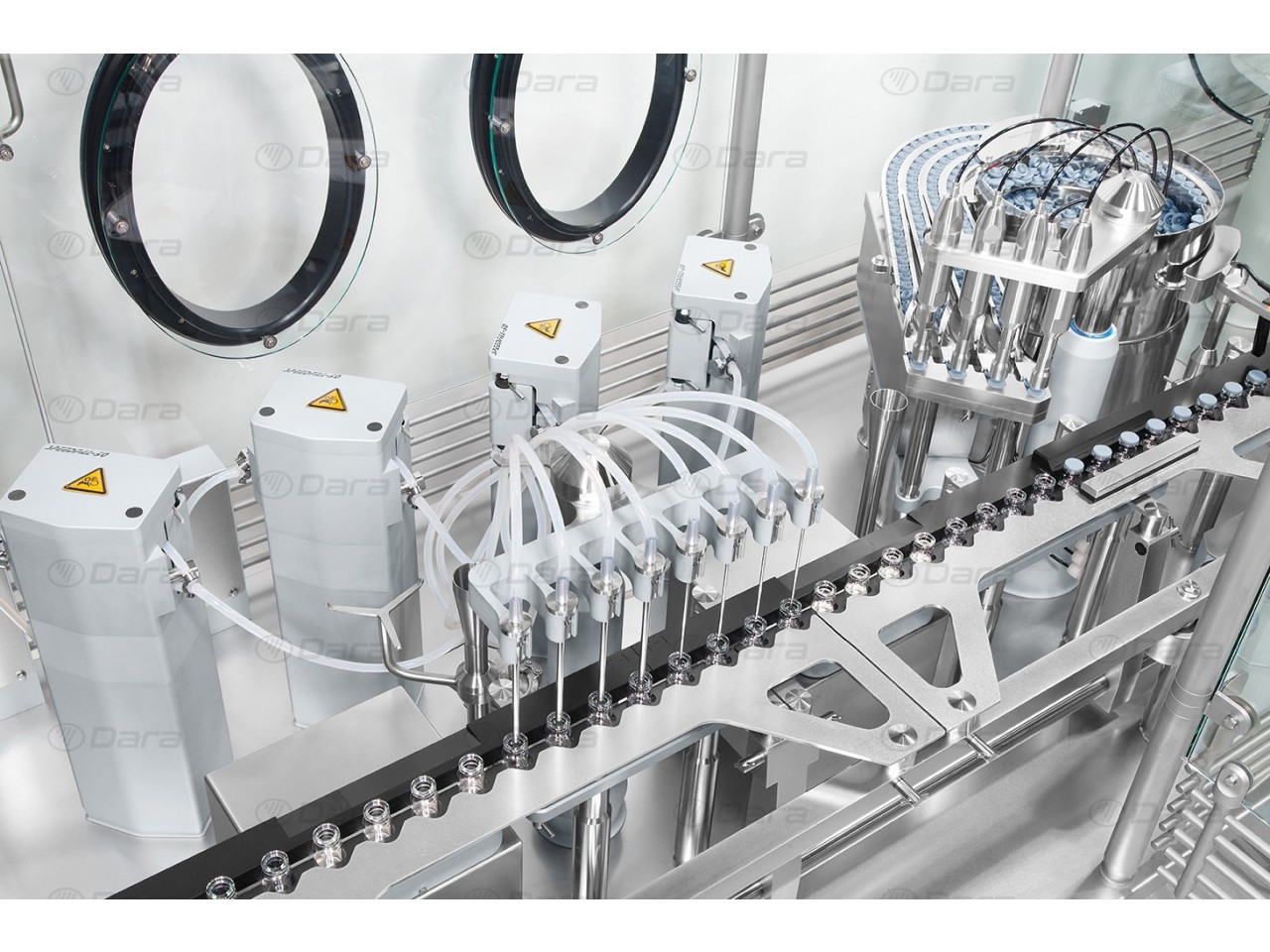
A vial filling machine performs a sequence of tightly controlled operations that take an empty, sterilized vial through the complete filling and sealing process. The sequence typically begins with vial feeding glass or plastic vials are loaded into the machine via a hopper or rotary turntable and conveyed to the filling station in precise alignment.
At the filling station, a volumetric dosing system most commonly a peristaltic pump, rotary piston pump, or time-pressure filling system delivers an exact predetermined volume of liquid into each vial. The filling nozzle descends into the vial to minimize splashing and aerosol formation, which is critical in sterile filling environments.
After filling, the vials move to the stoppering station where rubber closures are placed and pressed fully into the vial neck using a stopper insertion head. The final step is crimping an aluminum cap is applied over the rubber stopper and the cap’s skirt is mechanically crimped around the vial neck, creating a tamper-evident, hermetically sealed finished unit. All of this happens in a continuous, coordinated flow under strict environmental controls.
Types of Vial Filling Machines and Their Applications
Different pharmaceutical and biotech applications call for different machine configurations, and the market offers a corresponding range of specialized equipment.
Liquid Vial Filling Lines: These handle aqueous and non-aqueous liquid formulations, including small molecule drugs, vaccines, and biologics. They are available in formats ranging from compact bench-top units for clinical trial batches to high-speed rotary machines producing thousands of vials per hour.
Lyophilization (Freeze-Drying) Lines: These specialized systems fill vials with a liquid formulation that will subsequently be freeze-dried. They incorporate partial stoppering capability the stopper is placed but not fully seated, allowing moisture to escape during lyophilization before the stopper is driven home.
Powder Filling Machines: Used for antibiotic powders and other dry pharmaceutical formulations, these machines use auger dosing or vibrating dosing systems to deliver precise powder weights into each vial before stoppering and capping.
Each configuration must be designed and validated for the specific product and regulatory requirements of the application, with particular attention to material contact surfaces, cleaning validation, and sterility assurance.
Sterility Assurance and Regulatory Compliance
Pharmaceutical vial filling operations are among the most heavily regulated manufacturing processes in any industry. Regulatory frameworks from the FDA, EMA, and other health authorities impose strict requirements on the design, validation, and operation of filling equipment.
Aseptic filling where the product, container, and closure are all pre-sterilized and the filling operation is performed in a controlled clean room environment is the standard for injectable pharmaceuticals. Machines operating in aseptic environments must be designed to minimize the generation of particles, support effective cleaning and sterilization in place (CIP/SIP), and operate within ISO Class 5 (Class 100) environments.
Isolator technology is increasingly used in conjunction with filling machines to provide an absolute barrier between the aseptic filling zone and the surrounding environment. This approach offers superior sterility assurance compared to traditional clean room setups and is rapidly becoming the industry standard for new facility designs.
All filling machine components that contact the product must be manufactured from materials that are compatible with pharmaceutical products typically pharmaceutical-grade 316L stainless steel, borosilicate glass, and FDA-compliant elastomers and plastics and must be validated to clean effectively and withstand repeated sterilization cycles.
Automation, Throughput, and Integrated Line Design
Modern pharmaceutical production demands not only precision and compliance but also efficiency at scale. High-speed vial filling machine systems are designed to integrate seamlessly with upstream and downstream equipment into a continuous production line.
Upstream integration typically includes depyrogenation tunnels that sterilize and dry the incoming glass vials immediately before they enter the filling machine, and bulk drug product supply systems that maintain the correct temperature and pressure at the filling nozzles.
Downstream integration includes checkweighers that verify the fill weight of every individual vial rejecting out-of-specification units automatically followed by labeling machines, cartoning systems, and serialization stations that apply and verify the unique identifiers required by drug traceability regulations.
Machine control systems in modern filling lines provide comprehensive data logging of all critical process parameters fill volumes, environmental conditions, machine speeds, and reject events that can be exported to manufacturing execution systems for batch record generation and regulatory submission support.
Selecting the Right Machine for Your Production Needs
Choosing a vial filling machine requires a disciplined assessment of current and future production requirements, regulatory context, and total cost of ownership.
Throughput Requirement: Define the number of vials per hour your production schedule demands, including peak demand scenarios. Select a machine with capacity headroom of at least 20 to 30% above current peak needs to accommodate future volume growth.
Product Characteristics: The viscosity, pH, and temperature sensitivity of your formulation directly influence the choice of dosing system. High-viscosity products require different pump technologies than low-viscosity aqueous solutions, and temperature-sensitive biologics may require chilled product contact surfaces.
Regulatory Market: Machines for products destined for FDA or EMA markets must comply with current Good Manufacturing Practice (cGMP) requirements and be qualifiable under the IQ/OQ/PQ validation framework. Confirm that the machine supplier provides comprehensive validation documentation packages.
Changeover and Cleaning: If the machine will handle multiple products, evaluate the time and complexity required for product changeover and cleaning validation. Rapid changeover tooling and dedicated product-contact parts sets can significantly reduce turnaround time between batches.
FAQs
Q1: What types of products can a vial filling machine handle?
A: These machines handle aqueous liquids, oils, suspensions, lyophilized products, and pharmaceutical powders, depending on the dosing system and machine configuration selected.
Q2: What filling accuracy can be achieved?
A: Modern volumetric filling systems achieve accuracy within plus or minus 0.5 to 1.0% of the target fill volume. High-precision servo-driven systems can achieve tighter tolerances for critical applications.
Q3: What sterility standards must a pharmaceutical filling machine meet?
A: Machines used for aseptic filling must operate within ISO Class 5 environments, comply with FDA 21 CFR Part 211 and EU GMP Annex 1 requirements, and be capable of cleaning and sterilization in place.
Q4: How long does validation of a new filling machine take?
A: A complete IQ/OQ/PQ validation typically takes 3 to 6 months from installation to final validation report approval, depending on regulatory complexity and the number of products to be filled.
Q5: Can a single machine handle multiple vial sizes?
A: Yes. Most machines support changeover to different vial formats through the exchange of format-specific parts sets. The changeover time varies by machine design, from under 2 hours on well-engineered systems to a full shift for complex configurations.