

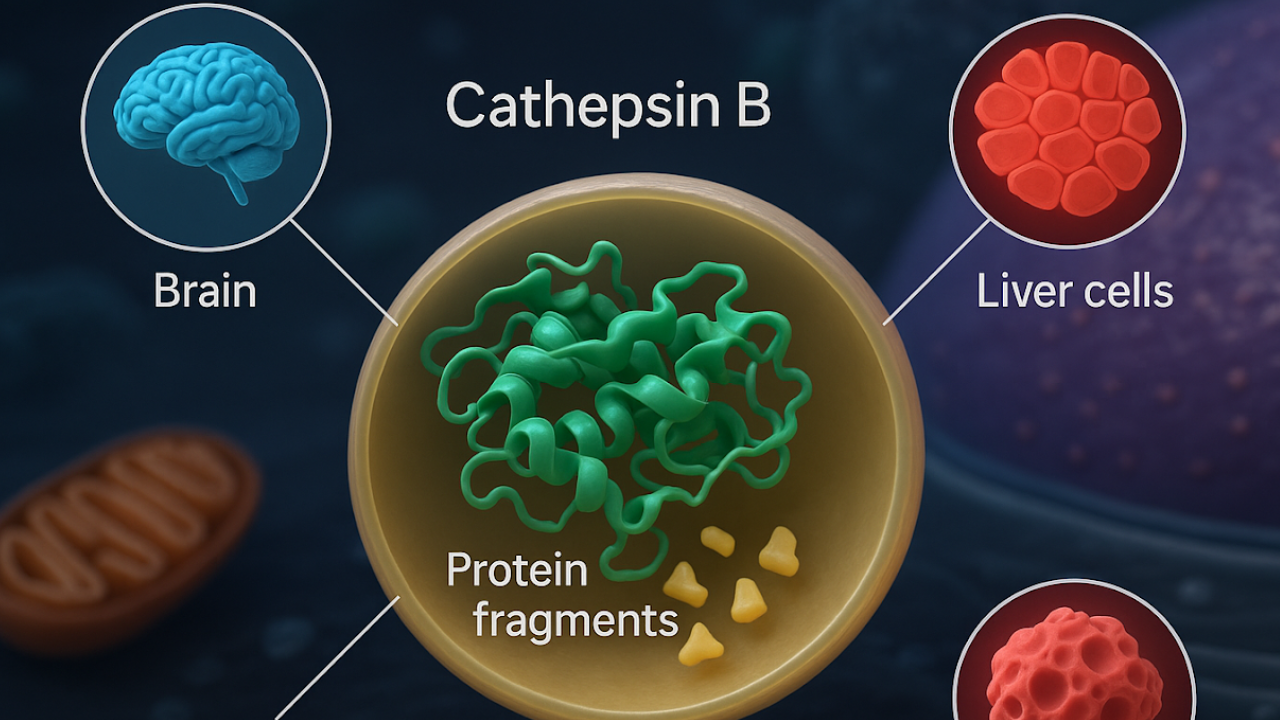
Are you looking to understand how proteins impact health and disease?
If yes, then you should know about a powerful enzyme called Cathepsin B.
Cathepsin B is a type of enzyme that is found inside tiny parts of cells called lysosomes.
In normal amounts, Cathepsin B helps with:
- Cell cleanup
- Digestion of proteins
- Healing and growth
But when it’s too active or found in the wrong places, it can cause serious problems. So, to study its role in these conditions, scientists use Ctsb recombinant protein —a lab-made version of this enzyme. It helps the researchers to understand how the enzyme behaves, test new drugs, and develop targeted treatments.
Let’s know about this enzyme to understand how it can be used in disease research.
Functions of Cathepsin B
1. Breaks Down Proteins
It is like your body’s internal garbage disposal. It chops up proteins inside cells, especially the ones that are not needed or have been damaged. This helps keep things clean and running smoothly inside the body.
2. Help Remove Damaged Cell Parts
It works inside lysosomes, which are like recycling centers in your cells. Cathepsin B helps break down old or faulty parts of the cell so they can be reused or removed.
3. Play a Role in Apoptosis
When a cell is damaged beyond repair, then the Cathepsin B helps trigger a self-destruct sequence (called apoptosis). This is especially important to prevent damaged cells from turning cancerous.
4. Involved in Neurodegenerative Diseases
This enzyme is related to neurodegenerative diseases like Alzheimer’s and Parkinson’s. It can affect how certain proteins (like α-synuclein and amyloid-beta) clump together, which leads to these diseases.
5. Acts as β-Secretase
Cathepsin B in Alzheimer’s acts like an enzyme called β-Secretase, which breaks down protein that forms sticky plaques in the brain. This means it could help to know how these plaques form–or how to stop them.
6. Linked to Memory Function
During exercise, Cathepsin B levels rise and can travel to the brain, where it helps increase a protein called BDNF (Brain-Derived Neurotrophic Factor). BDNF supports memory, learning, and brain health.
7. Activates the NLRP3 Inflammasome
This enzyme helps activate a part of the immune system called the NLRP3 inflammasome, which kicks off inflammation. While inflammation helps fight infection, too much of it can lead to chronic disease.
Importance of Cathepsin B in Disease Research
1. Neurodegenerative Diseases
Cathepsin B is involved in the formation of α-synuclein fibrils which leads to diseases like Parkinson’s disease (PD) and Dementia with Lewy Bodies (DLB).
Some studies in Alzheimer’s show that blocking Cathepsin B reduces sticky amyloid beta (Aβ) plaques and even improves memory.
But on the other hand, other research says increasing Cathepsin B can help break down Aβ and stop plaques from forming in the first place.
It is so confusing—which is why scientists are still figuring out whether to shut it up or down in Alzheimer’s.
2. Liver Diseases
It plays an important role in killing liver cells, especially in liver problems like toxic overdose from acetaminophen or sudden liver failure.
But if you block it with certain drugs (like CA-074Me), it protects the liver and helps you survive.
This makes Cathepsin B a possible target for liver treatments in the future.
3. Cancer
This enzyme shows up a lot in cancer but not in a good way.
Cancer cells use it to break down tissue, which helps them spread and invade other body parts.
It is often found at the edges of tumors, helping them move and grow faster. It is also made by cells around tumors, like fibroblasts and macrophages, which support the cancer’s growth.
It is important to note that blocking this enzyme using broad drugs could help slow down some cancers.
The Bottom Line
Cathepsin B is more than a protein-breaking enzyme— it is a key player in how our bodies respond to damage, disease, and even exercise. When you understand how it works, you can find new treatments and better ways to fight disease.
If you are diving into disease research, don’t overlook Cathepsin B recombinant protein—it might be the missing piece in your puzzle.